Why Foam Soap Sprayers Make Boat Washing Faster, Safer, Cleaner
A foam sprayer will not erase oxidation, but it buys dwell time, cuts grit scratches, and makes the first wash pass on a boat far more effective.
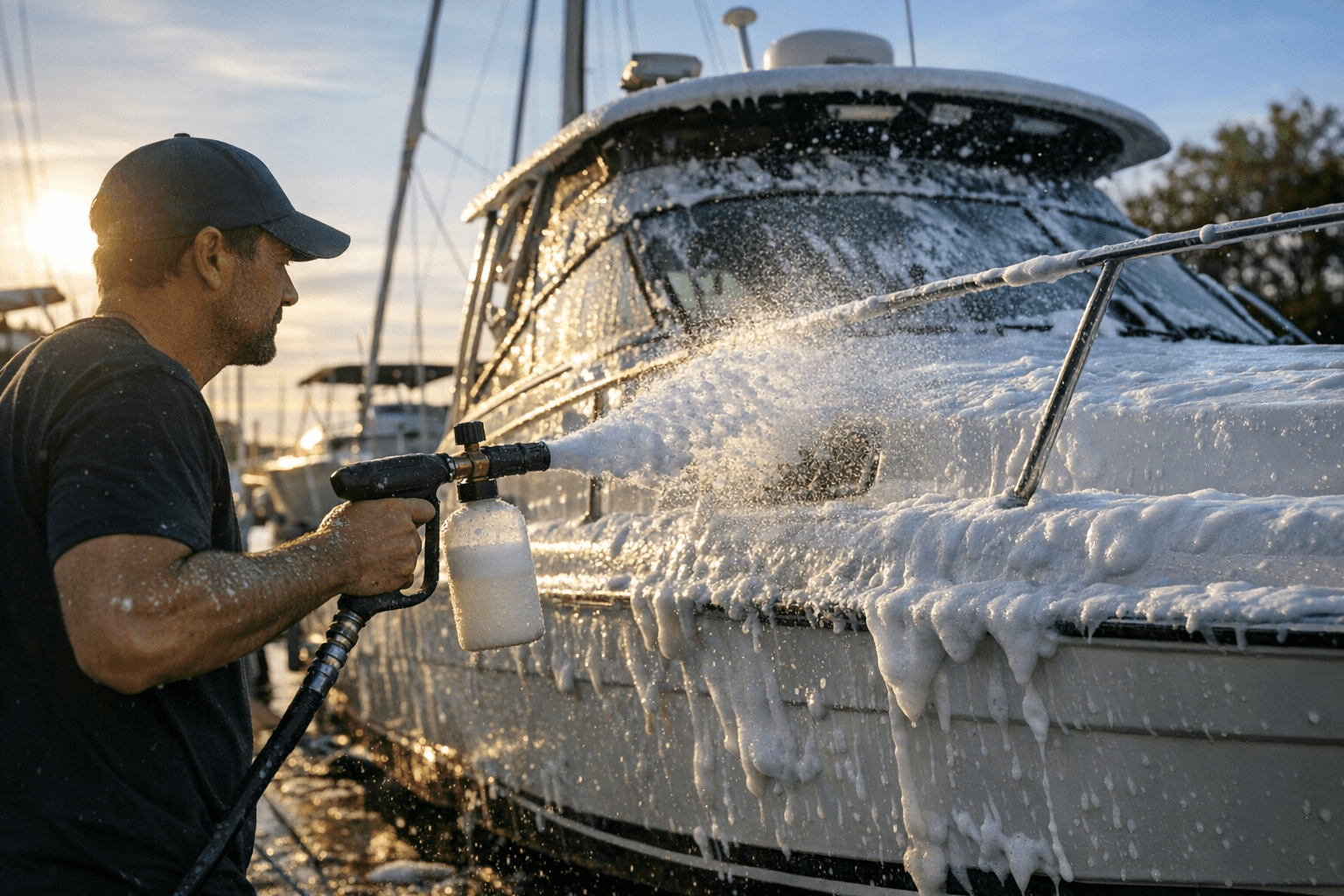
Foam changes the wash from a wipe-down into a soak
The real win with a foam soap sprayer is not drama, it is control. Instead of blasting a hull with a hose, dumping soap, and chasing runoff, you put cleaner where it can sit long enough to loosen the mess before a mitt ever touches gelcoat. That matters on boats because the surfaces are not all the same, and neither is the grime: gelcoat, vinyl, non-skid, rub rails, and hardware all ask for a different touch.
Boat Juice’s guide gets that part right. The sprayer is useful because it keeps cleaner on the surface instead of letting it slide off immediately, which gives it time to soften dried salt, bug residue, mildew, and waterline scum. That dwell time is the whole point. It makes the first contact cleaner and lowers the chance that you grind grit across the finish, which is how you end up with fine scratches and dull spots that never seem to buff out completely.
Why the foam step saves time without pretending to do everything
A foam sprayer is worth using when the problem is the first pass. If your hull is dusty, salty, or coated with that normal mix of marina grime and sun-baked residue, foaming the surface means less scrubbing and fewer repeat passes. It also helps on tall hull sides where traditional wash soap runs down too quickly to do much good.
But this is where boat owners get tripped up: foam is not a magic fix. Boat Juice is blunt about that, and it is the right warning. Heavy stains, oxidation, and ugly waterline marks still need separate products or real correction work. If you buy a sprayer expecting it to erase chalky gelcoat or deep discoloration by itself, you will be disappointed and probably overuse soap trying to force it.
The smarter way to think about it is process, not gadget. Foam improves the wash stage so the hand work that follows is easier, safer, and gentler. That is a practical upgrade, not a miracle.
What foam does well on a boat
The surfaces that benefit most are the ones that collect grime in layers. Gelcoat loves to show every scratch, vinyl picks up dirt and sunscreen, non-skid traps residue in texture, rub rails get streaked, and hardware collects salt and film in corners. Foam buys you a cleaner first pass across all of it because it gives the cleaner a chance to lift the dirt before you start agitating.
That is especially helpful around seams, fittings, and the edges of molded surfaces where mildew and salt tend to hide. Boat Juice points out that car-centered wash advice falls apart on marine surfaces, and that is exactly right. A car does not live with spray from the harbor, waterline scum, and the constant threat of corrosion. A boat does.
What to use with the sprayer, and what not to use
West Marine’s guidance backs up the marine-specific approach. It recommends washing hulls and topsides with marine boat soap diluted in water, and it notes that marine soaps are low-sudsing and generally better for the marine environment than many dishwashing liquids. That low-sudsing behavior matters because you want product that works with the sprayer and rinses clean, not a kitchen soap that creates the wrong kind of foam and leaves you fighting the rinse.
This also matters for finish protection. West Marine says deck cleaners are designed to remove dirt, fish residue, grease, mildew, sunscreen, salt deposits, and organic buildup without damaging gelcoat, non-skid textures, foam decking, or protective coatings. That is the kind of cleaner a foam sprayer deserves. Use the right chemistry and you get the benefit of dwell time without risking the surfaces you are trying to preserve.
Where the hand work still earns its keep
Foam makes washing easier, but it does not replace the brush bucket. Molded-in non-skid is still difficult to clean, and anyone who has tried to bring a deck back from a season of footprints knows that the texture holds onto grime in a way flat fiberglass never does. You still need a brush, a mitt, and a little patience in those areas.
The same is true for stubborn spots, especially anything tied to oxidation or corrosion. Yamaha Outboards treats cleaning and exterior appearance maintenance as part of preservation, not vanity, and that is a useful mindset for sailboats too. A clean, well-maintained boat reflects pride and helps it last longer, while corrosion remains an ongoing issue even in freshwater. On the stern, around hardware, and anywhere metal meets moisture, foam is only the opening move.
The time-versus-results answer boat owners actually need
If you wash often, a foam soap sprayer makes the job faster in the places that matter most. It shortens the amount of scrubbing you need on the hull, cuts the chance of dragging grit across gelcoat, and makes the boat feel cleaner with less effort. That translates into a safer deck, a brighter finish, and less of that dull buildup that creeps in when washing becomes a rushed chore.
If you are hoping it will replace detailing, it will not. Heavy oxidation still needs correction. Deep stains still need attention. Waterline grime still needs proper removal. The sprayer is valuable because it improves the wash stage, and on a boat, that stage is where you either preserve the finish or slowly wear it down with every bad pass.
That is why the best case for foam is not that it makes washing glamorous. It makes boat care more efficient, more marine-specific, and less likely to damage the very surfaces you are trying to keep in shape all season.
This article was produced by Prism’s automated news system from verified source data, official records, and press releases, then run through automated quality and moderation checks before publishing. The system is built and supervised by the people who set the standards it runs under. Read our full AI policy.
Did this article answer your question?