Arch-mounted solar panels keep sailboat decks clear and charging strong
A stern arch can carry solar without eating cockpit space, but the real win comes from matching panel size, shade exposure, and mounting strength to how you cruise.
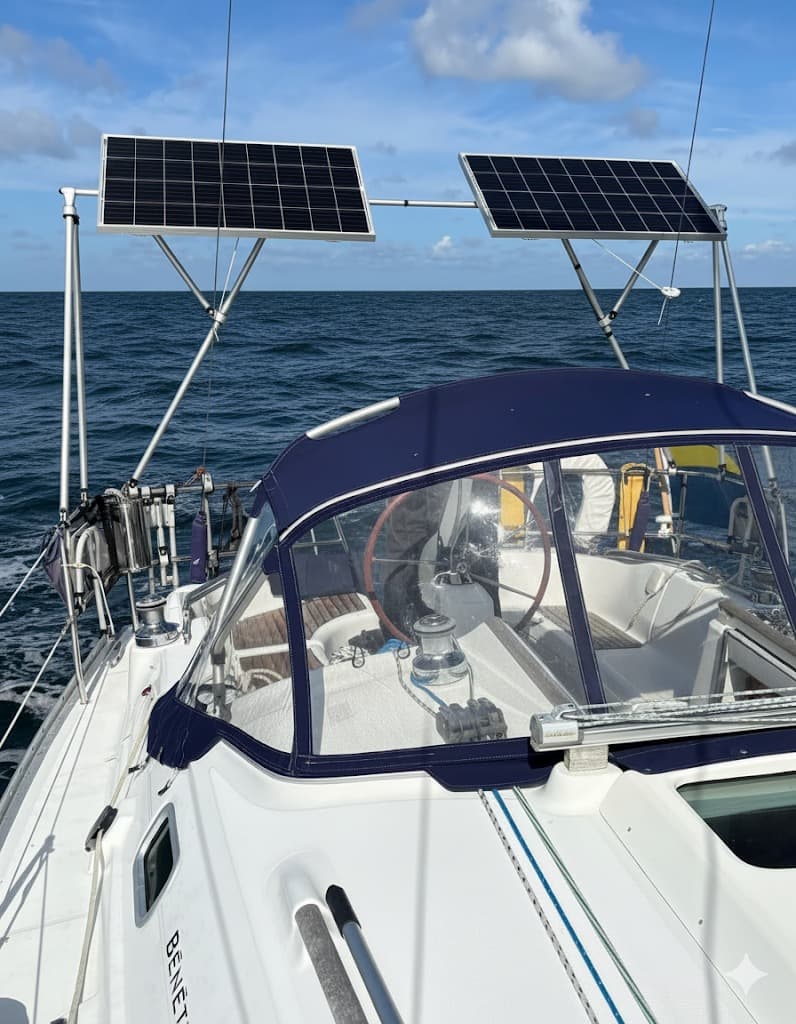
An arch-mounted solar array moves charging aft, keeps the deck clear, and gives you a cleaner path to reliable battery power underway and at anchor. The catch is that the arch only works when the panel, the structure, and the boat’s real cruising load all line up.
Why the stern arch keeps winning
BoatUS has tracked a simple shift in owner priorities: boatbuilders are seeing stronger demand for solar panels that can silently charge batteries and run refrigerators, freezers, and lights. That demand is tied to a familiar boatyard headache as well, because a dead battery is still common on boats that sit idle for weeks, and a small solar panel can prevent that kind of flat-start surprise. For cruising boats, the appeal is quiet, self-contained charging that keeps the boat ready to go.
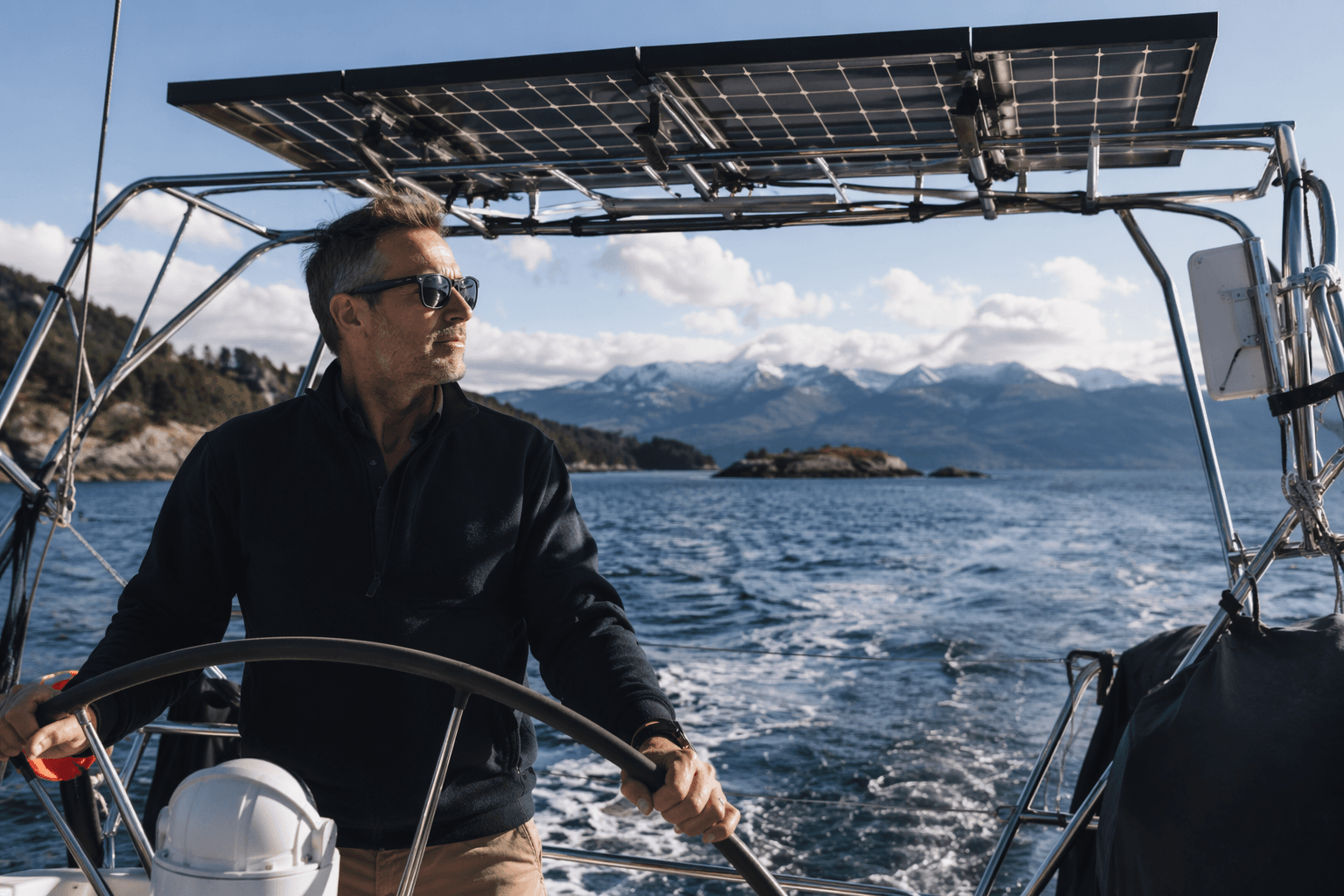
The stern dinghy-davit arch is one of the most effective places to mount panels, and that fits the way many sailboats are actually laid out. The stern is often the only area that can take solar without fighting the coachroof, boom sweep, or foredeck traffic. But that same zone is also where shade from sails, the mast, the boom, dodgers, biminis, and davits can erase output fast, so placement matters as much as panel wattage.
Choosing the panel for the boat you actually sail
BougeRV’s lineup shows the tradeoffs clearly. The 200W N-Type fiberglass model is aimed at larger sailboats and longer trips, while the 100W N-Type option makes more sense when space is tight or the arch is short. The range also includes additional fiberglass and bifacial variants, which gives owners more room to match panel construction to the shape of the stern and the way the boat is used.
BougeRV lists a 25 percent conversion rate, ETFE coatings for durability and self-cleaning, and dual fiberglass layers intended to improve impact resistance and reduce cracking in rough conditions. Those details matter on a boat because a marine panel does not live on a static roof. It lives in motion, in spray, with vibration, flex, and the occasional bump that can punish weaker builds.
Battery planning matters just as much as the panel itself. Some of these panels can support 12V, 24V, or even 48V charging through series wiring, which pushes the setup beyond simple trickle charging and into the kind of output that can matter on a liveaboard or passagemaking boat. A 100W panel may be enough to maintain a battery bank or cover light loads, but a 200W panel makes more sense when the boat is running more than the basics and the owner wants more reserve.
Mounting strength is part of the power system
An arch-mounted array is only as good as the structure holding it. On a sailboat, the arch has to carry the panels, survive continuous vibration, and keep its shape when the stern is working in waves or when the boat is under sail. If the mounting is flimsy, the panel stops being an energy solution and starts being a handling problem, especially when the installation shares space with dinghy davits or other stern hardware.
That is where the practical mistakes show up. If the panel blocks davit use, steals cockpit clearance, or ends up where the boom and sails regularly shade it, the owner has paid for watts that never arrive. If the arch is not planned around the boat’s actual geometry, the system can look clean in the marina and disappoint the first time the boat heels, the sun angle drops, or the dinghy comes off the davits.
The bigger energy picture on a cruising yacht
A 2025 Sustainability paper from Istanbul Technical University, by Hamdi Sena Nomak, İsmail Çiçek, Clifford Burgess, and Tim Murphy, modeled a 12.5-meter sailing yacht using solar panels, wind turbines, hydro-generation, and a regenerative propeller. In two representative 24-hour voyages, the system sustained propulsion and hotel loads entirely from onboard renewables, while battery state of charge stayed above 28 percent to 46 percent.
That same study also examined an emergency calm scenario in which the yacht could motor for four hours at 5 to 6 knots using stored energy, with solar input extending the range. The International Maritime Organization has targeted cutting CO2 emissions by 50 percent by 2050 relative to 2008.
What to get right before you drill
A good arch install comes down to a few practical checks that are easy to overlook when the focus is only on panel wattage:
- Verify that the panel clears the boom, sails, and davits through the range of motion the boat actually sees.
- Match the panel size to the stern structure, especially if the arch will carry a 200W module instead of a smaller 100W unit.
- Plan around shade from the mast, boom, dodgers, biminis, and any dinghy gear already living aft.
- Choose the wiring layout for the battery bank you are trying to support, not just the panel number on the box.
- Use the arch to keep the deck open for sail handling, boarding, and day-to-day cockpit use.
This article was produced by Prism’s automated news system from verified source data, official records, and press releases, then run through automated quality and moderation checks before publishing. The system is built and supervised by the people who set the standards it runs under. Read our full AI policy.
Did this article answer your question?