BenDoesSailing weighs solar charging for 48-volt propulsion and 12-volt house banks
Mixed-voltage solar on a cruising boat gets tricky fast, and BenDoesSailing’s 48-volt propulsion bank plus 12-volt house setup shows why the charge path matters more than the panel count.
The real puzzle is not solar, it is voltage management
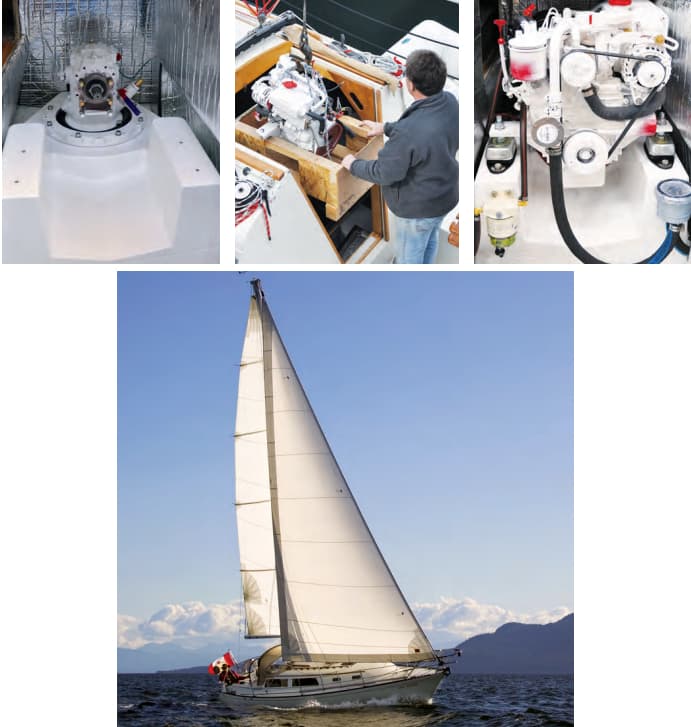
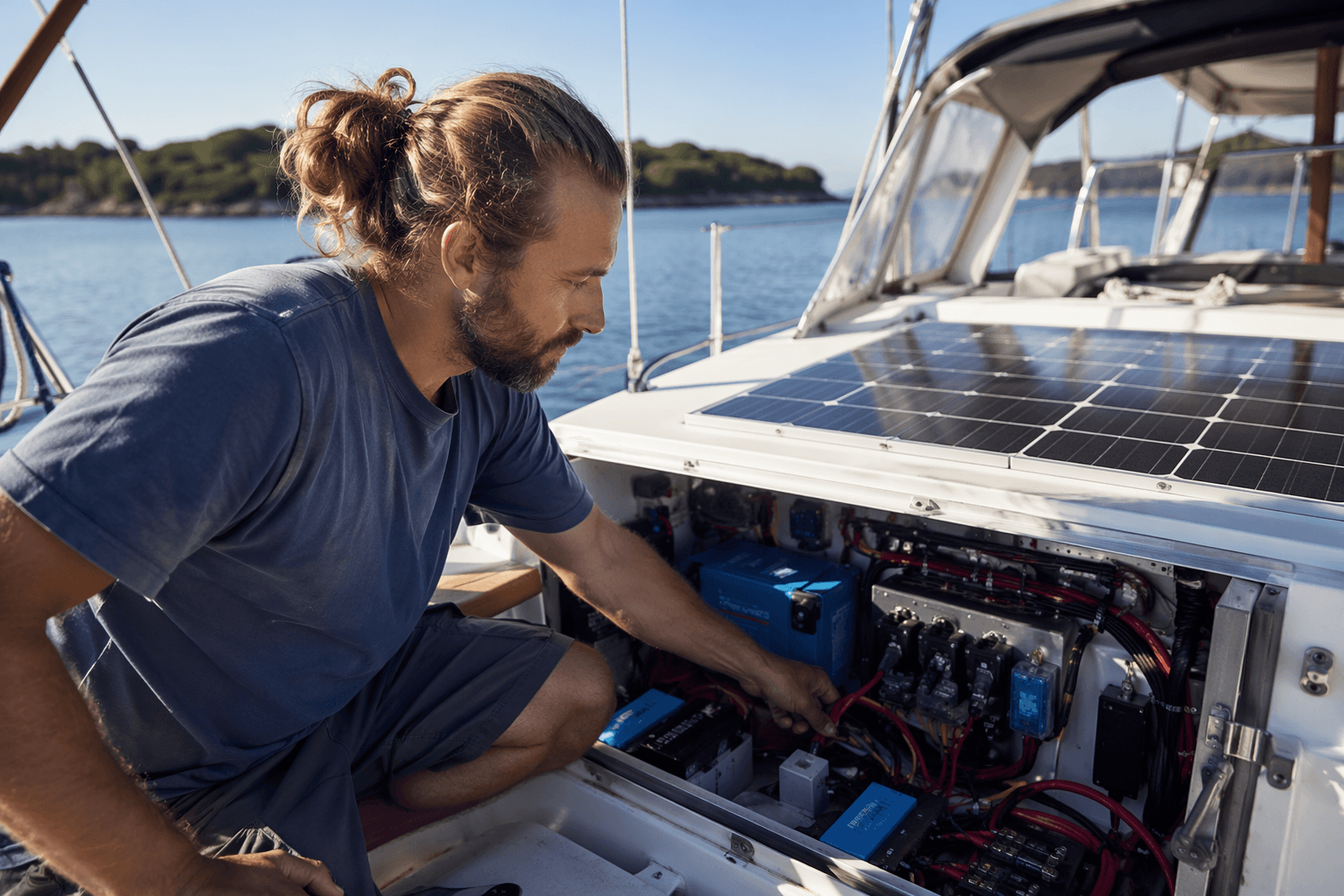
BenDoesSailing is staring at the kind of wiring problem that looks simple until you trace the cables. His boat has an inboard electric propulsion system on a 48-volt bank and a separate 12-volt house bank, and he wants solar to support both without turning the whole electrical system into a guessing game. That is the real tension here: not whether solar is useful, but how to make it work cleanly when propulsion and house loads live on different voltages.
He is also thinking in practical numbers, not wishful ones. His current idea is two 400-watt panels, about 800 watts total, with the 48-volt propulsion side taking priority because off-grid endurance depends on keeping the drive system alive first and then feeding the house bank in a sensible way.
Start with the outcome, not the hardware
The cleanest advice in the thread comes from a question that cuts through the jargon: what outcome do you actually want? That matters because the answer changes the entire architecture. If the propulsion bank is the main energy sink and the house bank is secondary, the system can be organized around the 48-volt side first, then stepped down to 12 volts with a 48-to-12-volt DC-DC charger.
That is a very different design from trying to treat both banks as equals. In a mixed-voltage boat, solar can be made to support both banks, but only if you decide whether the panels are feeding one primary battery system, two separate systems, or one system through a converter. Skip that decision and the boat quickly becomes a maze of half-compatible controllers, unclear charge priorities, and batteries that never seem to land in the same state of charge.
The branch point: one array, two banks, or two separate charging paths
This is where the practical decision tree starts. If you want the 48-volt propulsion bank to be the anchor of the whole system, a solar array aimed at that bank plus a DC-DC charger for the 12-volt house side is the most straightforward logic in the conversation. If you want both banks to charge directly from solar, then you are talking about either separate panel groups, separate regulation, or a controller strategy that is explicitly built to handle the split.
A boost MPPT controller, a dual-output MPPT, or a MultiPlus-style solution all came up in the discussion because each one solves a different part of the puzzle. But they are not interchangeable answers. A controller choice has to match the bank voltage, the battery chemistry, and the actual power flow you want on the boat, or the system will waste energy or behave unpredictably when the sun is doing what the sun does best, changing constantly.
Why the Victron terminology keeps showing up
The Victron product family makes the forum thread easier to decode because it lays out the same categories sailors keep bumping into. The Orion-Tr Smart DC-DC charger is designed for dual-battery systems and can be used in 12-, 24-, or 48-volt systems, which is exactly why it comes up in mixed-bank conversations like this one. It is the kind of tool you reach for when the boat needs a controlled handoff between voltages, not a direct solar shortcut.
Victron’s solar charge controllers are also aimed at mobile and off-grid use, and the SmartSolar MPPT RS line is designed for large series PV arrays charging 48-volt battery banks. That matters because a 48-volt propulsion system changes the solar conversation: the array and controller need to be comfortable living in that higher-voltage world. Meanwhile, the MultiPlus is a combined inverter and charger in one package with adaptive charging and PowerAssist, which explains why it gets mentioned in the same breath even though it is not simply a solar splitter for two separate DC banks.
What usually goes wrong on boats like this
The biggest mistake is assuming that one pile of panels can be wired into both banks without first deciding who gets priority. That leads to charging imbalance, because one bank can end up favored while the other is left underfed, especially when the house loads keep pulling at 12 volts all day. It also creates the sort of mystery drain sailors hate, where the system looks alive but never quite reaches a full, stable charge on either side.
Another common trap is buying hardware by name instead of by architecture. A dual-output label sounds convenient, a boost MPPT sounds clever, and an inverter-charger sounds powerful, but each one belongs in a different part of the electrical puzzle. On a mixed 48-volt and 12-volt boat, the wrong shortcut can mean extra conversion losses, awkward charging behavior, or gear that is working harder than it should just to keep the lights on.
A useful precedent from the early electric-boat crowd
This is not a brand-new problem. A Victron community example from around 2020 described a sailboat with a 12-volt house bank, a planned 48-volt electric engine, and six 100-watt solar panels. That old layout looks a lot like the same question BenDoesSailing is asking now: how do you keep a traditional house bank alive while building around an electric propulsion system that wants a completely different voltage?
The fact that the thread drew replies within days shows how active the discussion has become as electric auxiliary propulsion spreads through small cruising boats. The boats are changing, but the underlying DIY instinct is the same: keep the system understandable, keep the charge paths honest, and do not let convenience outrun the wiring diagram.
The practical way to think about the build
If the propulsion bank is the priority, start there and treat the 12-volt house bank as a downstream load that earns its power through a controlled conversion path. If both banks need direct solar support, isolate the charging paths so each bank gets regulation that matches its voltage and battery type. And if you are still trying to force one panel array to do everything at once, stop and redraw the system before the boat teaches you the hard way.
That is the lesson hiding inside BenDoesSailing’s setup. Once a cruising boat starts carrying both a 48-volt drive and a 12-volt house system, solar stops being a simple add-on and becomes a routing decision, the kind that decides whether passage morning feels calm and self-reliant or like a rust-colored panic over which battery is actually getting charged.
This article was produced by Prism’s automated news system from verified source data, official records, and press releases, then run through automated quality and moderation checks before publishing. The system is built and supervised by the people who set the standards it runs under. Read our full AI policy.
Know something we missed? Have a correction or additional information?
Submit a Tip