Best cable steering kits for smoother hands-free boat control
A good cable-steering retrofit starts with fit, not flash. The right NFB kit can cut wheel torque and helm fatigue without a full rebuild.
A stiff wheel can turn a good run into a shoulder-burning one fast. If you are trying to keep a cable helm smooth, predictable, and easier to live with, the winning move is the kit that matches your boat’s shaft, cable run, and wheel size instead of forcing a full steering overhaul.
ABYC treats steering as a standards issue, with separate references for manual and assisted mechanical steering systems, cable-over-pulley steering for outboards, and manual and assisted hydraulic steering. The U.S. Coast Guard’s 2024 recreational boating report logged 556 fatalities, 3,887 incidents, and 2,170 nonfatal injuries, while alcohol was the leading known contributing factor in fatal accidents at 92 deaths.
1. SeaStar Safe-T II NFB rotary
This is the strongest all-around retrofit if you want a straightforward mechanical upgrade that cuts wheel fight without changing the boat’s basic layout. The Safe-T II NFB rotary is an ultra-smooth, 3-turn system with a standard 3/4-inch tapered steering shaft, suitable for non-power-assisted outboards up to 100 hp, boats up to 24 feet, and single-configuration top speeds up to 50 mph.
2. SeaStar NFB rack steering
Pick the rack setup when you want a single-station package that sits neatly behind the dash and accepts a larger wheel. The NFB rack steering system fits most single-station boats with a single non-power-assisted outboard engine up to V-6 or sterndrives, and it accepts steering wheels up to 16 inches in diameter.
3. SeaStar XTREME mechanical steering
This is the choice for boats where the main complaint is effort and lost motion, not just basic compatibility. XTREME is the smoothest and lowest-effort mechanical helm in the marine industry, and its cable design reduces backlash and lost motion compared with a standard steering cable, with quick-connect features that make installation easier.
4. VEVOR cable steering kit
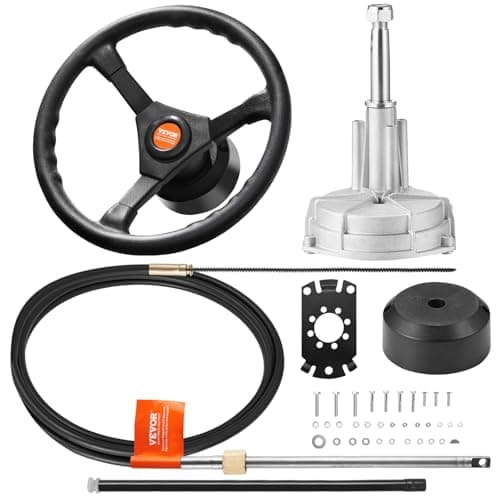
VEVOR belongs on the shortlist when your boat already lines up with the common retrofit geometry: a standard 3/4-inch tapered shaft, a 12- to 16-foot cable run, and a wheel around 13.5 inches. It restores responsiveness and reduces fatigue without a redesign, but only if you verify cable length against the rudder or cylinder setup before you buy.
5. Yaofreeland cable steering kit
Yaofreeland sits in the same practical lane as the other standard-fit kits, which makes it worth considering if you are replacing tired hardware on a small or mid-sized boat. Cable length and wheel size matter here too, because the wrong match can limit travel and make the install harder than it needs to be.

6. QYMOPAY longer-cable option
QYMOPAY is the longer-cable option when reach is the real problem, not just steering feel. It makes sense when a standard-length kit would leave you short on routing path or flexibility.
7. Misakomo longer-cable option
Misakomo is the same kind of longer-cable retrofit for boats that need more room to route cleanly. It pays off when the helm layout demands extra length, but the same rule applies across the board: measure the routing path carefully, and stay with the steering style the boat manufacturer originally installed.
SeaStar installation guidance warns to stay with the steering style the boat was built with, and not to switch from dual-cable steering to single-cable steering, because that can create an unsafe boating condition.
This article was produced by Prism’s automated news system from verified source data, official records, and press releases, then run through automated quality and moderation checks before publishing. The system is built and supervised by the people who set the standards it runs under. Read our full AI policy.
Did this article answer your question?