Breathable PVC turnbuckle cover stops snags and corrosion
Tape hides the snag, but it can also starve stainless of oxygen. A shaped PVC boot solves the rough edges without turning the fitting into a corrosion trap.
Tape quiets a turnbuckle until it becomes a little moisture trap. Gregg Nestor’s June 3, 2026 guide makes the better fix feel obvious once you see it: protect the crew and the headsail from snagging hardware, but do it in a way that still lets stainless breathe.
Why taped turnbuckles can backfire
Most sailors have wrapped a turnbuckle at some point. It keeps cotter pins, rings, and threaded bits from chewing up a sail or finding skin at the worst possible moment, and on a messy foredeck that feels like common sense. The problem is that tape does not just smooth the fitting, it can seal it off.
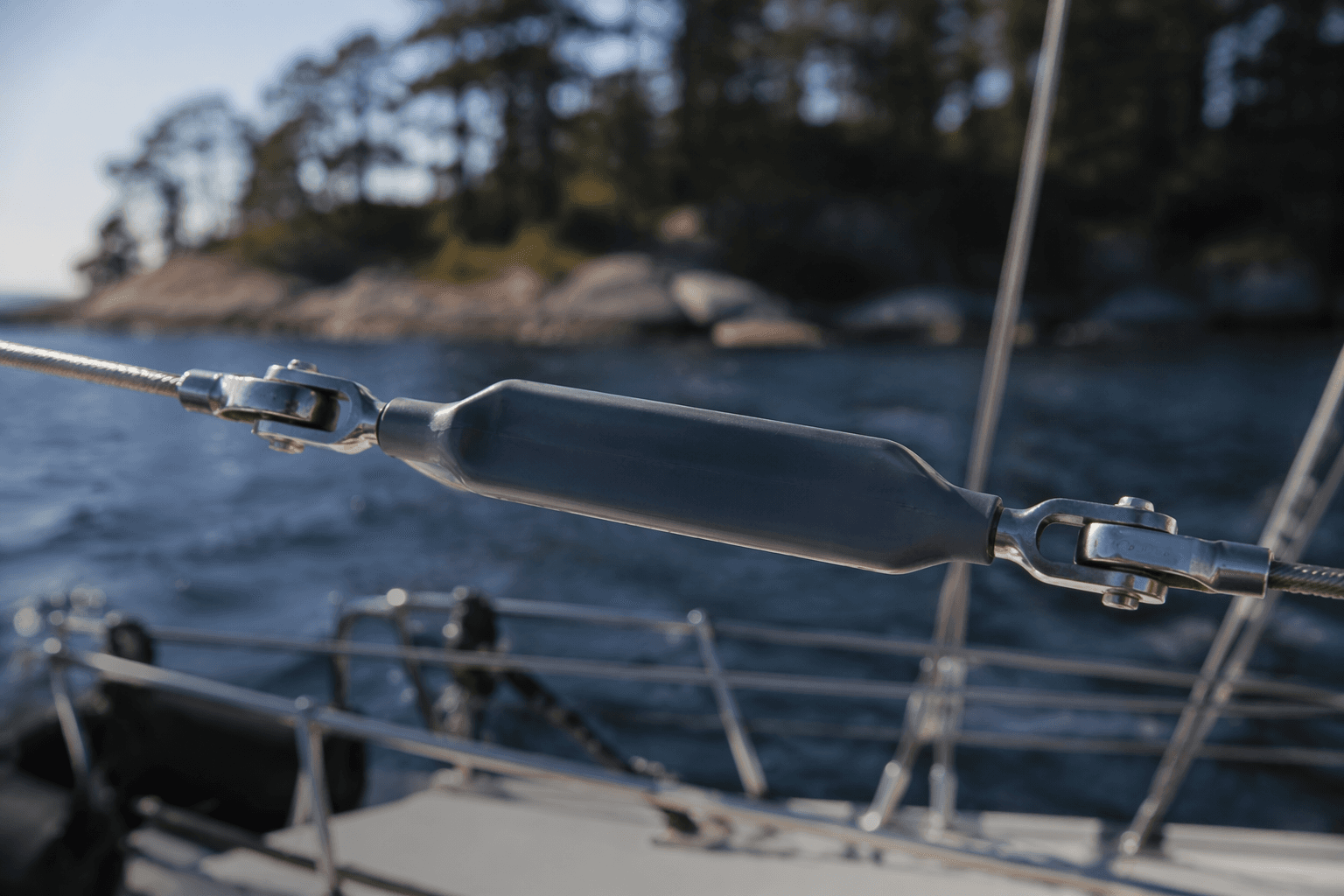
Nestor’s point is the hidden chemistry behind that habit. Stainless steel relies on oxygen to maintain the thin oxide layer that helps protect it from corrosion. When you wrap a turnbuckle tightly, you can create a crevice environment that blocks oxygen and traps moisture against the metal. The cover solves one problem, the snag hazard, while quietly creating another, the kind of corrosion that likes to start where you cannot see it.
That is why the best answer is not more tape. It is a cover that is rigid enough to keep hardware and sailcloth apart, but open enough that the fitting is not walled in. In other words, a good turnbuckle cover should behave like gear, not like shrink wrap.
The shape of the fix
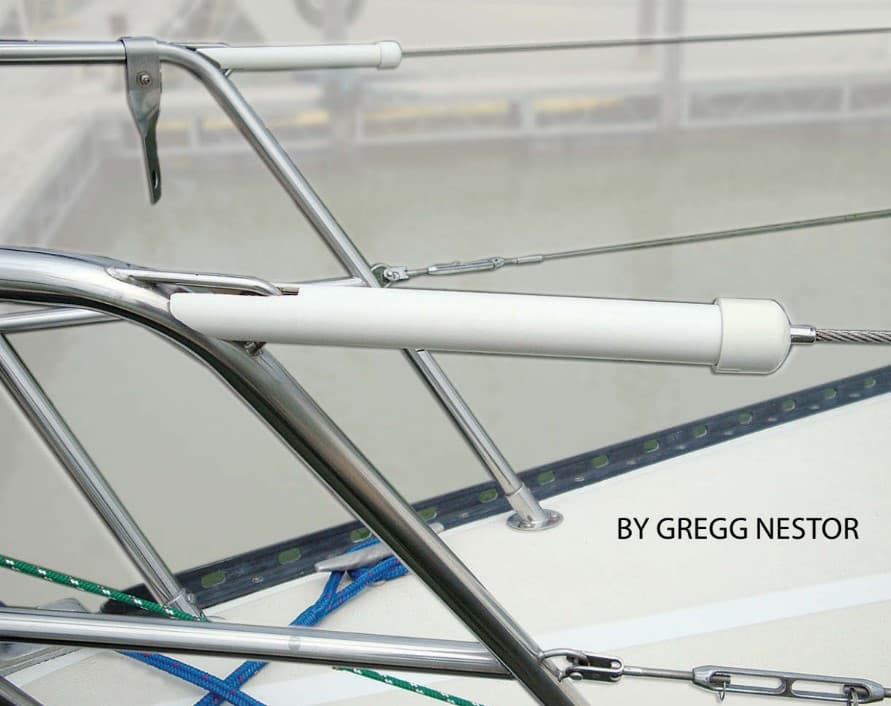
The version Nestor describes is beautifully plain: a custom boot made from 3/4-inch PVC pipe. It is the sort of workshop solution that feels more like boat sense than product design, because it is tailored to the actual geometry of the boat instead of trying to force every installation into the same mold.
A friend fabricated Nestor’s example with a Dremel tool, though a band saw or coping saw would also do the job. The important part is not the tool, it is the fit. Bow and stern pulpits vary from boat to boat, so the cover has to match the angle and the length of the specific installation. That custom fit is what lets the boot stay put without needing a sealed wrap or a jungle of fasteners.
The result is a hard shell that guards the rough bits and leaves the metal open to air. It is simple enough to build in an afternoon, but more thoughtful than the usual tape-and-forget approach because it treats corrosion as part of the problem, not an afterthought.
How the PVC boot is built
The process starts with the pipe held beside the turnbuckle so you can see the boat’s actual angle, not a guessed one. Mark where the pipe meets the pulpit, then cut a matching slot on the top and bottom. That opening is what lets the cover follow the line of the rig rather than fighting it.
From there, the builder drills and glues an end cap so the piece fits snugly over the swage fitting. That cap is doing practical work, not decorative work. It gives the cover a finished end, helps locate it on the hardware, and makes the boot sit where it belongs instead of wandering around the wire.
Once the pipe is shaped to the exact geometry of the boat, the boot slips onto the lifeline and the turnbuckle goes back in place. Nestor notes that friction and the slot geometry are what keep it seated. There is no mystery to that hold, just a fit tight enough to resist movement and loose enough to install without a struggle.
If you are building one yourself, the logic is straightforward: 1. Hold 3/4-inch PVC pipe beside the turnbuckle and pulpit. 2. Mark the angle where the pipe meets the installation. 3. Cut matching slots on the top and bottom. 4. Drill and glue on an end cap to fit over the swage fitting. 5. Slip the boot into place on the lifeline and reattach the turnbuckle.
That sequence matters because the piece is custom, not generic. The cover only works if it follows the actual line of the rig and leaves enough room for the hardware it encloses.
Why rigidity matters as much as breathability
A soft wrap can cushion hardware, but it can also collapse, chafe, and trap grime. The PVC boot solves those tradeoffs by staying rigid. That rigidity keeps the cover from bunching up against the sail and from exposing sharp points every time the boat loads up.
At the same time, the design stays open enough to avoid sealing the fitting in a damp pocket. That is the hidden advantage over taped covers. You still get a clean exterior for sails and hands, but you do not create the dead-air, moisture-heavy environment that stainless dislikes.
Nestor’s larger point reaches beyond one clever accessory. If a protection method makes corrosion more likely, the answer is not just to cover the problem harder. It is to redesign the protection so air, access, and maintenance remain possible.
A useful approach for standing rigging too
The concept is not limited to the bow or stern pulpit. Nestor says the same idea works on standing rigging turnbuckles as well, which makes the project useful anywhere you need a chafe guard that can stand up to motion and weather. That matters because standing rigging sees constant load, and anything that sits there has to handle vibration, spray, and the occasional careless brush of a hand or sail.
That is what makes this fix so appealing in the first place. It does not ask you to choose between protecting the crew and protecting the hardware. It does both, with a shape tailored to the boat and a design that leaves stainless exposed to the air it needs. For a small piece of gear, that is a smart answer to a long-standing annoyance.
The next time a wrapped turnbuckle looks neat but feels wrong, the better solution is the one that stays visible in the right way: a breathable PVC cover that blocks the snag without sealing in the corrosion.
This article was produced by Prism’s automated news system from verified source data, official records, and press releases, then run through automated quality and moderation checks before publishing. The system is built and supervised by the people who set the standards it runs under. Read our full AI policy.
Know something we missed? Have a correction or additional information?
Submit a Tip