Build a waterproof windlass pendant switch for easier anchor handling
A small pendant switch can change everything at the bow: better sightlines, freer movement, and safer hands-on control when the anchor starts to run.

The tiny upgrade that changes anchor handling
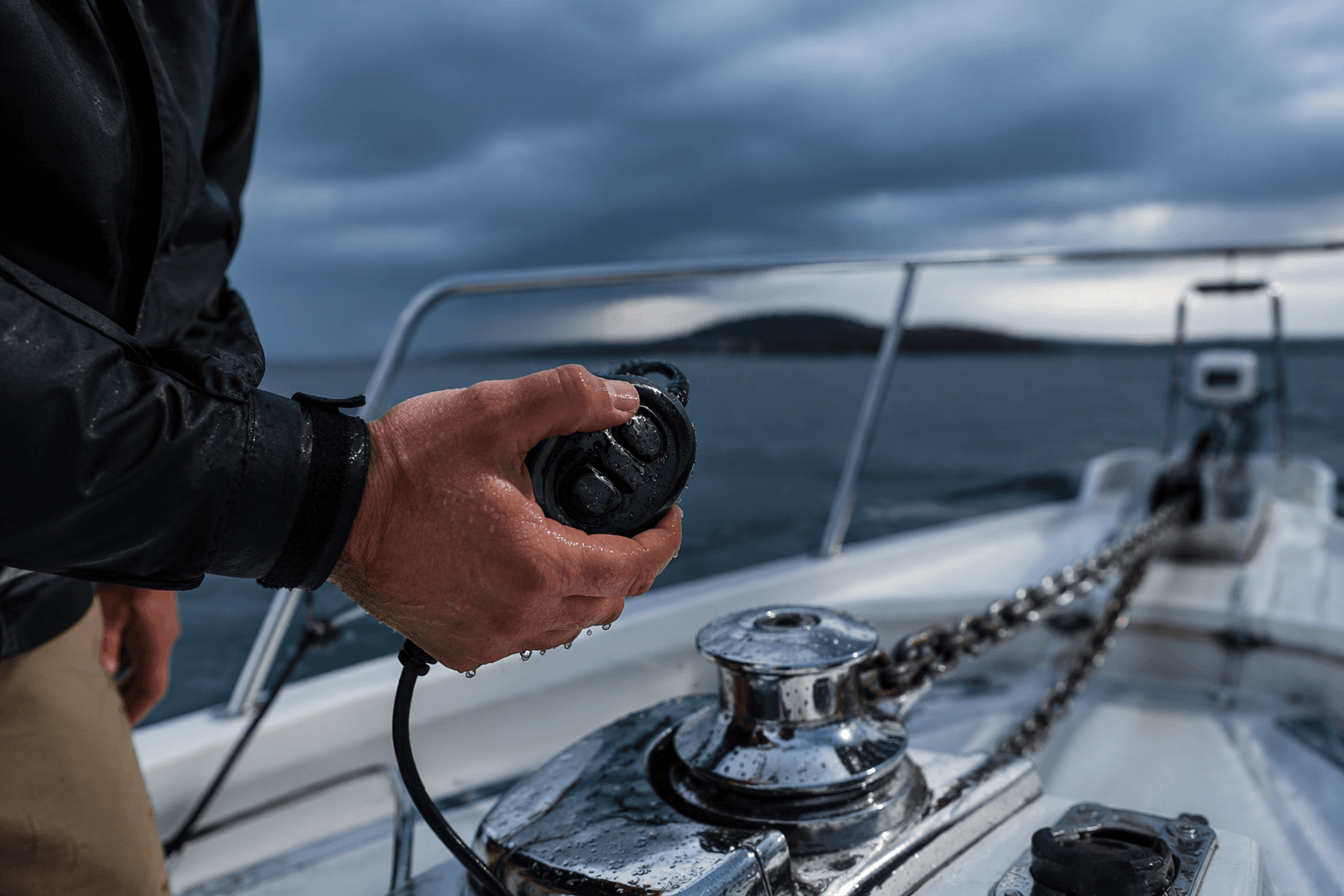
The first time the windlass matters most is usually the moment you least want to be trapped in one spot. Norm Johnson’s solution was a pendant switch, and what makes it compelling is how much it changes at the bow: you can move with the rode, keep your eyes on the anchor, and shift control without planting yourself on a fixed foot switch.
Johnson says he originally rigged a temporary switch-on-a-wire because he could not decide where to drill for the foredeck foot switch. That improvised setup turned into a lesson in how anchor work really happens. When the chain is coming up or the anchor is being set, mobility and sightlines matter as much as raw switch convenience.
Why the pendant beats the awkward foot-switch compromise
A deck foot switch sounds simple until you try to place it. Put it too far aft and it is clumsy; put it too close to the pulpit or roller and you risk standing in the wrong place at the wrong time. Johnson’s experience is the same one many sailors run into: the best control point is not the one that looks neat on paper, it is the one that lets you stay balanced while handling the rode.
That is why current windlass products keep emphasizing hands-free operation from the foredeck. Lewmar describes its deck foot switch as a sealed, marine-grade control meant for wet conditions, and Schaefer Marine says deck-mounted foot switches let you start and stop the windlass while keeping both hands free to handle the slack end of the line. Those descriptions match the basic truth Johnson discovered the hard way: at the bow, your hands are usually busy and your feet need to stay adaptable.
When commercial pendant switches fail, the fix gets personal
Johnson did not set out to invent anything. He bought commercial pendant switches, then watched them corrode internally after only months of use. That failure changed the project from a convenience upgrade into a durability problem, and that is where the article becomes especially useful for DIY sailors.
Instead of replacing fragile parts over and over, he built his own waterproof pendant from ordinary hardware-store and electrical-store pieces. The parts list is refreshingly practical: PVC fittings and glue, Teflon tape, 3-conductor 12-gauge utility cord, a strain-relief fitting, an SPDT momentary switch with a center-off position, a rubber boot, shrink tubing, and anti-corrosion compound. The result was a control that has worked for 15 years, which is exactly the sort of long-term outcome that makes a weekend project worth considering.
How the homemade pendant is put together
The value here is not just that Johnson made a replacement. It is that he built one with the right priorities for life on deck: keep water out, protect the conductors, and make the switch easy to trust when spray and salt are part of the job.
A sensible retrofit follows the same logic:
1. Choose a switch that returns to center-off, so the windlass stops when you release it.
2. Protect the wiring entry with strain relief, because repeated movement at the bow will work any loose connection.
3. Seal the housing with PVC parts, glue, Teflon tape, shrink tubing, and a rubber boot.
4. Use anti-corrosion compound anywhere the wiring and terminals can be exposed to moisture.
5. Test the control where you can reach it quickly with gloves on and still see the anchor, the rode, and the roller.
That setup is what gives a pendant switch its edge over a fixed switch location. You are not fighting the foredeck geometry anymore; you are bringing the control to your hand while you work.
Why a spare pendant is the smartest part of the system
Johnson did something even more revealing than building the first pendant. He made a second spare and planned to install it in parallel so a backup could be swapped in instantly if the primary failed. That is the kind of detail that separates a clever one-off from a cruising-grade system.
If the pendant is critical to handling the anchor, then failure at the bow is not a minor annoyance. It becomes a safety and convenience issue the moment you need to stop or start the windlass fast. A parallel spare means you are not rebuilding electronics in a sloppy anchorage or waiting for a replacement while your anchor gear sits offline.
Retrofit choices, deck holes, and whether this is a weekend project
The retrofit question is really about how much you want to modify the boat. Johnson’s own path started with uncertainty over drilling location, which is why a temporary switch-on-a-wire made sense before he committed to a permanent installation. If your foredeck layout already feels cramped, a pendant can be the cleaner answer because it reduces the pressure to place a permanent foot switch in one exact spot.
At the same time, every control point you install near the bow has to justify its own deck penetrations. A later Good Old Boat windlass remote piece notes that some vendor remotes are waterproof to 1 meter for 30 minutes, and it also points out the obvious maintenance truth: every hole in the deck is a potential leak path. That makes sealing and serviceability part of the project from day one, not an afterthought.
The current market gives you options, but not all of them solve the same problem
Modern marine retailers now sell a wide range of windlass-control choices, including wired remotes, wireless remotes, deck foot switches, toggle switches, and guarded rocker switches. Brands commonly stocked for anchor windlass parts and accessories include Lewmar, Maxwell, Quick Windlass, Harken, Lofrans, and others, with waterproof and water-resistant options showing up across the category.
That variety is useful, but it also clarifies why Johnson’s pendant still matters. A wireless fob may be convenient from the cockpit, and a guarded rocker may be neat at a helm station, but neither automatically solves the bow-end problem of moving freely while you manage chain and line. The pendant does, and that is why the homemade waterproof version has lasted so long in a place where saltwater usually wins.
A small control with outsized payoff
Issue 98 of Good Old Boat, the Sept/Oct 2014 issue, framed Johnson’s article as a simple solution, and that is exactly right. The upgrade is modest in size, but it changes how your body works at the bow: you are no longer pinned to a single switch point, your sightlines stay open, and your hands stay free to manage the rode as the anchor comes up.
That is the heart of the story. The best pendant switch is not just waterproof, and it is not just cheaper than repeated replacements. It is the one that lets you handle anchor work the way it actually happens, with salt on the deck, movement underfoot, and no room for a control that only works when everything else is calm.
This article was produced by Prism’s automated news system from verified source data, official records, and press releases, then run through automated quality and moderation checks before publishing. The system is built and supervised by the people who set the standards it runs under. Read our full AI policy.
Know something we missed? Have a correction or additional information?
Submit a Tip