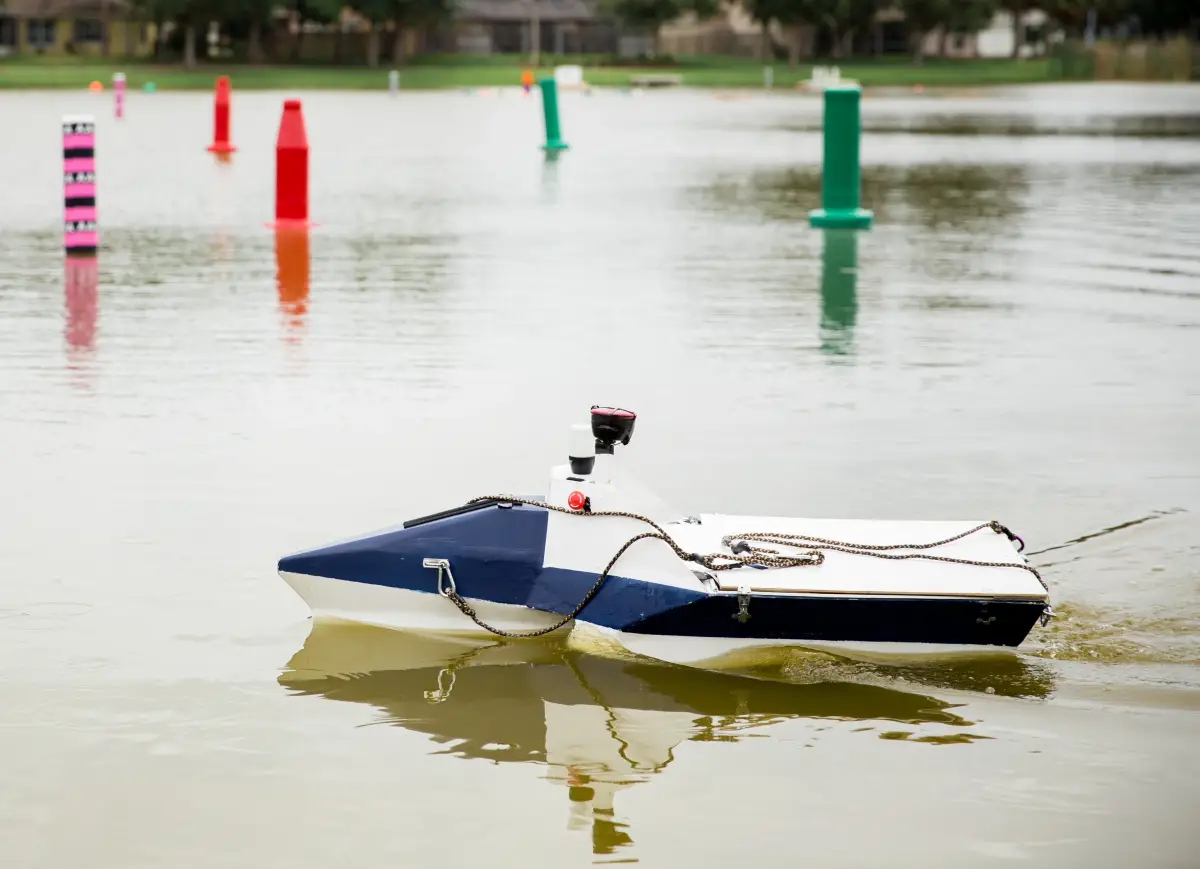
Builder Transforms 90s Jet Ski Into a Budget-Friendly Fishing Skiff
Joe Oceanside gutted a junk 90s jet ski hull and rebuilt it as a micro skiff with a 20 hp outboard; the build exposes the real gap between a cheap hull and genuinely safe water.
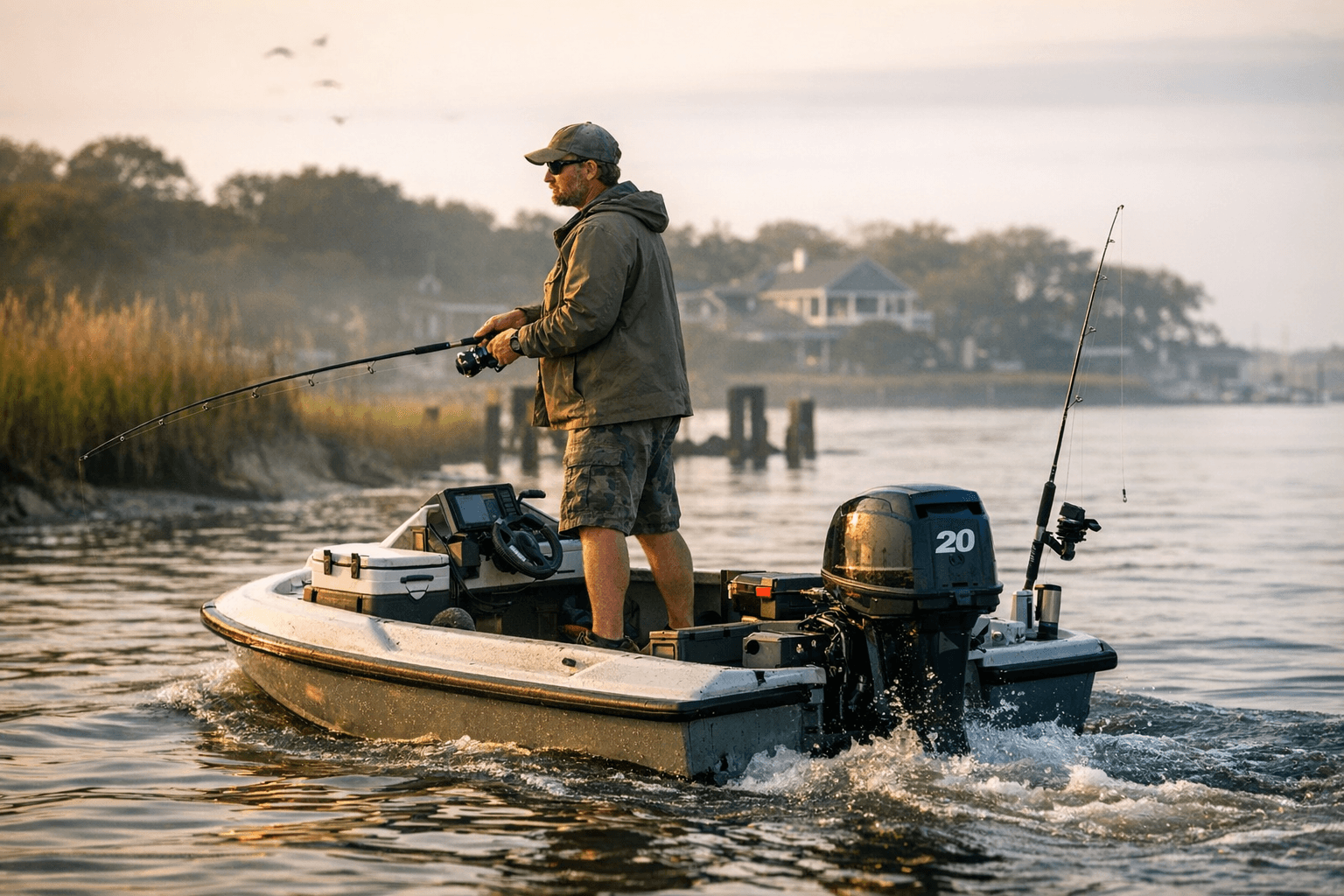
Strip the engine, gut the deck, bolt on a transom: what sounds like a weekend afternoon is actually the most structurally consequential decision a DIY builder can make, and Joe Oceanside's waverunner-to-fishing-skiff conversion shows exactly why. His build, which has drawn widespread attention on TikTok under the handle @joeoceanside, takes a 1990s-era jet ski hull from junk status to functional micro skiff, and the specific choices he made are worth studying as carefully as the viral clip itself.
Oceanside rebuilt the boat from the hull up, ditching the original jet-drive propulsion entirely and retrofitting a 20 hp outboard in its place. That single swap is where most of the engineering risk lives. A 1990s PWC hull was designed around internal jet propulsion, which means the transom was never engineered to bear outboard torque loads. Any replication of this build needs a properly glassed-in transom reinforcement, typically two layers of marine-grade plywood sandwiched in biaxial fiberglass cloth, before a motor bracket goes anywhere near it. Skip that step and the transom delaminates under load, often at speed and far from shore.
Stability is the next real conversation. Jet ski hulls are narrow and round-bottomed by design, built for a rider straddling the centerline at speed rather than an angler standing off-center casting to structure. Oceanside addressed this directly by fitting bait boxes along the gunwales, which serve a dual purpose: storage and low ballast that widens the effective weight base. He also added a central handhold bar specifically to give a standing angler something to grab when the hull rolls. These are smart fixes, but any builder copying this project should calculate the vessel's metacentric height with gear and an angler aboard before the first real-water launch. Adding 40 to 50 pounds of closed-cell foam in the bow and under any added deck panels dramatically improves swamped-hull buoyancy, which matters enormously on a hull this narrow.
Steering deserves equal attention. PWC hulls have no skeg, and the original jet drive used thrust vectoring for directional control. With an outboard installed, the hull tracks poorly at low speed, particularly in any kind of beam wind or current, which is precisely the condition a solo angler encounters when drifting a flat. A small fixed skeg bonded to the keel aft of amidships, roughly 4 to 6 inches deep, dramatically improves tracking without affecting plane performance. Oceanside's addition of a remote-controlled trolling motor solves much of this in practice, using the electric drive for precise maneuvering while the outboard handles transits.
The nonslip deck Oceanside laid down is not a cosmetic detail. PWC decks are slick fiberglass, and a wet surface combined with a rolling hull is a man-overboard scenario waiting to happen. Peel-and-stick nonslip mat costs under $40 for a full sheet and is arguably the highest-value safety dollar in this entire build.
As a practical bill of materials, a builder replicating this project should budget for the outboard motor bracket and transom reinforcement, closed-cell foam for buoyancy, a sheet of marine plywood for a casting deck, nonslip surface, trolling motor mount, and whatever electrical runs the remote trolling system. The hull itself, the genuine budget win, can often be sourced from classifieds for little to nothing given how many 90s-era PWC engines have long since seized. The hardware, done correctly, is where the real spending happens. That ratio, cheap hull, real money on safety and structure, is the lesson Oceanside's build actually teaches, whether or not the video's comment section has caught up to it yet.
Know something we missed? Have a correction or additional information?
Submit a Tip