Student Competitions Drive Electric Boat Skills From Campus to Industry
The $1,500 Budget Warriors bracket at PEP proves university electric boat teams are solving the same constraints DIY sailors face; here's how to steal their techniques.
Wiring high-amperage DC from a lithium pack through undersized conductors is the fastest way to turn a promising electric conversion into a bilge fire. It's not a hypothetical; it's the exact failure mode that haunts DIY repowers when builders skip the fundamentals and jump straight to the motor controller. What's striking is that 57 student teams across 46 universities are currently working through exactly these problems under competition pressure, and the best practices they're developing are portable, documented, and increasingly available to anyone paying attention.
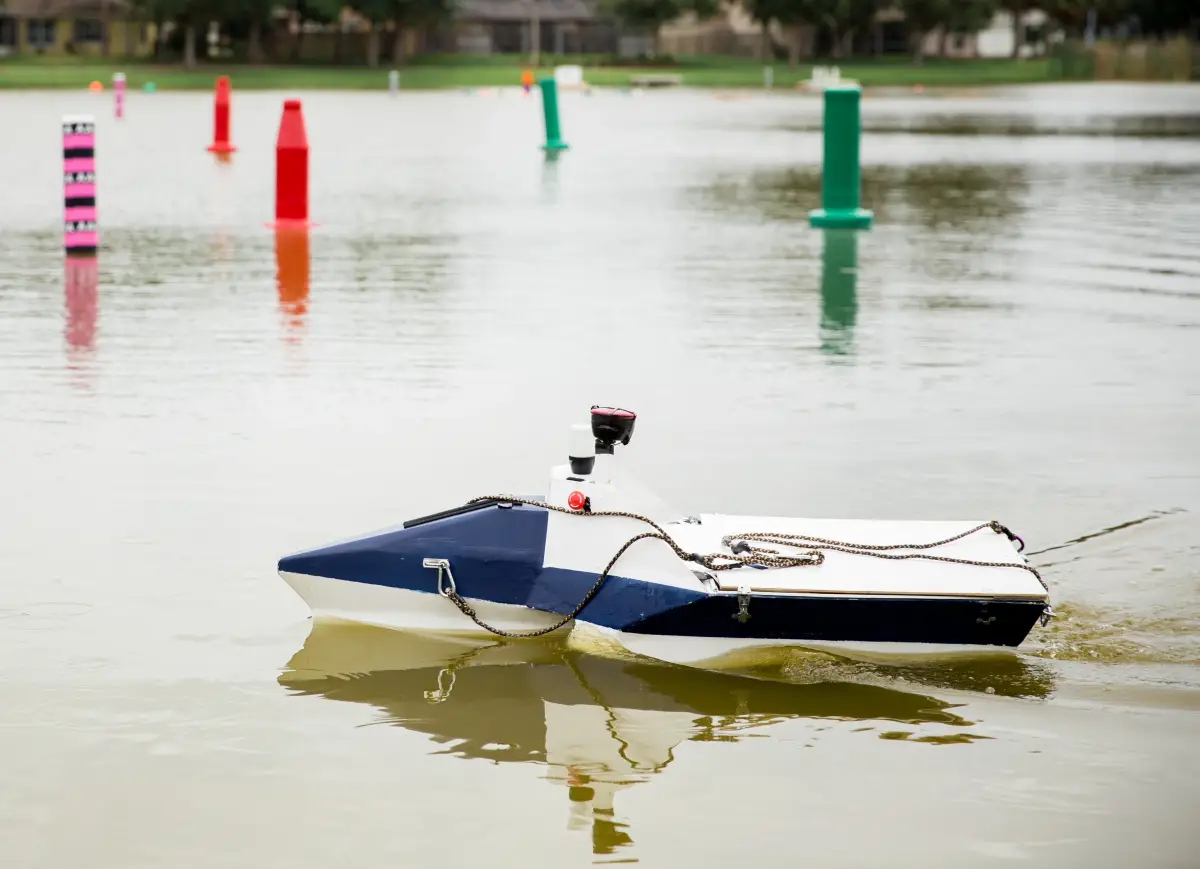
The competition ecosystem producing this knowledge runs from February through June in 2026. RoboBoat, managed by the nonprofit RoboNation, tasks teams with building fully autonomous electric vessels where once deployed, no human hand is on the controls. The 2026 theme was Storm Response, with tasks designed to simulate real-world applications: navigating debris fields, executing supply drops, and simulating fire suppression. Then in April, the Promoting Electric Propulsion competition takes the wheel. PEP's sixth running takes place April 14-16, 2026 at Portsmouth City Park in Virginia, with 46 universities fielding 57 teams across six divisions, a substantial increase on the competition's launch when a single university entered. Solar Splash follows in June, completing a season that spans autonomy, speed, efficiency, and endurance across the full range of disciplines the electric marine sector demands.
Why the Budget Warriors Division Is the Most Important Bracket in Marine Electrification
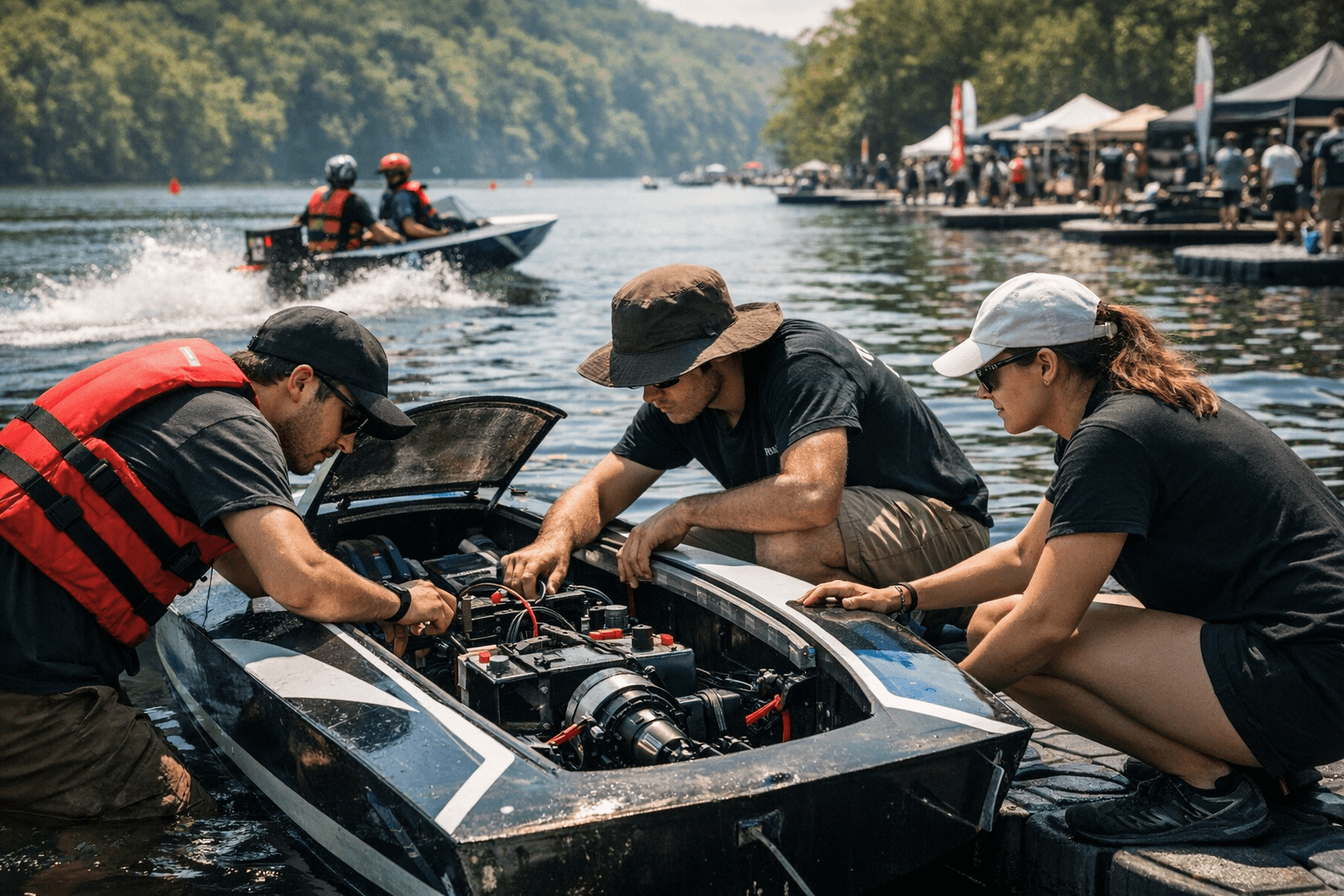
Most DIY sailors won't recognize the RoboBoat challenge as directly relevant to a 30-foot sloop conversion. But PEP's Budget Warriors division is something different. It caps total construction costs at $1,500, which isn't an academic constraint; it mirrors precisely the envelope most DIY builders are working inside when they're retooling a small tender or auxiliary electric outboard setup. At that price point, you cannot buy your way out of bad engineering decisions. Every BMS choice, every wire gauge call, every motor cooling strategy has to be correct on the first pass because there's no budget headroom for rework.
Dr. Steve Russell, who co-founded PEP with colleagues at ASNE and the Naval Sea Systems Command Carderock division, has been direct about the competition's purpose: students who build and compete gain real, recruitable experience in high-power electronics and naval systems. That's not incidental to the DIY community; it means the techniques being validated under this competition structure are being pressure-tested by people who understand the actual failure modes. The Office of Naval Research and the American Society of Naval Engineers aren't backing these programs for trophy ceremonies. They're building a talent pipeline, and the engineering discipline coming out of it is real.
What the Competition Season Actually Teaches (and What It Fixes)
The skills being developed across PEP and RoboBoat overlap directly with the gaps that sink most amateur electric conversions. Consider what a RoboBoat team has to solve before launch day: a fully autonomous hull running on battery power through a mission profile that includes sustained load variation, water ingress risk, and no onboard human to catch thermal events. That demands rigorous BMS configuration, proper fuse topology, and motor cooling that doesn't fail when the vessel is working hard. RoboNation's Alicia Gavin described the competition's workforce purpose directly, noting that students who compete are typically ready for employment on day one, having dealt with the complexity of real maritime autonomy challenges before graduation.
Compare that to the typical DIY approach: drop a trolling motor controller into a locker, run some 10-gauge wire to a group 27 AGM, and figure out cooling later. The failure modes are predictable. Voltage sag under load kills range estimates. Unprotected wiring creates fault paths. No thermal management means the motor controller throttles output precisely when you need it most in tight maneuvering. The university teams are solving these problems systematically because competition scoring punishes the same failures that punish sailors at the worst possible moments.
A Staged Electrification Roadmap: Monitoring Before Motors
The lesson from watching these competition programs isn't "go build an autonomous electric vessel." It's that disciplined sequencing prevents expensive mistakes. Before any propulsion hardware changes hands, a DIY sailor should run through this staged process:
1. DC hygiene audit. Check every connection on your existing 12V and 24V systems for voltage drop under load.
A clamp meter and a helper are all it takes. Loose terminals and undersized runs that are invisible at rest become critical failures under motor load.
2. Install monitoring first. Shunt-based battery monitors and basic current logging reveal how your existing DC loads actually behave across a sailing day.
This data shapes every subsequent decision about pack sizing and inverter capacity.
3. BMS selection before battery selection. University teams treat BMS choice as a first-principles engineering decision, not an afterthought.
For lithium packs, the BMS determines safe discharge limits, cell balancing behavior, and fault response. Get this wrong and the battery chemistry becomes irrelevant.
4. Thermal management planning. PEP and RoboBoat teams both deal with motor and controller cooling as a primary design constraint, not an accessory.
On a sailboat, the installation geometry matters: closed-locker installations with no airflow are a recipe for thermal derating. Solve ventilation before installing hardware.
5. Then address propulsion. With clean wiring, accurate load data, a validated BMS spec, and a thermal plan in place, the motor controller and drive selection become much more tractable decisions.
How to Follow the Pipeline
Between RoboBoat in February, PEP in April, and Solar Splash in June, the 2026 competition season covers the full range of disciplines the electric marine sector requires: autonomy, speed, efficiency, and endurance. The teams competing in those events aren't publishing glossy brochures; they're posting technical reports, CAD files, and competition documentation to open repositories. Following the ASNE and RoboNation channels after each competition delivers a stream of tested engineering decisions, not marketing material.
From a single university at launch to more than 46 in 2026, the growth trajectory reflects both the demand for electric propulsion expertise and the appeal of a format that delivers genuine engineering experience rather than academic theory. That growth means more published approaches, more open-source tooling, and more engineers entering the aftermarket and DIY supply chain who have actually built and raced electric boats under pressure. For a sailor planning a conversion over the next 18 months, the timing is genuinely good. The best practical knowledge in electric marine propulsion is being forged under competition conditions right now, and most of it will be freely available before you cut your first cable run.
This article was produced by Prism’s automated news system from verified source data, official records, and press releases, then run through automated quality and moderation checks before publishing. The system is built and supervised by the people who set the standards it runs under. Read our full AI policy.
Did this article answer your question?