Singlehanding made easier with smarter sail-change setup tips
The easiest sail change starts before you leave the cockpit. Sullivan’s setup cuts foredeck trips, reduces strain, and keeps solo work simpler when the boat and weather are working against you.
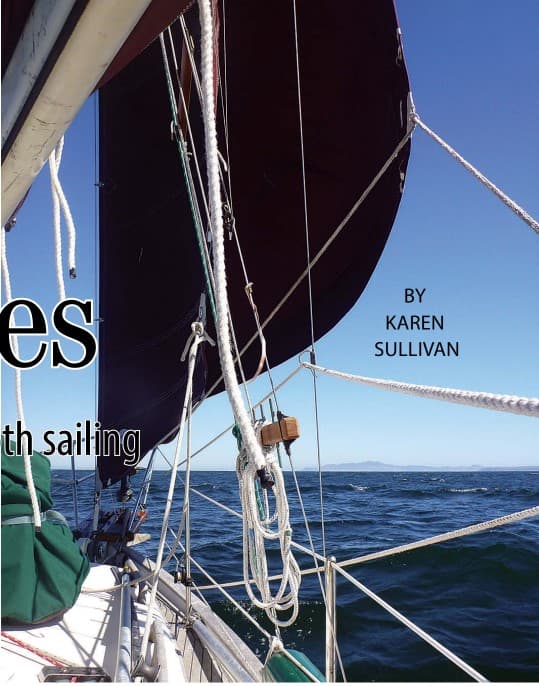
Think the whole maneuver through before the first line moves
When you are singlehanding, the hardest part of changing sails is rarely the sail itself. It is the chain of small decisions that begins before you leave the cockpit, and Karen Sullivan’s advice starts there: picture the entire maneuver step by step, then rig the boat so each task is as simple and energy-efficient as possible. That matters because fatigue leads to bad choices, and the place where those mistakes hurt most is the pitching foredeck in rough weather.
Sullivan’s larger point is that solo sailing rewards organization more than brute force. If you can reduce how often you go forward, make each trip shorter, and eliminate awkward body positions, you lower the physical load and the mental load at the same time. That is the real system here: not one magic piece of gear, but a deck layout and sequence that work together when you are tired and the boat is moving.
Add protection where the work actually happens
Chest-high lifelines are one of the simplest upgrades Sullivan points toward, and they fit the singlehanding problem cleanly. A higher line gives you another layer of security when you need to move forward, and Practical Sailor’s later coverage backs up the idea with simple do-it-yourself approaches that use strong line, shroud attachment points, and tensioned ends. Lin and Larry Pardey’s long advocacy for practical offshore seamanship also sits behind this approach, which has become part of the short-handed sailing toolkit rather than an exotic custom touch.
Sullivan also describes a stainless-steel D-ring lashed to a shroud. The point is not just to add hardware, but to guide a safety line without interfering with sail trim. That is the kind of detail that makes a real difference aboard: you stay clipped in, but you do not create a tangle that slows the sail change or forces you into clumsy movement while the boat is rolling.
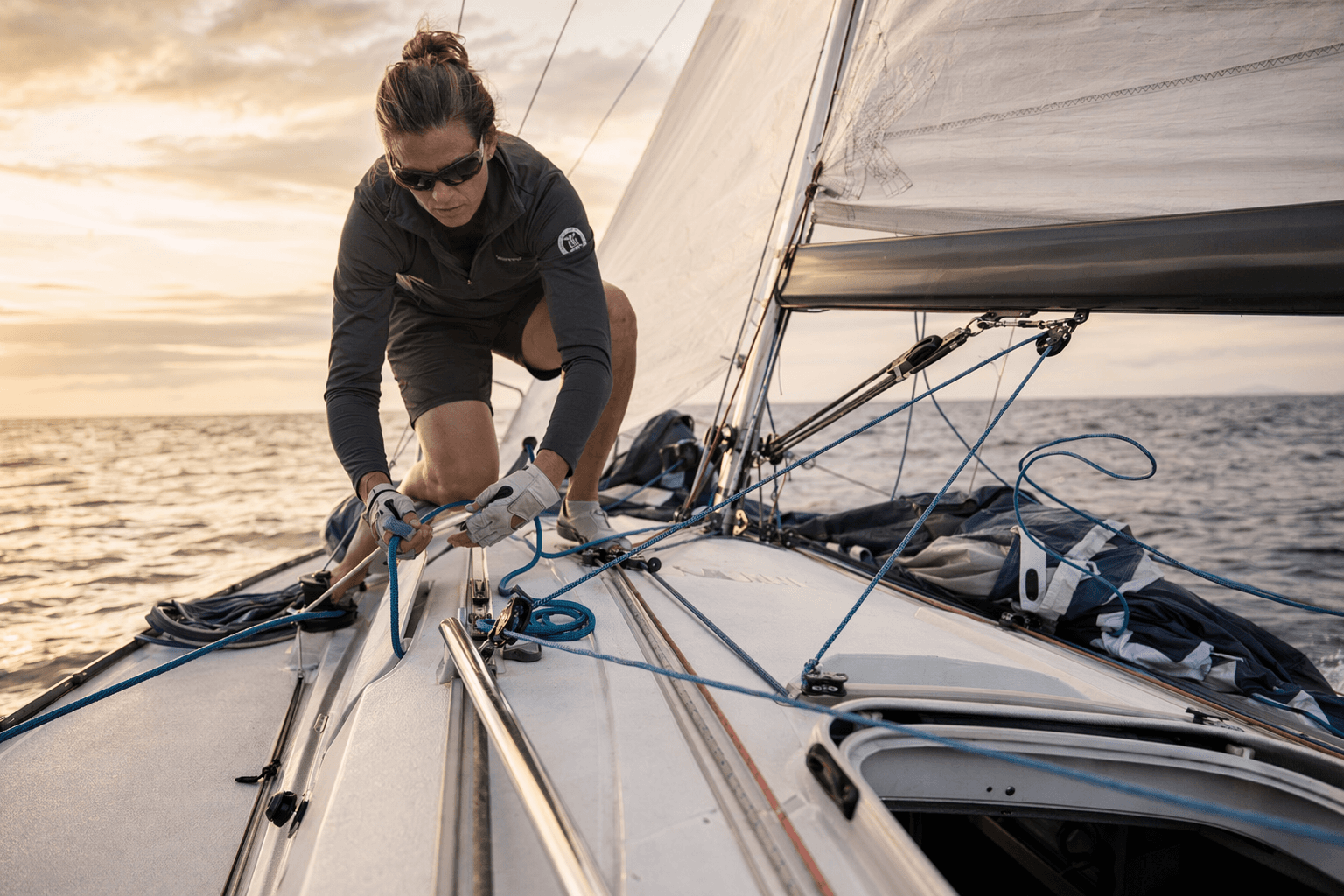
US Sailing’s safety guidance reinforces the same mindset. Wear a lifejacket, stay calm, and keep yourself prepared for the unexpected. In practice, that means building a deck setup that makes calm behavior possible when conditions would otherwise push you into rushed, physical problem-solving.
Make headsail handling honest about your sailing style
Sullivan treats roller furling and padded-luff genoas as a practical answer to a practical problem, not as a moral upgrade over hanked-on sails. The comparison is useful because it gives you a decision tree instead of dogma. If the goal is fewer trips to the foredeck and less exposure in nasty weather, furling has a clear appeal; if the goal is pure simplicity and sail shape, hanked-on sails still have their defenders.
The historical side of that tradeoff is worth remembering. Practical Sailor reported that by 2009, third- and fourth-generation genoa furlers had become smoother, easier to install, and reliable enough that almost every new cruising boat longer than 35 feet came standard with roller furling. That helps explain why so many solo sailors now see furling as a quality-of-life change rather than just a convenience.
Still, hanked sails are not automatically the wrong answer. They remain attractive to sailors who value uncomplicated gear and the feel of a well-shaped sail, but they generally demand more foredeck work unless the rig has been customized for easier handling. A downhaul or similar modification can reduce the back-and-forth, which is exactly the kind of incremental improvement Sullivan’s article encourages: keep the system you have if it suits you, but remove the parts that force unnecessary movement.
Put the furling line where your hand wants it
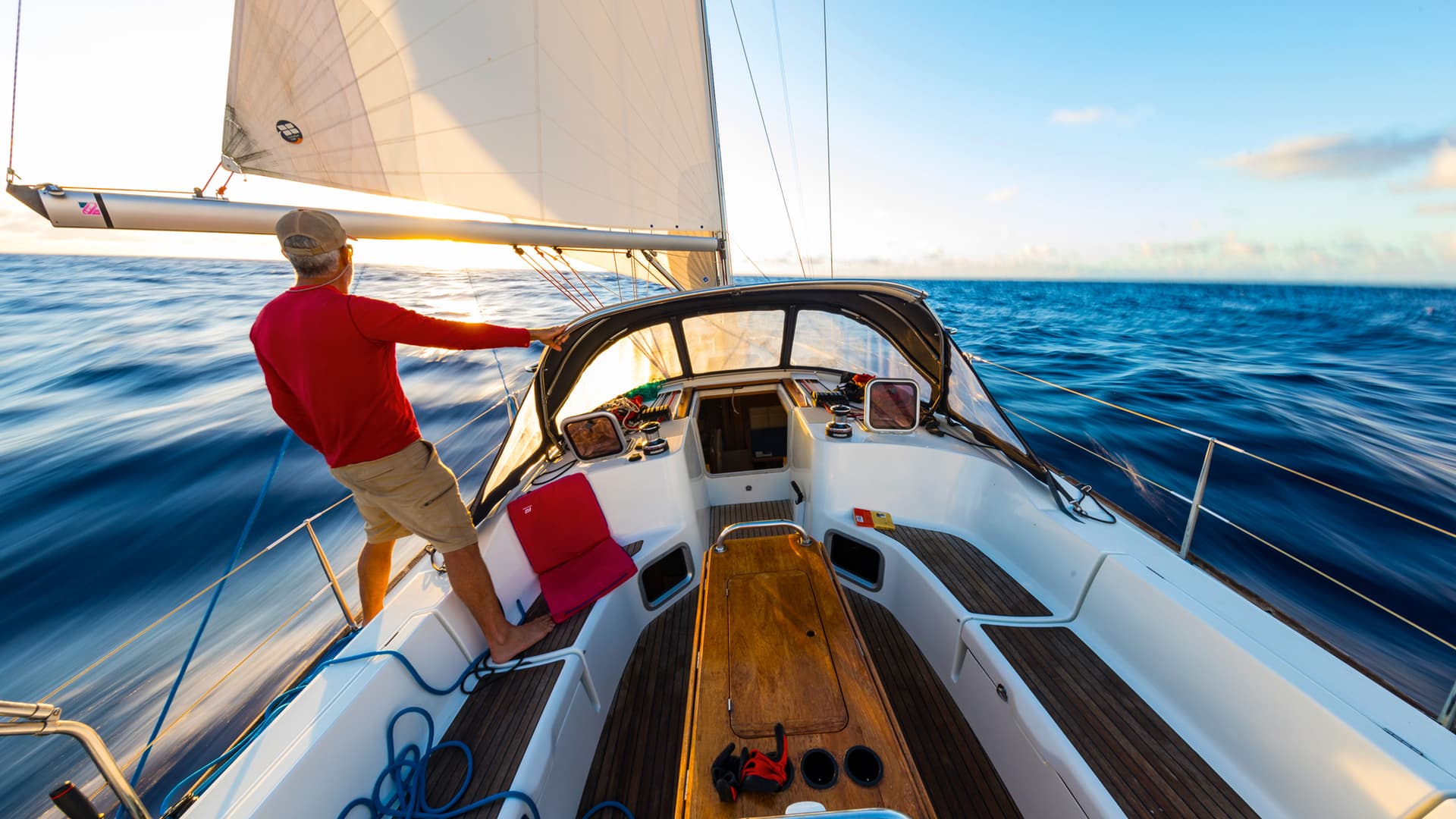
One of the smartest, least expensive changes Sullivan highlights is the genoa furling-line lead. A fair lead near the cockpit, run through a block and cam cleat, makes the line faster to use and easier to control. That may sound small, but small changes are what keep the sailor from fumbling with friction and awkward angles when the boat is already lively.
This is where deck organization becomes a workload-reduction system instead of a collection of unrelated fittings. If the furling line runs cleanly, the safety line is guided properly, and your body does not have to twist into bad positions, you save energy every time you change sail. On a solo passage, that matters as much as the sailcloth itself because every move is one more chance to waste time or make a mistake.
- Can you operate the furling line from a stable stance near the cockpit?
- Can you move forward without needing to improvise your tether path?
- Can you complete the change without extra shuffling, backtracking, or hand-over-hand wrestling?
A good test is simple:
If the answer to any of those is no, the fix is usually in the layout, not the sail.
Do not forget the mainsail
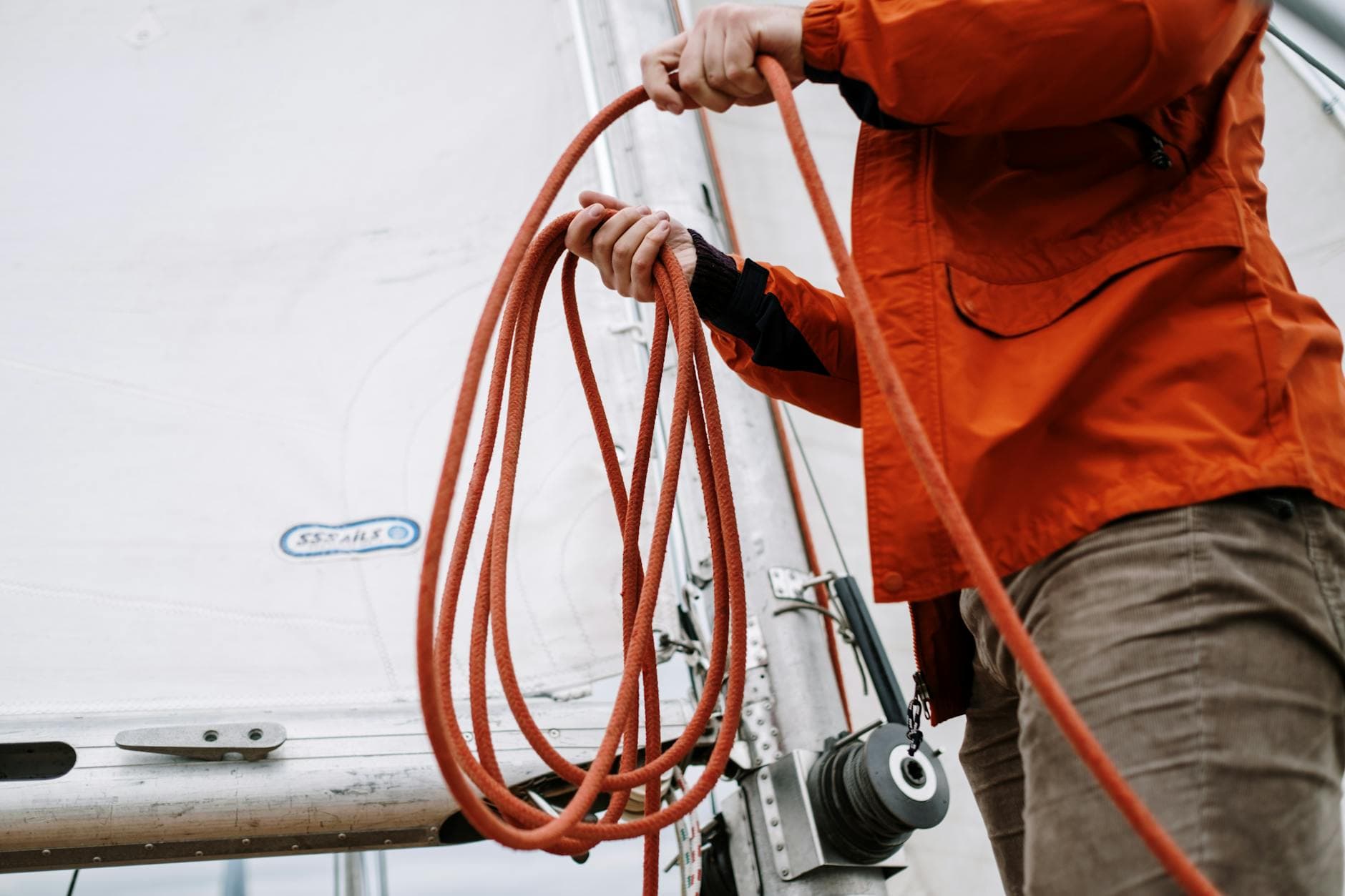
Sullivan does not stop at headsails, and neither should you. A mainsail that refuses to raise or lower freely because of jammed slugs or slides turns into a safety issue just as quickly as a stubborn furling line. That is an important reminder for DIY sailors: sail changes are a whole-rig problem, not just a headsail problem.
The broader singlehanding lesson is that you cannot be in two places at once. The sailor who is troubleshooting a stuck mainsail at the mast is not also available to manage the helm, monitor the water ahead, or recover from a sudden change in conditions. That is why the best improvements are often the least glamorous ones: cleaner hardware placement, fewer friction points, and a deck plan that matches how you actually sail.
A recent forum discussion captured the emotional side of that logic with unusual clarity. One sailor described switching from hanked headsails to furling after a partner’s death, and said the change made solo sailing dramatically easier because it removed the constant need to change headsails while trying to hold course. That kind of testimony lines up with Sullivan’s argument: the point is not technology for its own sake, but a boat that lets one person sail with less strain, less exposure, and more confidence.
When the wind picks up and the boat starts pitching, the best sail-change system is the one that has already done most of the thinking for you. That is Sullivan’s real lesson: reduce the trips forward, simplify the sequence, and let the deck work support the sailor instead of fighting back.
This article was produced by Prism’s automated news system from verified source data, official records, and press releases, then run through automated quality and moderation checks before publishing. The system is built and supervised by the people who set the standards it runs under. Read our full AI policy.
Did this article answer your question?