Carbon monoxide safety for sailboats, what ABYC A-24 says
The worst CO hazard on older sailboats is often a bad alarm install, not the heater itself. ABYC A-24 pushes you to inspect airflow, burners, and detector placement together.
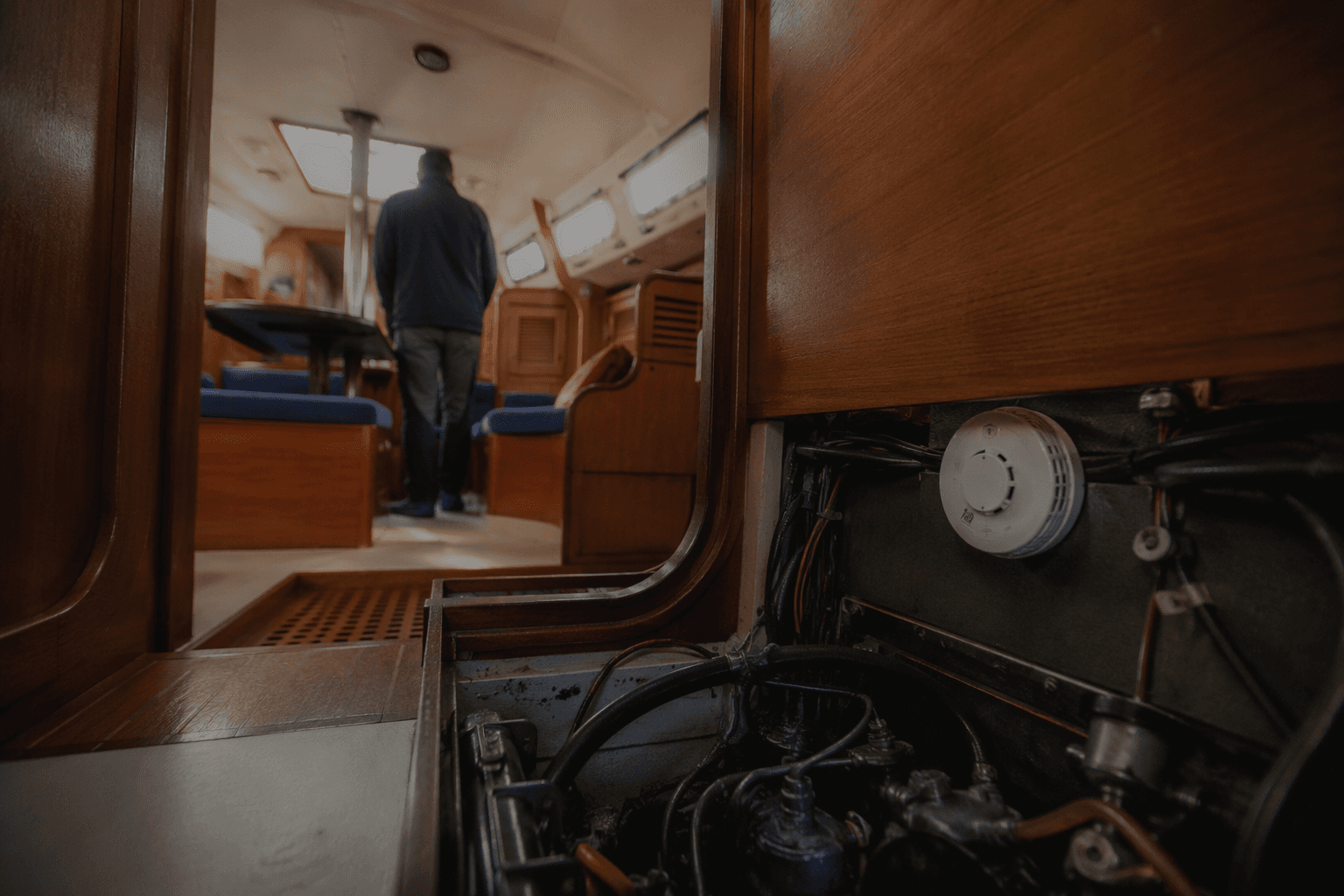
A cabin that feels open at anchor can still trap carbon monoxide when hatches are partly shut, canvas is up, or the boat is sitting in a bad wind shadow. ABYC A-24, the July 2020 equipment standard for fire fighting and detection systems, treats CO safety as a whole-boat problem, not just a matter of hanging an alarm on a bulkhead and calling it done.
ABYC’s standards come out of a consensus process that includes government, industry, and public-sector representatives, and each standard is reviewed at least every five years before it is reaffirmed, revised, or withdrawn. A-24 is intended as a guide for manufacturers and the marine community in the design, construction, equipage, and maintenance of small craft.
Why carbon monoxide is the invisible threat
In the U.S. Coast Guard’s Boating Safety Circular 86, carbon monoxide is toxic, odorless, colorless, and tasteless. On boats, it comes from engines, gas generators, cooking ranges, and heaters. Build-up inside cabins, partially enclosed cockpits, beneath swim platforms, and other enclosed areas can be deadly.
Older sailboats make the problem easy to miss. The hazard is not just the appliance that burns fuel. It is the way exhaust, airflow, and enclosure combine in a small, moving space.
The part most owners miss: CO behaves like a system problem
ABYC’s TH-22 technical information report from 2002 is still valuable because it names the variables that change CO accumulation. Carbon monoxide can build up in both interior spaces and exterior areas, and the factors include boat geometry, openings, ventilation, proximity to other structures, swim platforms, canvas enclosures, exhaust outlet location, vessel attitude, wind direction, boat speed, and boat systems.
That list is the reason a detector can look perfectly installed and still miss the real risk. A sailboat heeling on one tack, motoring slowly into a headwind, or running with the cockpit enclosed by canvas does not behave like a fixed house. Exhaust that clears cleanly at the dock can pool in a cockpit, drift under a swim platform, or find its way into the cabin once the boat’s attitude changes.
A weekend audit that catches the usual failure points
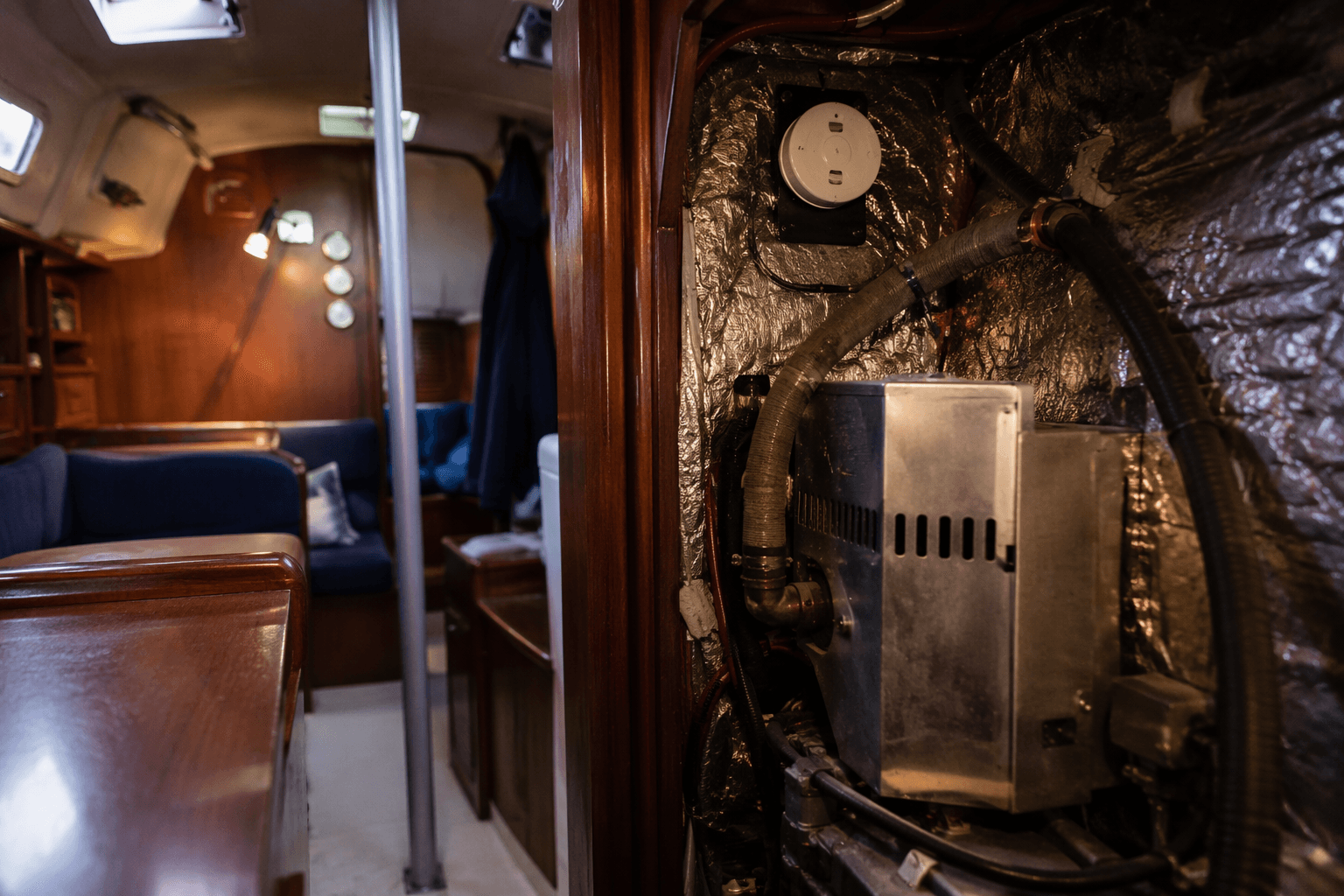
Start with the combustion sources, not the detector. On most sailboats that means the diesel heater, the engine, any generator, and the galley gear. Engines, gas generators, cooking ranges, and heaters are common sources, so each one deserves a look at the exhaust path, the intake path, and the spaces where people actually sit and sleep.
Then walk the boat with the deck gear in the condition you actually use underway or at anchor. Canvas enclosures, closed hatches, and a loaded cockpit can change how air moves through the boat, especially if the exhaust outlet is close to a swim platform or tucked into a corner where the wind can swirl.
For the detector itself, install a marine-rated unit and follow the manufacturer’s instructions. The National Marine Manufacturers Association recommends a marine-rated carbon monoxide detector on every gasoline- or diesel-powered boat with an enclosed accommodation space, or on any boat with an LPG system or an open flame device such as an alcohol stove.
A quick inspection should include these common misses:
- A detector mounted where it can be isolated from the actual sleeping or living space by a closed door or canvas panel
- An alarm installed without regard to how exhaust moves when the boat heels, idles, or sits behind another vessel or structure
- A setup that looks compliant but was not installed according to the detector maker’s instructions
- A boat that has upgraded canvas, heaters, or galley gear since the last CO check, but never revisited detector placement
Why state law and industry practice point the same way
Minnesota’s boating carbon-monoxide law requires CO detectors and warning stickers on motorboats. The Minnesota Department of Natural Resources fact sheet lists the state as the first to require CO detectors and warning stickers on motorboats. The law applies to all motorboats with enclosed accommodation compartments, regardless of fuel type, and gasoline-powered motorboats with any enclosed occupancy compartment must display three CO warning stickers. The compliance date listed in the fact sheet was May 1, 2017.
The same logic applies to any sailboat with an engine, a heater, a propane stove, or an enclosed berth area that can trap exhaust.
ABYC’s case for standards is not academic
Industrial Economics, Incorporated issued a January 31, 2024 memorandum analyzing the reduction in recreational boating accidents from adoption of ABYC’s voluntary standards. ABYC’s 2024 effectiveness messaging states that those standards significantly reduce boating accident frequency and severity.
This article was produced by Prism’s automated news system from verified source data, official records, and press releases, then run through automated quality and moderation checks before publishing. The system is built and supervised by the people who set the standards it runs under. Read our full AI policy.
Did this article answer your question?