Common lithium battery mistakes sailboat owners make, and how to avoid them
The biggest lithium failures happen when sailors swap the battery but ignore the system. That can mean overheated alternators, damaged cells, and a bank that is worse than lead-acid.
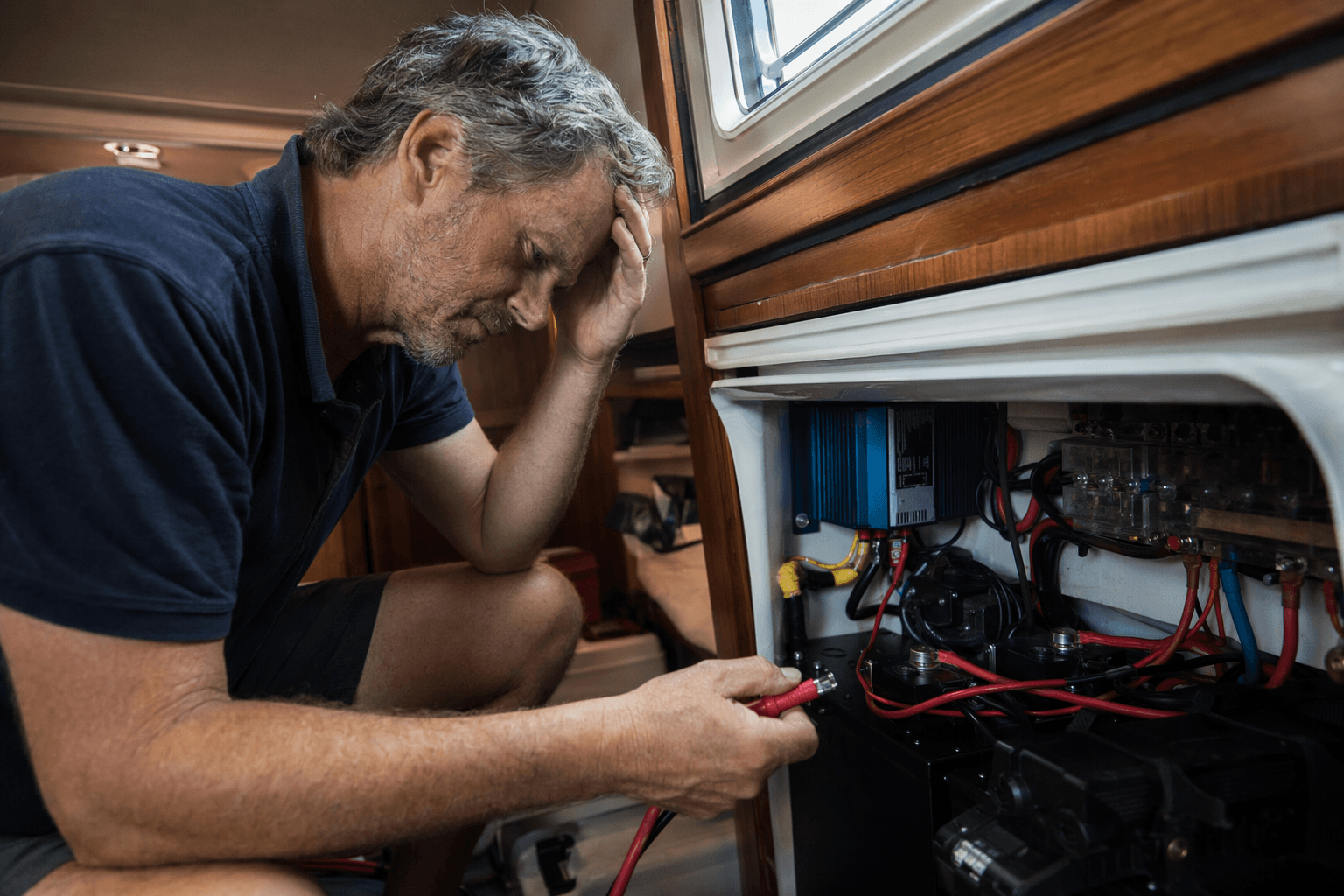
The mistake that costs the most: treating lithium like a drop-in swap
Tim Labute’s Practical Sailor reality check lands on the right nerve: lithium is one of the most appealing upgrades you can make on a sailboat, and one of the easiest to misunderstand. The payoff is real, with higher usable capacity, lighter weight, faster charging, less maintenance, and, in Practical Sailor’s earlier guidance, almost four times the lifespan of lead-acid. Some reputable marine lithium batteries even carry warranties as long as 11 years. But those benefits only show up when the whole electrical system is designed around the battery, not when the battery is bolted in like a replacement part.

That is the core mistake behind most expensive lithium stories. Sailors hear “drop-in” and assume the job is simple. In practice, the battery, alternator, charger, BMS, wiring, temperature limits, and fusing all have to play together. If one piece is still thinking in lead-acid terms, the boat can end up with a dead alternator, a confused charging system, or batteries that were never being protected the way the owner expected.
Size the bank for the boat, not for the brochure
A lot of bad lithium installs start with sizing. The label on the battery is not the same thing as the amount of usable energy your boat can safely and repeatedly count on. Practical Sailor’s “Leaping Into Lithium” pushed sailors to do their homework and take a system-wide approach because lithium makes the most sense when the boat spends long periods away from shore power and relies on solar, wind, or alternator charging. That is the real use case to size around, not a vague wish for “more amp-hours.”
The onboard consequence of getting this wrong is simple: you either build a bank that is larger than your charging system can support, or you choose a bank that does not actually meet your liveaboard or cruising loads. In both cases, the upgrade gets expensive fast. The prevention check is equally simple: map your daily loads, identify every charging source, and make sure the house bank size matches the way the boat actually lives. If the boat cannot reliably recharge what it uses, the numbers on the battery case will not save you.
Don’t let the alternator become the weak link
Scuttlebutt’s report puts one of the biggest hazards in plain language: lithium charging can damage alternators and regulators. That is not a theoretical problem. Lithium accepts charge aggressively, which is great when the charging architecture is built for it and dangerous when it is not. Older boats, in particular, may need an alternator upgrade and careful battery monitoring as part of the refit.
This is where a lot of owners get caught. They install lithium, keep the old regulator behavior, and assume the engine charging side will sort itself out. Instead, the alternator can work much harder than it did with lead-acid, run hot, and fail early. The prevention check: verify alternator compatibility before launch day, confirm the regulator profile matches lithium charging, and do not assume the engine side of the system is automatically up to the job just because the battery side is new. If you do not know how your alternator behaves under sustained lithium acceptance, the install is not finished.
A BMS protects the cells, but it does not fix a bad design
The Battery Management System gets talked about like a safety net, and it is one, but it is not magic. The Practical Sailor video explicitly addresses what BMS units really protect, which is the right question. A BMS is there to help manage the battery’s internal limits, but it cannot rescue a mismatched charging profile, an alternator that is being pushed beyond its comfort zone, or a bank that was installed without considering the rest of the boat’s electrical architecture.
That matters because many sailors hear “protected by BMS” and stop thinking. The better habit is to ask what the BMS actually does on your boat, how it communicates with the charging system, and what it will do if the battery gets too hot, too cold, too full, or too low. If the BMS cannot clearly shut down or limit charge in the right circumstances, or if nobody on board knows how the system responds to a fault, the safety margin is thinner than it looks.
Cold-weather charging can quietly ruin a battery
The most concrete temperature warning in the notes comes from RELiON, and it is a big one: charging LiFePO4 batteries below 0°C, or 32°F, requires charge-current reduction, and below -10°C, or 14°F, it must be reduced further or the battery can suffer irreversible damage. That means a cold morning, a shoulder-season passage, or a boat stored in a chilly harbor can become a battery-killer if the system is allowed to charge as if nothing is wrong.
The onboard consequence here is brutal because the damage can be permanent. A battery that looks fine after a cold charge may have already lost life. The prevention check is to know your battery’s low-temperature charge limits and build around them, not around optimism. If your cruising pattern includes freezing conditions, use batteries and controls designed for that job. RELiON’s LT-series batteries, for example, are designed to begin charging below freezing by using charge current to warm the battery before normal charging starts. That is the kind of feature that matters when the thermometer drops and the alternator comes alive.
Why this is no longer a niche debate
This is not just a forum argument anymore. The American Boat & Yacht Council published its 65th supplement on August 5, 2025, said its standards guide more than 90% of boats constructed in North America, and updated E-13, Lithium Ion Batteries, along with other standards. ABYC also scheduled a compliance webinar for September 17, 2025, and a separate ABYC and U.S. Coast Guard risk-mitigation session for November 5, 2025, both centered in part on lithium-ion battery systems and electrical safety. That tells you how mainstream the subject has become.
ABYC’s own message is that standards development helps manufacturers, surveyors, and repair teams keep up with evolving technology and safety requirements. That is the clearest sign yet that lithium on boats is no longer an exotic experiment. It is a serious system choice, with real engineering consequences. The smartest installations start with the same rule: treat the battery as one part of the boat, not the whole story.
This article was produced by Prism’s automated news system from verified source data, official records, and press releases, then run through automated quality and moderation checks before publishing. The system is built and supervised by the people who set the standards it runs under. Read our full AI policy.
Did this article answer your question?


