Cruising sailor replaces obsolete galley stove with safer, simpler setup
A worn pressurized stove pushed Sarmiento toward a simpler alcohol setup that better fits real cruising, from heel angles to rolly anchorages.
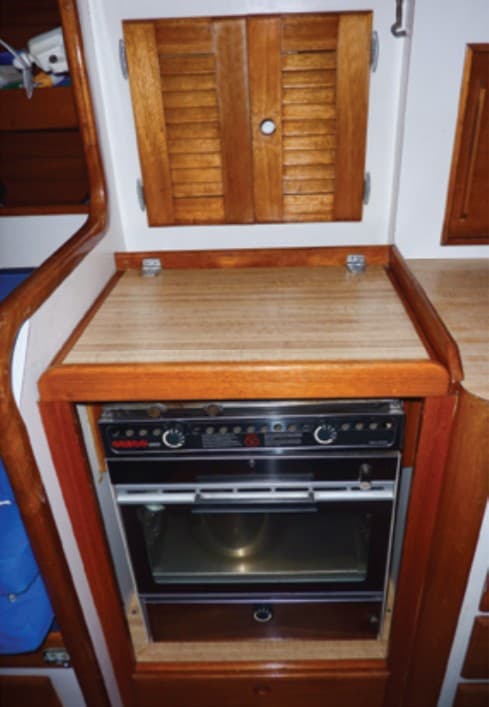
A tired pressurized-alcohol stove was never going to stay the center of Sarmiento’s galley for long. Carl Hunt wanted a setup that would let him cook underway, stay usable when the boat was heeling, and cut the flare-up risk and fuss that had made the old unit feel like a liability instead of a tool.
Why the old galley gear lost the argument
Hunt’s Bristol 35.5 came with a fixed-mounted pressurized-alcohol stovetop that had seen better days. He described the setup as inefficient, cranky, and somewhat dangerous because of flare-ups, which is the sort of verdict that matters more than brand loyalty when you live with a galley every day. The key point is not that pressurized alcohol cannot cook, but that the system no longer matched the way this boat was actually used.
Kerosene was out early too. That was not because kerosene stoves are incapable, but because they bring their own baggage: soot, odor, crankiness, and regular maintenance. For a cruising boat, those tradeoffs quickly become part of the decision, especially when the stove has to be practical in a seaway and tolerable when you are tired, wet, and trying to get dinner on the table.
What the replacement needed to do underway
The biggest design requirement was simple: the galley had to work when the boat was not flat and calm. Hunt wanted a gimbaled stove because a cruising boat does not always cook in smooth water, and some anchorages are so rolly that preparing a meal at anchor is harder than doing it under sail. That is the sort of real-world detail that should drive the choice before anyone starts comparing BTUs or fuel types.
ABYC’s A-3 galley-stove standard reinforces that point. It expects marine stoves to operate safely at angles up to 30 degrees, and it says oven doors should latch securely so cookware cannot force them open when the boat heels. ABYC’s carbon-monoxide technical report, TH-22, has also been revised several times since its original 1992 publication, which is a reminder that ventilation and CO precautions are not side issues in a cruising galley.

- Safety at heel is not optional.
A stove that cannot stay controlled at 30 degrees does not belong on a boat that actually sails.
- Ventilation matters as much as the burner.
ABYC’s CO guidance underlines that combustion appliances are part of the boat’s air-management system, not just kitchen hardware.
- The boat’s motion should drive the hardware choice.
If you cook while underway, a gimbaled installation is far more than a convenience.
How the fuel choices stack up in practice
West Marine’s current stove-selection guidance still treats alcohol stoves as common on production sailboats and powerboats, but it also notes their limitations: low heat content, an unpleasant odor, and a lot of water vapor. That combination explains why sailors often see alcohol not as the dream option, but as the compromise that keeps the galley workable without adding more complexity than the boat needs.
Practical Sailor puts numbers on that tradeoff. A new wicking alcohol stove can burn around 4,500 BTU per hour when the reservoir is full and taper to about 4,000 BTU per hour as it empties. Small propane stoves, by contrast, can produce roughly 6,000 to 8,500 BTU per hour, which is why many sailors view alcohol as a middle ground rather than the highest-performance answer.
Hunt’s choice of a drop-in alcohol stove fits that middle ground well. It is a functional fit that is easier to live with than the worn-out original gear, and it avoids the soot and maintenance burden that pushed kerosene out of contention. In an older cruising boat, that can be the difference between a galley you use confidently and one you keep working around.
Why this matters on an older cruising boat
Hunt is not a full-time kitchen designer, he is a retired economist living in Colorado who has sailed and cruised from British Columbia to Mexico and on other people’s boats in multiple U.S. and overseas cruising grounds. That background matters because it points to a very cruiser-like way of thinking: judge the appliance by how it behaves in real use, not by nostalgia for the original installation.
The boat matters too. Sarmiento is a Bristol 35.5, a Ted Hood design introduced in 1977 and built through the early 1990s, with Sailboat Database estimating about 180 to 200 boats constructed. That is enough hulls to make this a broad owner question, not a one-off oddity, because a lot of older cruising boats are now at the stage where the galley has to be rethought instead of merely refreshed.
The lesson for refits is straightforward. Once a pressure stove is obsolete, the decision is no longer about preserving a sacred original fixture, it is about what keeps the boat safe, maintainable, and usable at sea. That means weighing the availability of support for old gear, the fuel logistics you can actually live with, and the way you cook aboard when the boat is moving, not just when it is tied up flat at the dock.
The broader safety picture reinforces that discipline. The U.S. Coast Guard’s 2024 recreational boating statistics found alcohol was the leading known contributing factor in fatal boating accidents, with 92 deaths, or 20 percent of total fatalities. In a cruising galley, that kind of hard-eyed risk management is exactly the mindset that turns a worn-out stove replacement into a smarter operating system for the whole boat.
Sarmiento’s new setup lands on the point that matters most: if the original appliance no longer fits the way the boat is sailed, a simpler replacement can be the real upgrade.
This article was produced by Prism’s automated news system from verified source data, official records, and press releases, then run through automated quality and moderation checks before publishing. The system is built and supervised by the people who set the standards it runs under. Read our full AI policy.
Did this article answer your question?