Diagnosing a diesel fuel failure aboard a vintage Voyager 38 at sea
A dying engine in fading light exposed a hidden fuel-path clog, not bad diesel. The fix was a day tank that turns one old-boat vulnerability into a safer passage plan.
A failure at the worst possible moment
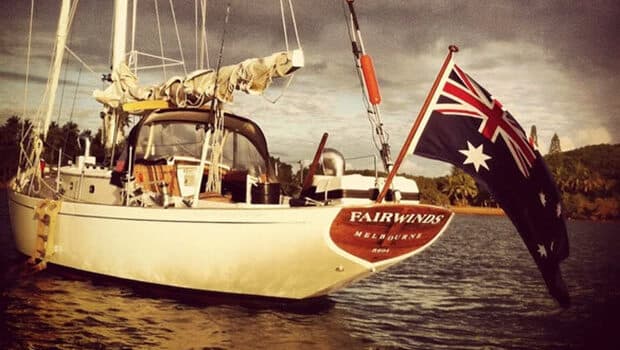
Richard Thomson was motoring Namika, a vintage 1983 Trident Marine Voyager 38, through a swell off the western Peloponnese when the engine note began to wander, groan, and die. Land was nearby, daylight was fading, and the kind of problem every cruising skipper dreads was suddenly real: the seawater filter looked clear, the primary filter bowl was clean, and the diesel was only weeks old. On a boat like this, that combination is exactly what makes a fuel failure so unnerving. Nothing obvious is wrong, yet the engine will not stay running.
That is why the story matters beyond one afternoon at sea near Pylos. Practical Boat Owner, a magazine first published in 1967, framed Thomson’s experience as a maintenance lesson as much as a rescue story. The boat itself adds to the appeal: Namika is an Angus Primrose-designed Voyager 38, a 38-foot Trident Marine model first built in 1982, the sort of well-loved cruising yacht whose systems often reflect decades of previous decisions, repairs, and compromises.
The hidden fault was not the fuel in the tank
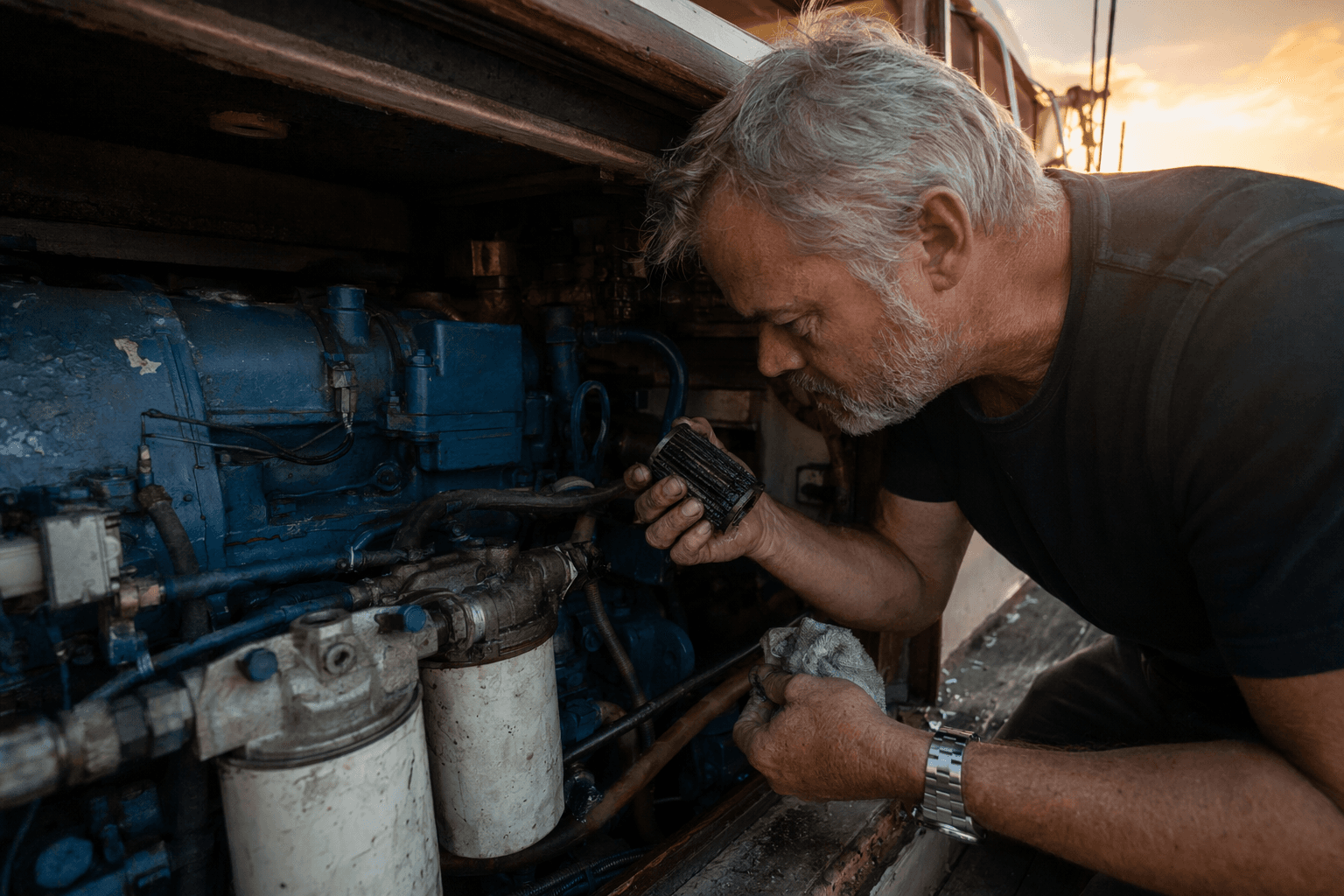
The first instinct in a fuel-starved diesel is to suspect contamination in the tank, but Thomson’s case showed how much trouble can hide between clean fuel and a starving engine. Working in a rolling engine bay, he tried the manual priming pump, changed the primary filter anyway, and kept narrowing the problem down to fuel delivery. With another yacht shadowing them, the crew eventually called the Coastguard, which arrived about 40 minutes later.
The real answer came the next morning. Fuel lines, the fuel cock, and multiple connections were clogged with gluey slime, sludge, and grit. That is the critical lesson for anyone running an older diesel system: fuel can look fine and still fail because the path between tank and engine has turned into a trap. The U.S. Coast Guard has long treated contaminated marine fuel as a known hazard, especially where water and sediment are involved. Wilhelmsen’s marine fuel guidance adds another layer: diesel bug lives in the water phase of a fuel system and can cause blocked filters and injector damage.
Why the usual checks were not enough
A clean filter bowl and recent bunkering can create false confidence. Thomson’s engine trouble shows why the first visual checks are only the beginning of diagnosis, not the end of it. If the engine starts losing revs, then groans or dies, and the filters still appear clean, the restriction may be farther upstream or hidden inside fittings, valves, and hoses that do not get inspected every day.
That is also why the fuel-polishing and contamination guidance that Practical Boat Owner has run over the past few years keeps resonating with cruising sailors. A 2022 piece on DIY fuel polishing treated it as a defense against dirty diesel, while a 2025 contamination guide made the same broader point: even on-spec fuel can still become problematic in marine use. In other words, the surprise is not that diesel goes bad. The surprise is how often a good-looking system can still be carrying the beginnings of a blockage.
The day tank solution turns a weak link into a buffer
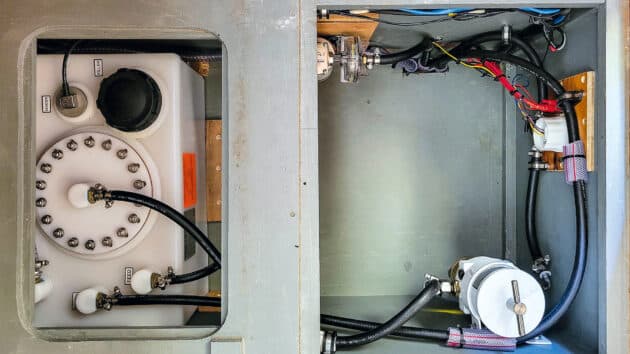
Thomson’s long-term answer was to install an auxiliary diesel day tank. That is more than a convenience upgrade. In practical terms, it creates an intermediate buffer between the main tank and the engine, which makes the fuel supply easier to isolate, inspect, and control. For older cruising boats, that can be the difference between endless troubleshooting and a system that gives you one clean place to start when something goes wrong.
A day tank is especially useful when an engine-mounted fuel pump struggles to draw from a remote tank because of distance or elevation. Installation guidance for these tanks generally recommends putting them close to the engine and using gravity feed where possible. That is the opposite of a sprawling, hard-to-trace fuel run, and it is exactly why a day tank can make a vintage boat more forgiving at sea. The American Boat & Yacht Council’s H-33 standard sits behind this kind of small-craft diesel-fuel thinking: make the system reliable, keep it clean, and reduce the chances of contamination and delivery failure.
When the complexity is worth it
A day tank starts to make sense when the boat’s original fuel arrangement is simple, long, or hard to inspect, especially on a cruising yacht where the cost of one failure is measured in stress, tow risk, and lost passages. It also earns its keep when the boat has a known history of sediment, microbial growth, or recurring filter issues. If you have already found yourself changing filters at awkward moments, or if the engine behaves differently when the tank level drops, that is a strong sign you are living with a fuel system that needs more control.
The upgrade is not just for offshore passagemaking. It is for the sort of mixed-use cruising where the engine matters most at the exact wrong time: close to land, in a swell, with weather turning and daylight fading. Thomson’s near-miss near the western Peloponnese is a sharp reminder that reliability is not an abstract ideal. It is a margin of safety that buys you time.
Installation mistakes that can undo the benefit
The whole point of a day tank is to simplify the fuel path, so the installation has to avoid creating new weak points. The most common mistake is mounting it too far from the engine, which defeats the buffer effect and can make delivery less predictable. Another is overcomplicating the plumbing, adding bends, fittings, and joints that become fresh places for air leaks, sludge buildup, or vibration problems.
- Put the tank close to the engine whenever possible.
- Favor gravity feed if the layout allows it.
- Keep the fuel path short and easy to inspect.
- Do not assume clean-looking fuel means a clean system.
- Treat fittings, cock valves, and hose runs as inspection points, not background scenery.
Keep an eye on these issues:
The smartest installations make troubleshooting obvious. If the engine stops, you want the system to tell you where the problem is, not hide it behind another tangle of hose.
What to inspect on your own boat this week
Thomson’s breakdown is useful because it points to symptoms, not just causes. If your engine has been hesitating, surging, or sounding uneven under load, that deserves attention. If you are changing filters often, finding slime or grit, or seeing any sign of water in the system, it is time to inspect more than the visible bowl. Fuel that is only weeks old can still be part of the problem if the delivery path is contaminated.
The next time you are alongside, check the fuel cock, line connections, and any low spots where water or sludge could settle. Then ask the hard question the Voyager 38 forced into the open: do you have a fuel system that merely works on a good day, or one that can survive the bad one too? Thomson’s day tank retrofit lands on the right side of that divide, turning a vintage boat’s vulnerability into a more resilient cruising setup.
This article was produced by Prism’s automated news system from verified source data, official records, and press releases, then run through automated quality and moderation checks before publishing. The system is built and supervised by the people who set the standards it runs under. Read our full AI policy.
Did this article answer your question?