DIY cockpit cushions that stay put and keep crews safer
A cockpit cushion that slides can do more than annoy: it can turn a wet step into a fall. The fix is smart foam, drainage, and tie-downs that actually hold.

A cockpit cushion that skitters underfoot is not a comfort problem, it is a seamanship problem. On a heeled boat, a loose cushion can blow away, slide off, or shift just as a crew member steps down from deck to cockpit, and that is how an ordinary movement becomes a fall. Practical Sailor’s latest cushion guidance makes the point plainly: the real goal is to keep gear dry, secure, and usable when the boat is moving hard and conditions change fast.
Why cockpit cushions become hazards
The failure modes are simple and familiar to anyone who sails actively. A cushion can slide when the boat heels sharply, blow loose when apparent wind builds, or soak up water until it becomes heavy, cold, and slow to dry. Practical Sailor also notes that broken bones are not a theoretical risk, which is exactly why cushion retention belongs in the same conversation as lifelines, handholds, and footing.
That risk rises on performance boats and multihulls. Even hefty cushions can move when apparent wind exceeds 20 knots, and a wide, open cockpit gives a loose cushion more room to shift at the worst possible moment. The lesson is blunt: if the cushion can move, it can become part of the problem instead of part of the solution.
Choose materials that work wet, not just look good in the slip
Older cushion-and-cover combinations are still seen on boats, but they are a poor match for real cruising conditions because they can absorb water. Modern closed-cell materials change the game because they do not soak up moisture the way older foam and cover setups do. That matters because a wet cushion is not just annoying, it is a sponge you have to sit on, carry, and dry out.
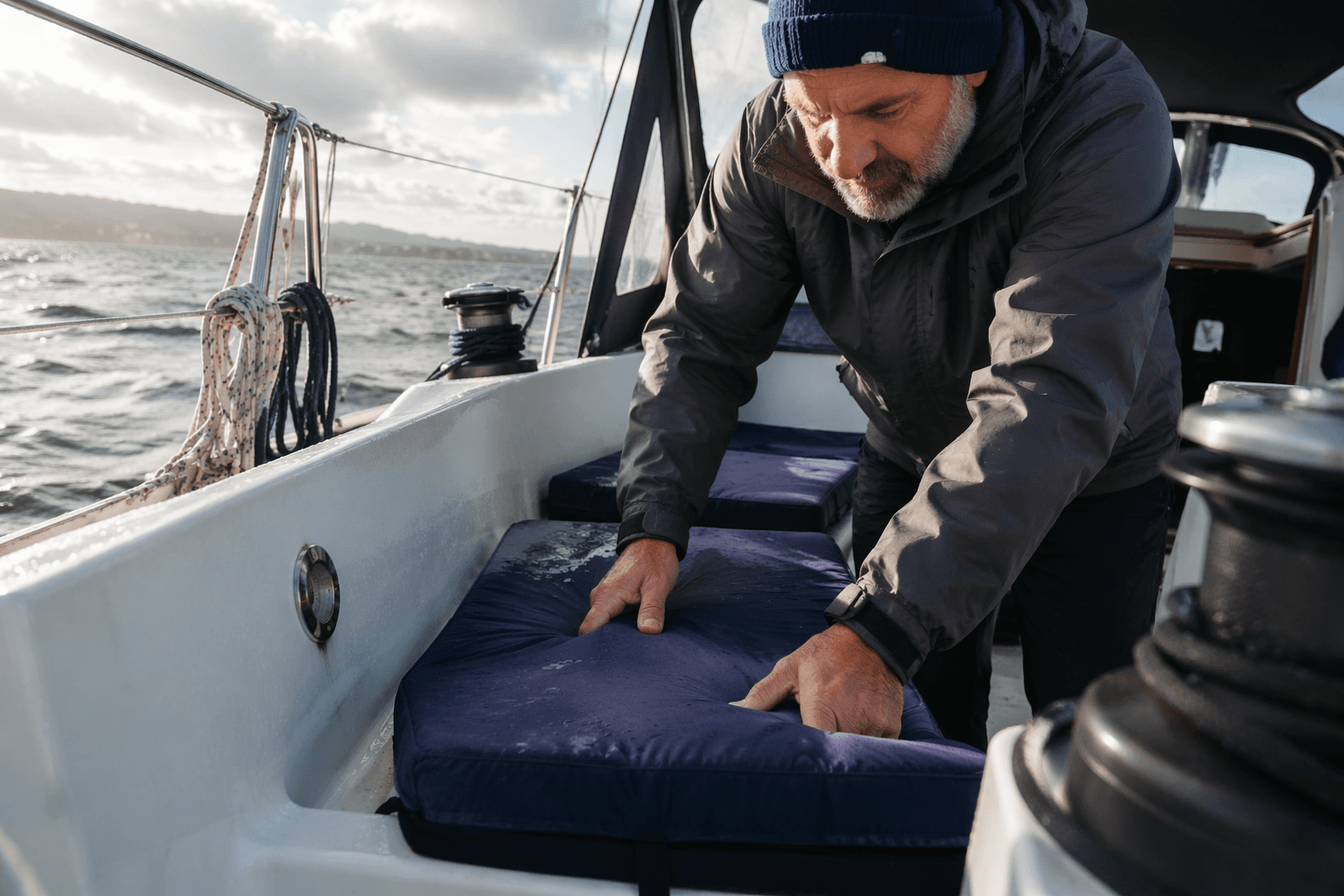
Sailrite’s cockpit-cushion guidance lines up with that approach. It points to Sunbrella marine-grade fabric for durability, water resistance, and breathability, and recommends CushionRite Dry Fast foam because it will not trap water and moisture. That combination makes practical sense for a cockpit that gets wind, rain, and sea spray, which is also why cushion replacements are so common on used boats.
Thickness matters too, but more is not always better. Practical Sailor’s earlier cockpit-seating advice said long-term comfort usually does not require cushions thicker than about 2 inches. That is a useful reminder for DIY builds: the right cushion is not the fattest one, but the one that supports a sitter without creating a waterlogged block in the cockpit.
Design for drainage and quick removal
A cockpit cushion should behave like a piece of deck gear, not upholstered furniture. It needs to shed water, come off easily, and dry quickly after spray or rain. Sailrite’s suggestion to use cushion underlining is especially useful here because it can help keep the cushion from sliding while still allowing water to drain.
That balance is the heart of the job. If you seal a cushion too aggressively, it may stay put but hold moisture. If you make it too loose or too slick, it may drain but wander across the cockpit when the boat is moving. The best DIY build solves both problems at once.
Secure the cushion without creating new deck problems
Practical Sailor’s soft-padeye guidance is a strong clue about how to think through attachment. Soft padeyes are presented as ideal for securing cockpit cushions, while snaps have not earned much enthusiasm. That does not mean there is only one way to do it, but it does mean the fastening method should be chosen for reliability first and convenience second.
Dyneema padeyes are attractive because they are relatively cheap and easy to add as tie-down points, but UV exposure limits their useful life to about 10 years unless they are overbuilt. That is the tradeoff with any minimalist tie-down: it can solve the cushion problem cleanly, but it still needs to be treated like a component with a service life.
Practical Sailor’s SNAD coverage gives another no-drill option. The larger 40 mm SNAD has about two square inches of adhesive area and is recommended for marine use on challenging surfaces. It can work well for seat cushions, but it is not meant for sustained loads greater than 15 pounds, so it is better for cushion retention than for high-tension hardware.
The larger point is that attachment choice affects more than convenience. Snaps can be useful, but drilling for them can create leak and rotten-core concerns. A cushion that stays put should not do so at the expense of the deck beneath it.
A practical DIY selection and securing checklist
When you build or replace cockpit cushions, think through the whole system before cutting foam or sewing covers.
- Start with closed-cell or fast-draining foam so the cushion does not trap water.
- Use marine fabric such as Sunbrella for the cover, not a material that will soak and stay wet.
- Keep total thickness sensible, with about 2 inches as a good comfort benchmark.
- Add underlining that helps the cushion grip while still letting water drain.
- Decide on retention before final assembly so the cushion can be tied down cleanly.
- Favor soft padeyes or a no-drill solution where possible.
- Treat Dyneema padeyes as a service item with a finite life, especially in sun.
- Use SNADs where the load is light and the goal is cushion retention rather than structural tie-down strength.
- Avoid relying on snaps alone if the cushion needs to stay fixed in rougher conditions.
That checklist reflects the real use case: cockpit cushions are part of movement, not decoration. They have to stay where they belong when the boat is pounding, heeling, or getting wetter by the minute.
A safety upgrade that earns its keep underway
The best cockpit cushion is the one nobody has to think about once the boat leaves the dock. It stays dry enough to use, stays low enough to avoid becoming a trip hazard, and stays fastened enough not to blow free the first time the wind builds. In that sense, the cushion is doing the same job as any other bit of seamanship gear: making the cockpit safer when the easy conditions are gone and the real sailing starts.
This article was produced by Prism’s automated news system from verified source data, official records, and press releases, then run through automated quality and moderation checks before publishing. The system is built and supervised by the people who set the standards it runs under. Read our full AI policy.
Did this article answer your question?