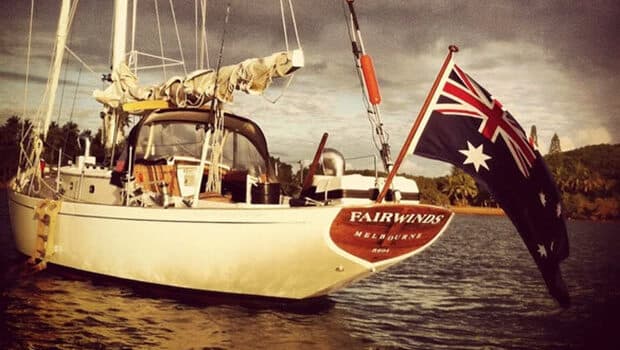
DIY tank rebuild maximizes space on a Pearson 28-2
A tired bladder tank gave way to a custom fit that uses the Pearson 28-2’s awkward locker better, with less odor and more cruising capacity.
A worn waste tank in the starboard cockpit locker can do more than stink up a boat. On Ken Poss’s 1986 Pearson 28-2, the failing rubber bladder had reached the point where the smartest fix was not a like-for-like swap, but a tank built around the boat’s real shape and the way it is cruised.
Start with the cavity, not the catalog
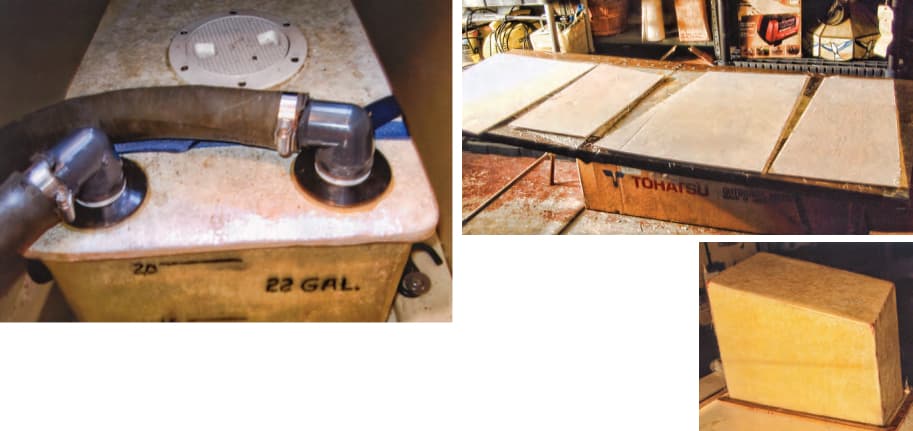
Poss’s old tank sat in the bottom of a molded fiberglass-reinforced plastic well, and the loose plywood cover was its own warning that the arrangement had never been a clean factory-perfect fit. The bladder had developed creases across its top surface, and when it filled those creases wept, which meant odor and extra cleaning.
The lesson for a DIY refit is simple: measure the locker first and the replacement tank second. On an older boat like the Pearson 28-2, which was built from 1985 to 1989 as a William Shaw design and measures 28.5 feet overall with a 9.83-foot beam, the available space is often more important than the old tank’s shape. If the cavity is irregular, a generic tank may waste volume, create dead space, or force awkward hose runs that make the system harder to service later.
Template the tank to the boat
Poss chose to make use of the well rather than force in a standard replacement. He made patterns for the sides of a male mold and used a laminate surface so the finished tank would release cleanly, a method that rewards careful templating before any fiberglass work begins.
Cardboard, thin plywood, or other pattern material lets you prove the shape before you commit to resin and cloth, and it gives you one last chance to check clearances around the locker opening, the molded well, and any nearby structure. The pattern needs to capture the full usable volume of the cavity.
Plan hose routing and service access before the tank is sealed in
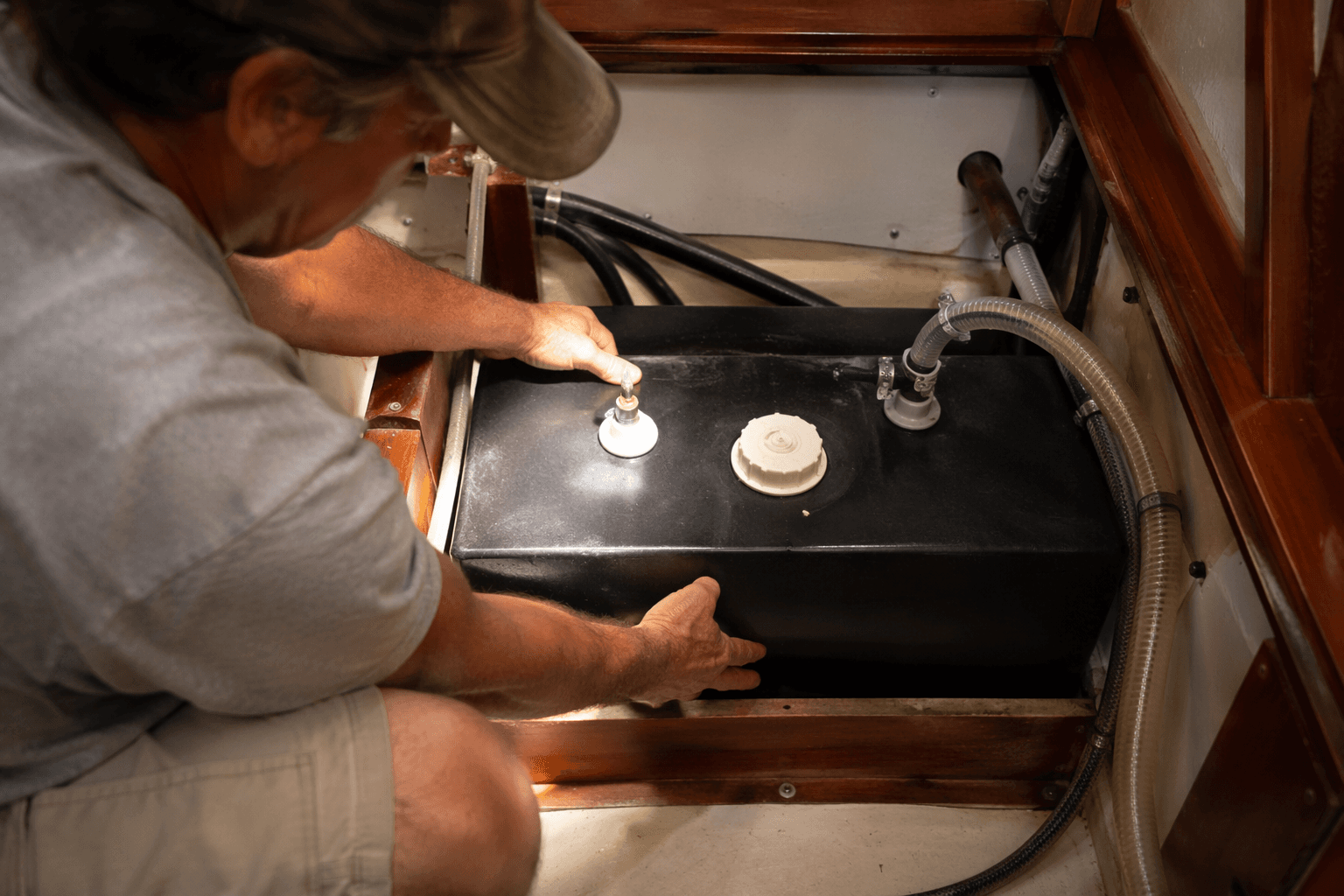
A tank that fits beautifully but traps the plumbing is not a win. In a starboard cockpit locker, you need to think about how the fill, vent, and pumpout connections will be reached after the tank is installed, and how the hoses will leave the well without sharp bends or crushed runs. If the clamps, fittings, or inspection points disappear behind the tank, the next cleanup or repair turns into a much bigger job than the original rebuild.
The tank can be shaped to leave service access where you actually need it, and Poss used webbing straps for a secure but removable installation. Straps hold the tank in place without turning the locker into a permanent trap, which matters when you know you will eventually want to inspect, clean, or replace hoses around it.
Size the tank for the way you cruise
Poss estimated the original capacity at about 10 gallons. A tank that small may suit a quick weekend, but it can become a limiting factor on several-day cruises with two or more people aboard. Holding-tank capacity should match how you actually sail, not how the boat was originally delivered.
In older boats, a custom build can beat a stock replacement when the original tank volume is undersized and the space is odd-shaped. You are not choosing between convenience and craftsmanship, you are choosing between wasted space and usable cruising range. On a Pearson 28-2, the locker geometry already exists, and a custom tank can use more of it.
Odor control still has to be part of the plan
The original bladder’s creases caused weeping when full, and that led to odor, which is the kind of nuisance that makes a small boat feel cramped fast. Holding-tank odors are a common issue, and larger boats often rely on vent filters and improved ventilation to reduce them. A bigger or better-shaped tank does not eliminate odor problems on its own; it just gives you more room to design the system correctly from the start.
That means the rebuild should be treated as both a fit problem and an odor-control problem. Better routing, cleaner hose runs, and attention to ventilation matter as much as capacity.
Keep the rules in view while you build
U.S. Environmental Protection Agency and U.S. Coast Guard rules under 33 CFR Part 159 govern marine sanitation devices and aim to prevent discharge of untreated sewage. ABYC standards are widely used across boat design, construction, repair, and maintenance, so a rebuild should be checked against safe plumbing and venting practice as well as simple fit.
A tank that fits the locker, leaves access to the hoses, and is secured with webbing straps can be more maintainable than a forced-in box.
This article was produced by Prism’s automated news system from verified source data, official records, and press releases, then run through automated quality and moderation checks before publishing. The system is built and supervised by the people who set the standards it runs under. Read our full AI policy.
Did this article answer your question?