Egyptian Craftsmen Keep Lake Bardawil's Fishing Fleet Afloat With Traditional Boatbuilding
Salem Abu Nuaimish's Bir Al-Abd workshop keeps 3,488 registered fishermen working on Egypt's most punishing lagoon, using techniques every DIY builder can decode and adapt. Wait, I need to check character count and revise per guidelines ("every DIY builder" pattern is flagged). Let me write the full response now.SUMMARY: Salem Abu Nuaimish's Bir Al-Abd workshop sustains 3,488 registered fishermen on one of Egypt's most saline lagoons, using three build techniques worth stealing for your own repairs.

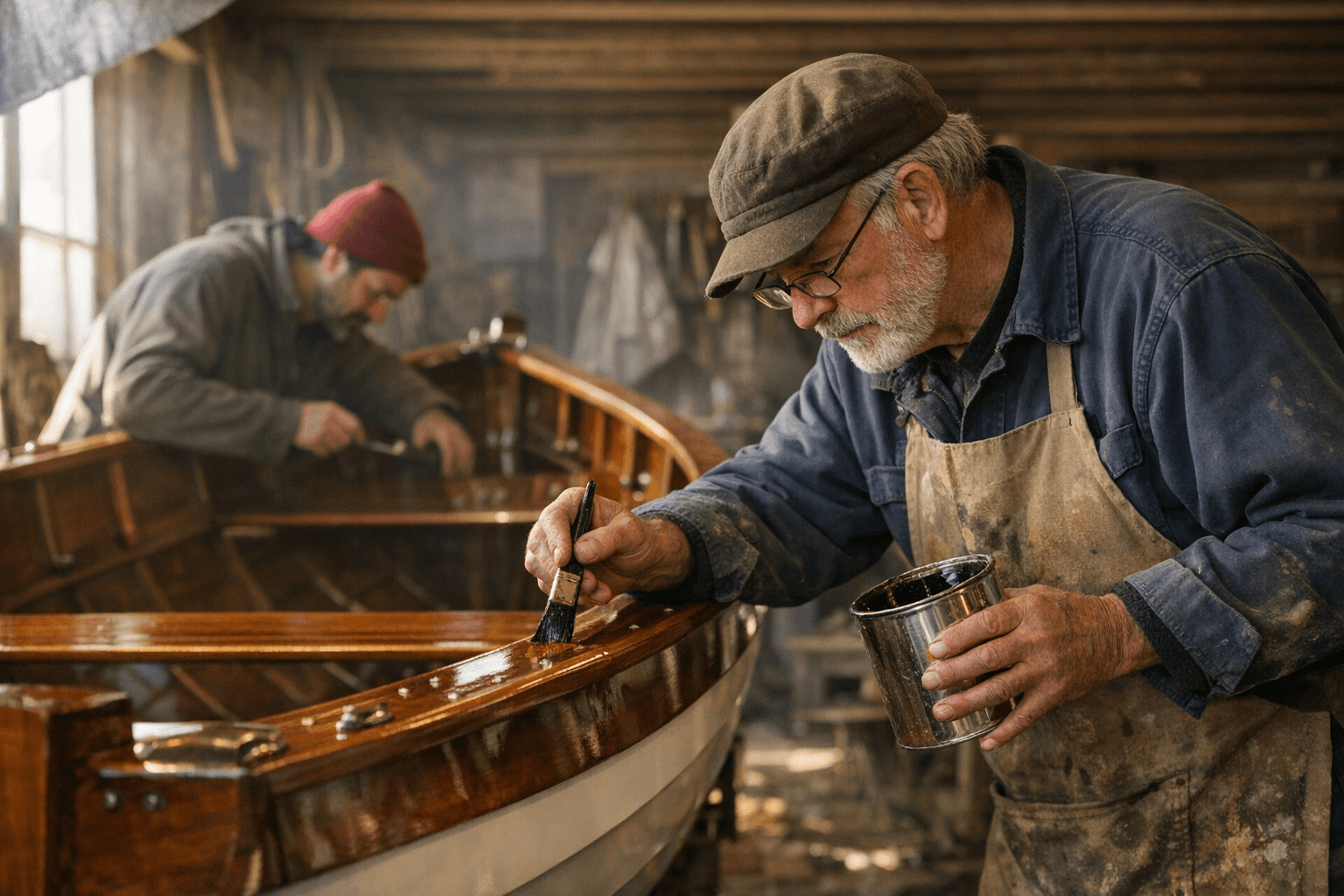
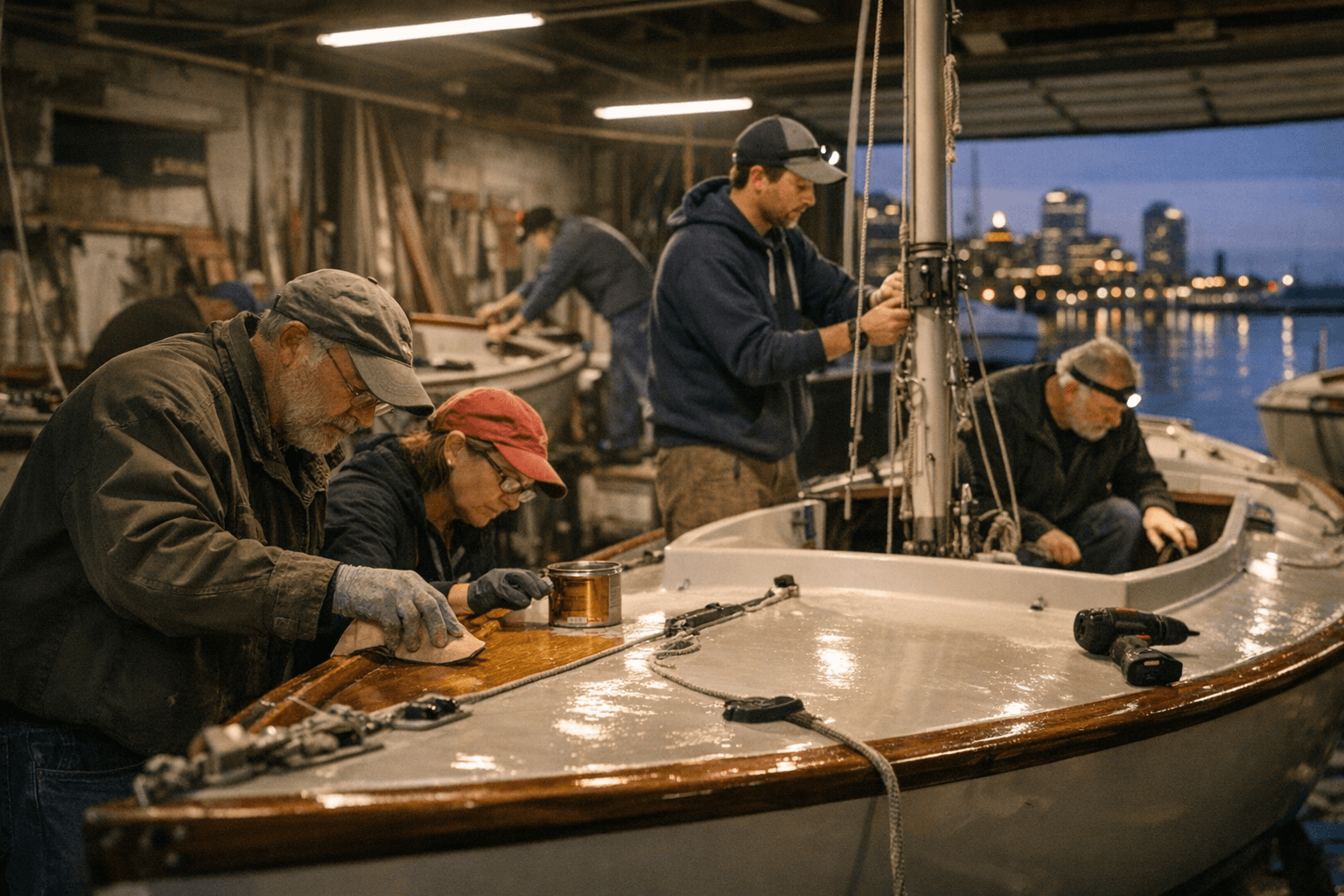
Roughly 7,000 families in North Sinai depend on the fishing economy of Lake Bardawil, a large, very saline lagoon on the north coast of the Sinai Peninsula, and most of those boats need someone to keep them in the water. That someone, at least in Bir Al-Abd, is Salem Abu Nuaimish. A Getty Images editorial set of 19 photographs, shot on April 5, 2026, documents Abu Nuaimish's small manufacturing workshop: frames, planking, fiberglass layups, and newly finished hulls staged outside the door, his son Hani Salem working beside him on the latest build. What the images capture is not a tutorial, but for a trained eye they are something more useful: a working record of how skilled craftsmen solve real engineering problems with constrained budgets and whatever timber arrives at the door.
The Fleet Behind the Workshop
About 3,488 fishermen are registered in Lake Bardawil's management records, and 70 percent of them are residents of the Bir al-Abd district. The fishing season runs from April through January, meaning boats cycle through a demanding ten-month saltwater workload before any off-season repairs can begin. The fish of Bardawil Lake carry a high-quality reputation globally, and high-end hotels across Egypt depend on them; bream and mullet are the most prized catches. That commercial pressure means downtime is expensive, and it shapes every material choice Abu Nuaimish makes: speed of repair matters as much as ultimate structural strength.
Three Traditional Techniques the Workshop Reveals
Stitch-and-Glue Assembly: Speed Under Resource Pressure
The Getty photos show plywood panels being mechanically joined before permanent bonding, the hallmark of stitch-and-glue construction. Stitch-and-glue is a simple boatbuilding method that uses plywood panels temporarily stitched together, typically with wire or zip-ties, then glued permanently with epoxy resin, and it can eliminate much of the need for frames or ribs. For a small workshop producing working fishing craft, this is a decisive advantage: panels can be cut, positioned, and stitched into an accurate hull shape without a full set of forms or expensive tooling. The problem this solves is not just cost but speed. A boat back in the water in three days generates income; one waiting for complex framing does not.
Fiberglass Overlay: Armoring Wood Against Hypersaline Abuse
Lake Bardawil's salinity is punishing. The lagoon is classified as hypersaline, meaning standard wooden hulls without surface protection degrade quickly from osmotic pressure, UV exposure, and abrasive sediment. The workshop images show craftsmen applying fiberglass cloth over timber panels, a lamination sequence that trades minimal materials cost for a dramatic jump in service life. Practically all stitch-and-glue boats receive a sheathing of fiberglass cloth soaked in epoxy resin to add protection, strength, abrasion resistance, and impact resistance. In the Bir Al-Abd workshop the fiberglass overlay is less about matching offshore bluewater standards and more about buying another fishing season from materials that are available locally and affordably, which is exactly what the fleet needs.
Local Timber Selection and Incremental Planking: Working With What Arrives
The workshop photos also reveal stacks of lumber being shaped into frames and planks, with craftsmen fitting components incrementally rather than following a rigid dimensioned plan. Vernacular boatbuilding documentation of Egypt's lake boats identifies the adze as the main shaping tool in the toolkit, alongside hand saws and drills, and the Bir Al-Abd images are consistent with that low-tech toolkit approach. The practical constraint being solved here is timber availability: North Sinai is not flush with boatbuilding-grade hardwood, so the craft lies in reading what stock is on hand and fairing by eye to fit. This incremental method is slower than CNC-cut kits, but it is infinitely adaptable when a specific plank dimension simply is not available.
What You Can Borrow Directly
The techniques documented in Abu Nuaimish's workshop translate cleanly to recreational dinghy and small-boat repair without modification:
- Wire or zip-tie stitching to hold plywood panels in position while fillets cure is as valid for a Mirror dinghy repair as it is for a Bardawil fishing skiff. No forms, no clamps, minimal tooling.
- Incremental dry-fitting before committing adhesive is visible throughout the photo set and is one of the most underrated habits a DIY builder can develop. Fit everything; glue nothing until you are certain.
- Fiberglass cloth over repaired planking is a direct lift from the workshop method and remains the most cost-effective way to reinforce a structural patch on a wooden hull.
What to Replace With Epoxy and Composites
The honest gap between traditional workshop practice and modern DIY best practice is in the chemistry. Where Abu Nuaimish's craftsmen may use polyester resin or locally available laminates for cost and supply reasons, modern epoxy systems close that gap significantly:
- Replace polyester resin with a marine-grade epoxy such as WEST SYSTEM 105 or equivalent for fiberglass overlays. The combination of fiberglass tape and epoxy glue produces a composite joint roughly 8 to 10 times the strength of fastenings and timber framing used in conventional plywood construction.
- Replace hand-faired putty fairing compounds with a thickened epoxy fairing mix. The surface life is longer and it bonds chemically to the laminate rather than sitting on top of it.
- For outboard transom reinforcement, the workshop images show solid timber blocking, which works but is vulnerable to rot in saltwater cycling. A G10 fiberglass board or an epoxy-saturated marine plywood laminate is a direct upgrade that adds negligible weight and eliminates the rot vector entirely.
Traditional vs. Modern: A Decision Table
| Repair or Build Task | Traditional Workshop Method | Modern DIY Equivalent | Verdict |
|---|---|---|---|
| Joining plywood panels | Wire stitch + resin fillet | Zip ties + thickened epoxy fillet | Borrow directly |
| Hull skin protection | Fiberglass mat over painted timber | Biaxial cloth + marine epoxy laminate | Upgrade to epoxy |
| Frame and keel timber | Available local hardwood, adze-faired | Marine ply + structural epoxy fillets | Replace with ply |
| Surface fairing | Hand-planed wood + filler putty | Epoxy fairing compound | Upgrade |
| Outboard transom block | Solid hardwood blocking | G10 board or epoxy-saturated ply | Partial upgrade |
| Hull shape without forms | Stitch panels to shape by eye | Stitch-and-glue with printed station lines | Borrow directly |
The Apprenticeship Model Hiding in Plain Sight
Hani Salem, Abu Nuaimish's son, appears in the Getty photos learning the craft alongside his father, a transmission of skill that has kept Bardawil's fishing fleet operational across generations. For DIY builders who want more than photographic reference, the same model is available closer to home: small regional boatyards and repair shops in almost every coastal community will accept informal apprenticeships or working arrangements in exchange for labor. An afternoon watching an experienced builder fair a hull or set a skeg is worth more than any number of instructional videos, because the decisions being made in real time, under real material constraints, are exactly the decisions you will face on your own boat. Abu Nuaimish's workshop is a reminder that practical boatbuilding knowledge has never been locked up in engineering schools; it lives in small yards, passed hand to hand, and it remains accessible to anyone willing to show up and work.
Know something we missed? Have a correction or additional information?
Submit a Tip