From spectator boat deckhand to SailGP boat builder
A Bermuda deckhand’s path to SailGP boat builder shows how small marine jobs grow into real fabrication skills. For DIY sailors, the lesson is simple: boatbuilding starts with habits, not titles.
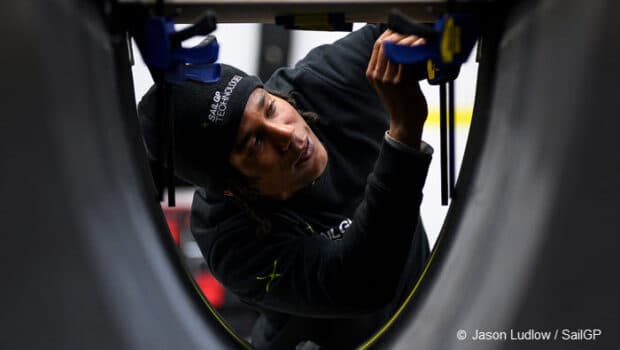
How a deckhand becomes a builder
Keeron Wilson’s story starts in the sort of job many sailors barely notice, yet every boat depends on it: an 18-year-old deckhand in Bermuda, working the summer of 2017 on a spectator boat and serving cocktails. That first step around boats did more than cover a shift in the tourism economy. It put him inside the daily rhythms of marine work, where timing, cleanliness, teamwork, and an eye for what can break all matter long before anyone calls the job boatbuilding.
The boat tied to that early chapter was Calico Jack’s, a 60-foot motorized pirate-themed tour boat in Bermuda’s Great Sound. In Bermuda tourism listings, it is described as the island’s only floating pirate bar and a Dockyard attraction, which tells you a lot about the environment Wilson came up in: a place where hospitality, charter work, and seamanship overlap. That overlap is exactly why this story matters to anyone who fixes, refits, or upgrades a sailing boat on the side. The first lessons often come from being near the gear, not from reading a manual.
What that early boat work really teaches
A deckhand role on a busy tour boat may sound far removed from the shop floor, but it builds the same instincts that keep a boat safe and usable. You learn how people move on deck, how fast small problems become service problems, and how marine equipment gets used hard in real conditions. That matters whether you are running a charter, maintaining a cruiser, or trying to keep a project boat from turning into a half-finished headache.
For DIY sailors, the practical takeaway is that real boat skill is cumulative. You start by noticing fittings, lashings, hoses, fasteners, leaks, wear points, and the little failures that show up when a boat is worked every day. Over time, that awareness turns into judgment, and judgment is what separates a cosmetic fix from a repair you can trust offshore.
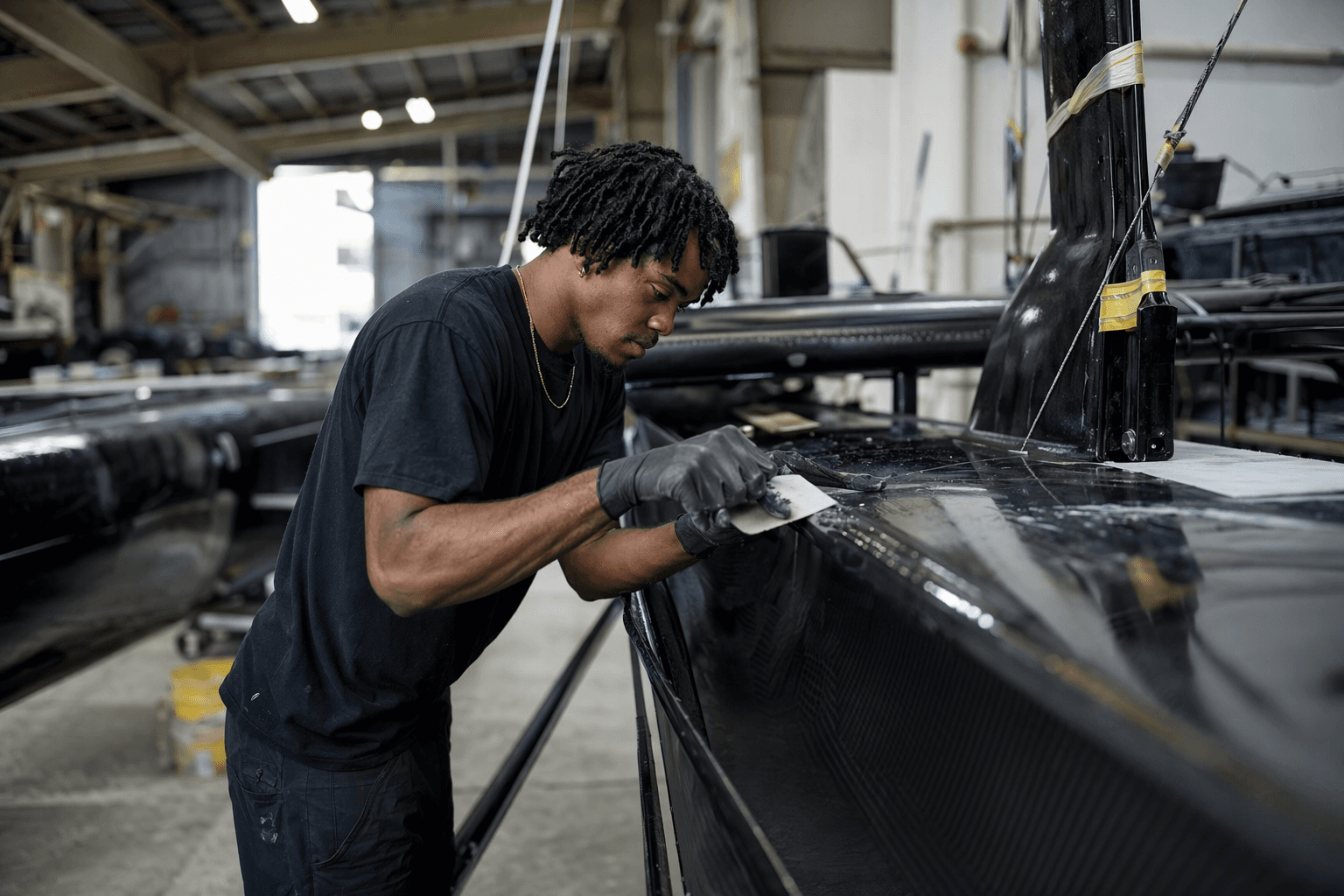
Why SailGP’s Southampton base is a useful model
Wilson is now described in 2026 coverage as a specialist boat builder for SailGP, working at SailGP Technologies in Southampton, UK. SailGP says its center of excellence opened on July 17, 2025, and that the facility is home to more than 100 designers, engineers, boat builders, and specialists. The organization also says the site supports the construction and maintenance of the F50 foiling catamarans.
That mix matters because it shows what modern boatbuilding actually looks like. It is not just carpentry with resin on top. It is composites, hydraulics, aerodynamics, design review, fabrication, and maintenance all in one place. For anyone doing small-build work at home, that should be a useful reality check: the best shops are not defined by one trade, but by how well they integrate several trades around a single hull, foil, or system.
The skills that matter first
If you strip the glamour away, the entry-level skills that move someone from service work into building are the same ones that keep a cruising boat reliable. They are the habits that make a repair durable instead of merely presentable. Wilson’s path suggests that the jump from deckhand to builder comes from learning how boats are assembled, how they fail, and how to work cleanly enough that the next person can trust the result.
For sailors doing their own maintenance, the highest-value skills are often the least flashy:

- Measuring accurately before cutting or drilling
- Preparing surfaces properly before bonding or sealing
- Mixing and applying epoxy or adhesive in controlled batches
- Fairing and sanding so the repair matches the surrounding structure
- Bedding hardware so water cannot creep into the core
- Inspecting hoses, clamps, and fittings with a builder’s eye, not a passenger’s eye
Those are not advanced skills in the way many people imagine boatbuilding. They are foundational skills. Once they are solid, everything else becomes easier, from patching a cracked panel to refitting a locker lid or repairing a damaged laminate.
What hobby sailors can borrow from pro shop practice
The biggest lesson from SailGP’s production model is process. A professional shop does not rely on luck, improvisation, or memory alone. It depends on clean work, repeatable methods, and specialists who know where the weak points are likely to appear. That approach is worth copying in a garage, a marina shed, or on a trailer boat being prepped for the season.
A good shop-style routine for DIY work usually looks like this: 1. Inspect first, then disassemble. 2. Label parts, fasteners, and hoses as they come off. 3. Dry-fit before any adhesive, sealant, or laminate goes on. 4. Keep dirty work and clean assembly separate. 5. Check the repair in strong light before calling it done.

That discipline saves time later, especially when a repair sits in a high-load area or a place that sees spray, vibration, and UV. The point is not to make a home project feel like a factory line. The point is to make sure the job lasts long enough to matter.
Bermuda’s marine economy makes the path visible
Bermuda is the right setting for this story because the island’s boating world is layered. The same place that supports tourist traffic and dockside excursions also hosts elite sailing on the world stage. The Apex Group Bermuda Sail Grand Prix took place on May 9-10, 2026, and Bermuda’s event included on-water spectator experiences, which makes the connection between tourism boats and top-end racing very real.
That local ecosystem helps explain how someone can start as a deckhand on a visitor boat and end up building race boats in Southampton. SailGP says its Better Sport strategy is meant to promote inclusion and opportunity across sailing, and its Inspire program is built around Learning, Racing, and Careers. In August 2023, SailGP said Inspire had engaged 15,483 young people since inception and had already passed its 10,000-young-people-by-2025 target two seasons early. That is not just a branding exercise. It is a pipeline.
Wilson’s path shows how the pipeline works in practice. A teenager serving cocktails on Calico Jack’s in Bermuda’s Great Sound can grow into the kind of builder who helps shape an F50. For the rest of us, the lesson is more immediate: the best repairs start the same way, with close attention to boats that are already moving, already working, and already teaching you what matters before a part fails at sea.
This article was produced by Prism’s automated news system from verified source data, official records, and press releases, then run through automated quality and moderation checks before publishing. The system is built and supervised by the people who set the standards it runs under. Read our full AI policy.
Did this article answer your question?