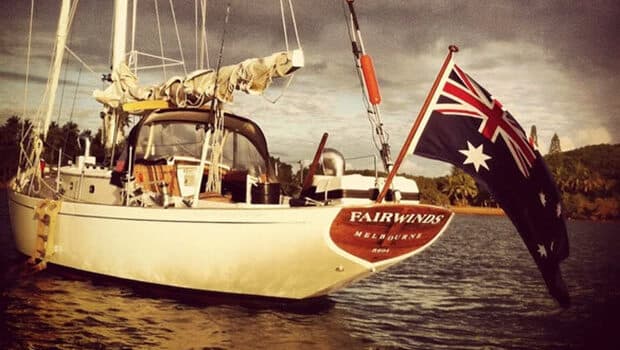
Rethinking the dinghy, why rowing still matters for cruising sailors
A flat inflatable and a stalled refit turned a 50-year-old pram into the smart answer, and that is the real dinghy lesson: rowability still saves cruises.

A deflated inflatable and a half-finished rigid tender forced one crew back into a 50-year-old Montgomery pram with an intact fiberglass hull, oars, and oarlocks, and that “Plan C” is exactly how to think about the dinghy problem. Every tender is a compromise, and the right one is not the trendiest hull on the dock. It is the boat that fits your storage, your maintenance appetite, your towing habits, and the way you actually move people and gear ashore.
Start with the failure mode, not the brochure
Ralph Naranjo’s take in Practical Sailor is useful because it starts where cruising gets real: at departure time, when the inflatable is down, the preferred rigid dinghy is still mid-refit, and the boat you can actually use is the one that is ready. That is the question every cruiser should ask before spending money on a tender. Do you want a boat that is easy to stow, easy to launch, easy to carry loads, easy to row, easy to trust underway, or some uneven mix of all five?
That is why the dinghy decision is never just about price or looks. A tender lives in the margins of cruising life, so its compromises show up in daily irritation: where it stores, how it behaves behind the mothership, how much grime and maintenance it adds, and whether it still works when the outboard quits or the fuel can is empty.
What inflatables really buy you
Practical Sailor’s earlier “Uninflatable Tenders” piece says the case for inflatables plainly: they are easier to stow, less likely to damage the boat they are tending, and more stable. That is a strong set of advantages for cruisers who care about davits, deck space, and protecting topsides. If your priority is moving people and gear without turning the foredeck into a puzzle, an inflatable makes a lot of sense.
The tradeoff is just as plain. Inflatables are not a joy to row. That matters more than many sailors admit, because the tender is often the boat you use when the conditions are awkward, the outboard is inconvenient, or you need a quiet, simple run ashore. A tender that is stable but miserable on the oars can still be the right choice, but only if you accept that you have bought portability and load carrying at the expense of propulsion by muscle.
Why a hard dinghy still earns its berth
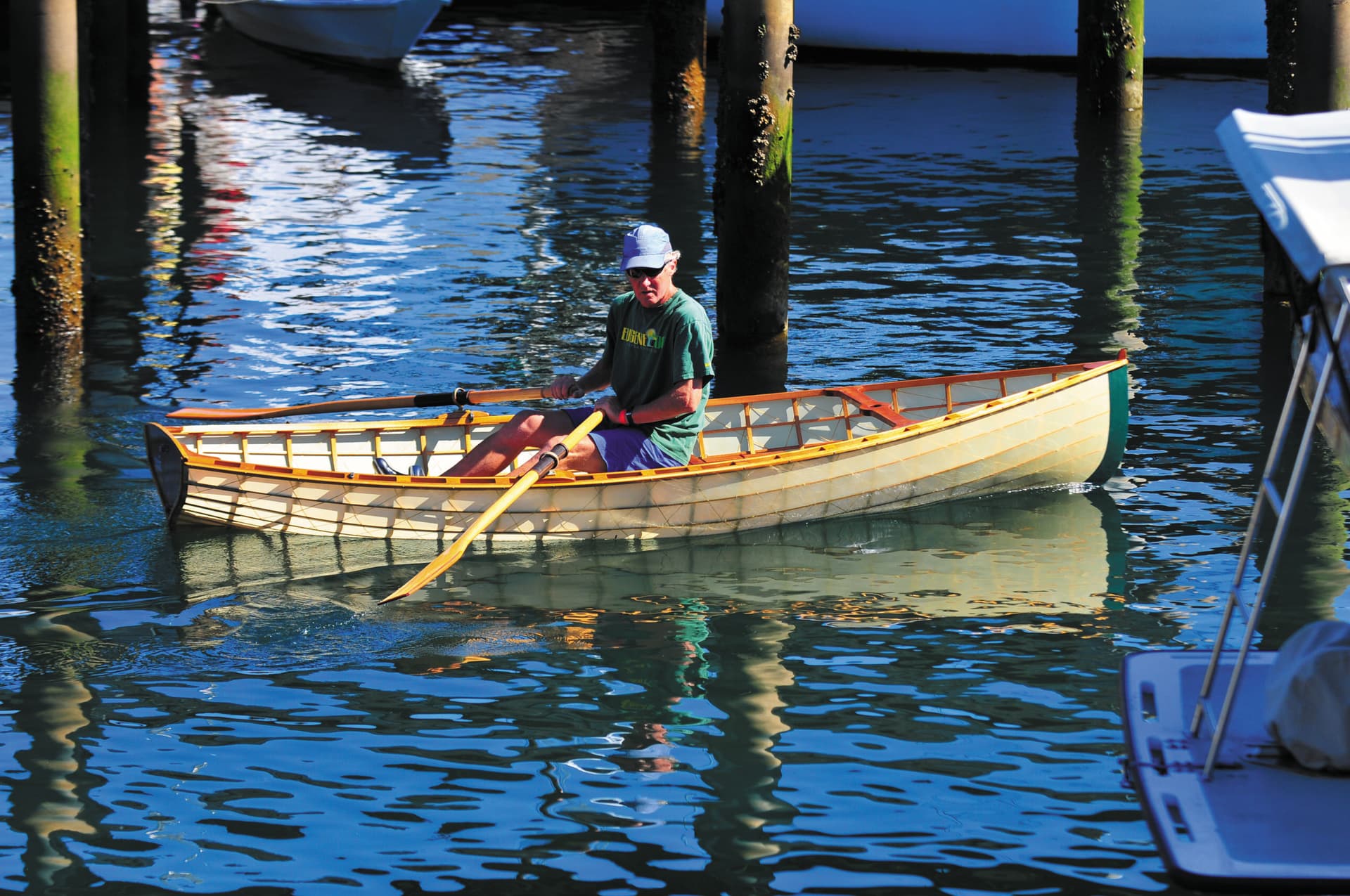
The revived Montgomery pram in Naranjo’s story is a reminder that a rigid hull can still be the better tool. A sound fiberglass dinghy has one huge advantage over a soft tube boat: it is a real boat, with structure you can inspect, maintain, and keep alive for decades. That does not make it painless to own. It asks more of your storage, more of your deck plan, and usually more of your willingness to live with a bigger footprint.
But the payoff is clear when you want a tender that rows well and behaves like a small boat instead of a floating compromise. Older lapstrake and round-bilge hulls, along with regional classics like Whitehalls, Adirondack guide boats, and wherries, are part of that argument. They are not just pretty. They can be efficient, predictable, and satisfying in a way that makes a short harbor hop feel like part of the cruise instead of a chore.
Rowing is not a quaint fallback
The best argument for rowing is not nostalgia. It is reliability. When an engine becomes inconvenient or unavailable, the oars still work. That is why Naranjo treats rowing as a legitimate propulsion method, not an old-fashioned extra. For a shore runabout, especially in real cruising conditions, a tender that rows well can be more dependable than one that depends on fuel, clamps, mounts, and a temperamental outboard.
Christopher Cunningham’s reporting in Small Boats drives that point home through the Whitehall. Howard I. Chapelle called the Whitehall “perhaps the most noted of American rowing work boats,” and Cunningham notes that Whitehalls served as water taxis in New York City beginning in the 1820s before becoming a recreational classic. That history matters because it proves the design was not romantic first and practical second. It was practical first, and the romance came later.
Why the Whitehall keeps coming back
Modern builders still see demand for that kind of efficiency. Whitehall Row markets the Minto 9 as a “rowing dinghy, tender, pond boat,” and also as a “rowing & sailing dinghy, tender, pond boat.” That is not marketing fluff so much as a confession that sailors still want one small boat to do several jobs. The same logic shows up in Steve Holt’s Whitehall 17 profile, which describes the Whitehall as an easily driven hull whose long waterline and light weight make it faster and more responsive.
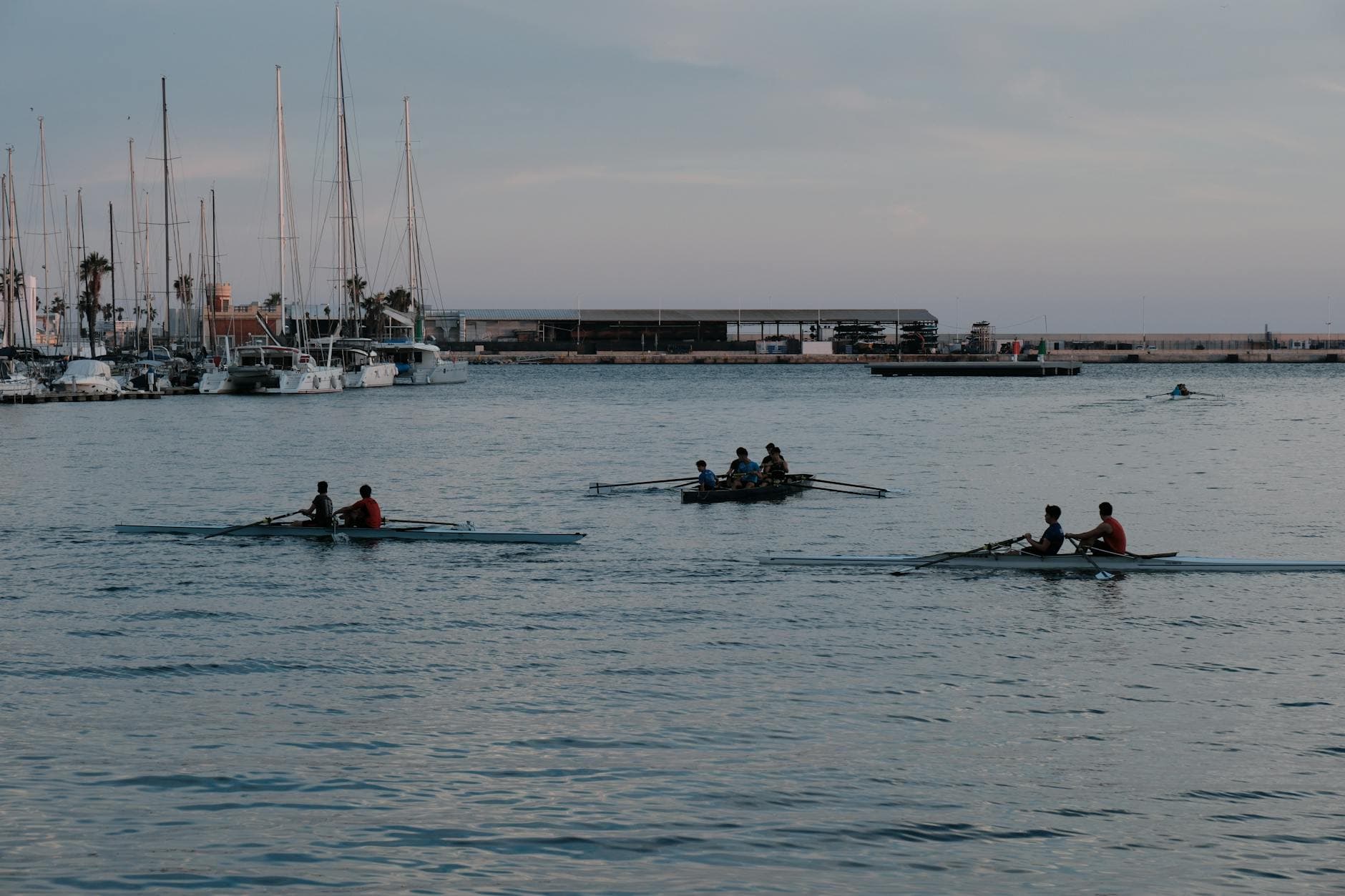
That is the heart of the hard-dinghy case. A lighter, better-proportioned rowboat asks less of the rower and gives more back in motion. It accelerates more easily, carries better through the stroke, and connects skipper to hull in a way that a tube boat rarely does. If your tender needs to serve as a daily shore runner and you value the oars, that responsiveness is not a luxury. It is the difference between using the boat and avoiding it.
Choose the boat that matches the cruise you actually run
The right tender depends on how you cruise, not on what looks clever on the dock. If you prize simple stowage, easy lifting, and gear hauling, an inflatable still makes sense. If you want real rowing performance, straightforward maintenance, and a boat that feels alive under oars, a hard dinghy deserves a hard look. If you want a little of both, the hybrid market exists for a reason, and boats like the Minto 9 show that sailors still want a tender that can split the difference without pretending there is no compromise at all.
The old Montgomery pram at the start of Naranjo’s story was not the prettiest answer, and it was not the newest one. It was simply the boat that was intact when the cruise needed moving. That is the quiet lesson here: before the inflatable fails at sea, before the outboard becomes dead weight, choose the tender that can still get you ashore when the plan falls apart.
This article was produced by Prism’s automated news system from verified source data, official records, and press releases, then run through automated quality and moderation checks before publishing. The system is built and supervised by the people who set the standards it runs under. Read our full AI policy.
Did this article answer your question?