Gary Jobson blends forecasts and seamanship for safer sailing
Jobson’s take is simple: never trust a single weather read. Blend apps, barometer, sky, and judgment before you cast off.
A layered weather check beats a one-app decision
Gary Jobson’s weather advice lands because it starts where real sailing starts, with pressure and uncertainty. Weather is always changing, and a boat is always moving through shifting air, water, depth, cloud cover, and wave patterns, so the skipper’s job is not to check once and relax. It is to keep watching, comparing, and adjusting as conditions evolve.
That is the core of his March 23, 2026 guide: use modern forecasting tools, but do not abandon seamanship. Jobson’s approach is built around pre-departure preparation and continuous observation, which is exactly how a DIY passage stays flexible when the forecast and the horizon do not match.
What the modern tools catch best
Jobson names a practical mix of online weather sources: PredictWind, SailFlow, Windy, Weather Underground, The Weather Channel, and the National Weather Service. Each one can help with the same basic goal, which is to show how wind, pressure, storms, and visibility may evolve, but the value comes from cross-checking rather than treating any one platform as final.
That matters because NOAA says marine forecasts are built from observations, numerical model guidance, and forecaster expertise. In other words, the forecast is already a blend of data and judgment, and your onboard decision should be one layer farther along, not one layer behind. For a passage plan, that means you are not looking for a magic answer. You are looking for enough agreement to trust your next move.
The barometer still earns its place
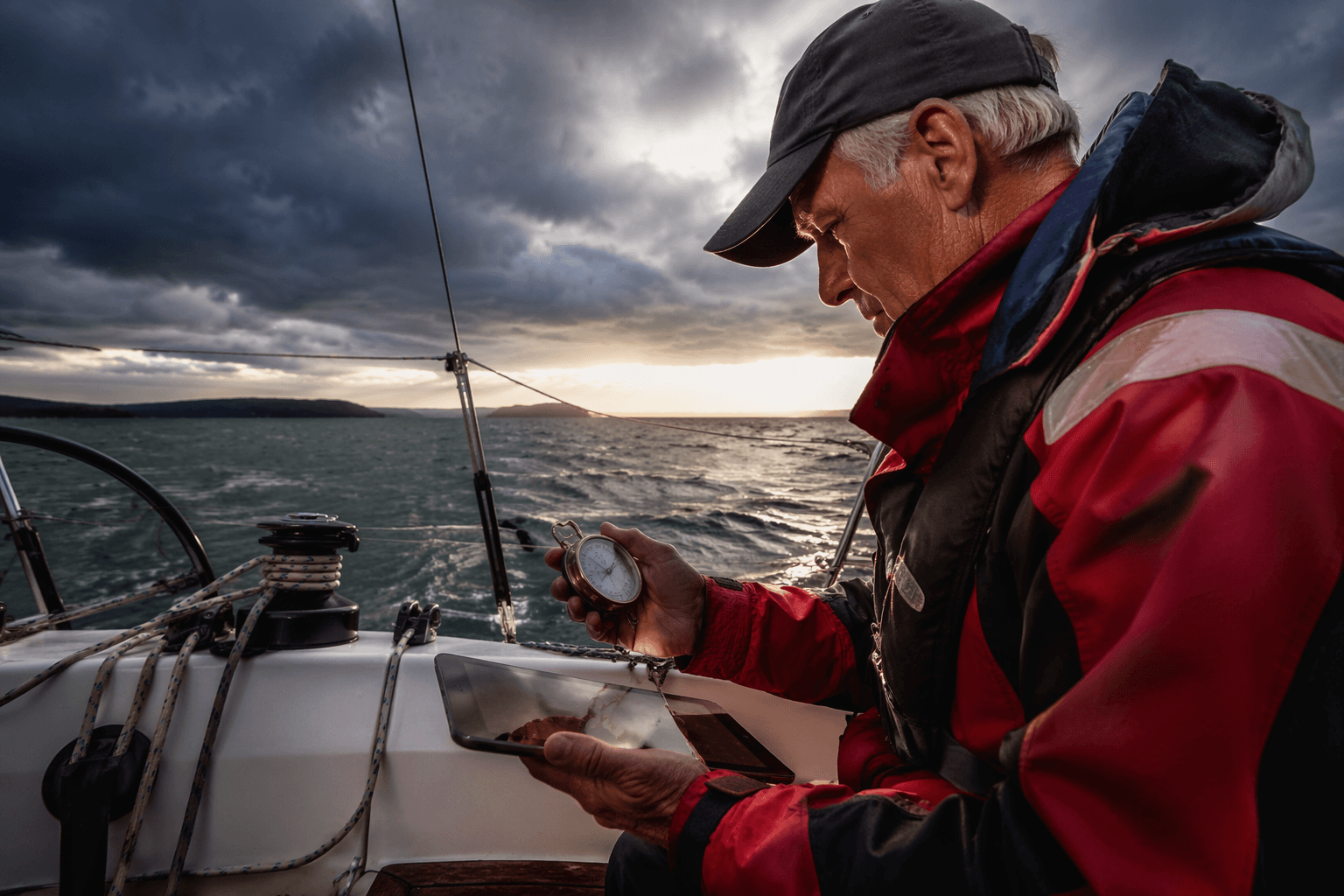
Jobson gives the barometer a simple but useful role: it can show an accurate change in weather tendency over about a three-hour period. Falling pressure points toward worsening weather, while rising pressure suggests improvement. That makes it one of the few tools on the boat that gives you a direct sense of whether the system is improving or degrading right now, not just what a model predicted earlier.
That short-term trend is valuable because forecasts can be right in the broad sense and still miss the timing that matters to you at the dock, on a lee shore, or halfway through a channel entry. A steady barometer reading, compared with the latest app output, helps you decide whether you still have a clean departure window or need to wait.
How NOAA fits into the onboard workflow
The National Weather Service’s Marine Weather Services Program issues marine forecast and warning products in graphical and text formats, which makes it a useful companion whether you like a quick scan or a more detailed brief. NOAA’s Ocean Prediction Center goes further, continuously monitoring and analyzing maritime data and providing guidance for safety at sea. That gives the sailor more than a single forecast snapshot. It creates a chain of information that can support both nearshore and offshore decisions.
The key point is that NOAA’s system is designed around changing conditions, not static ones. The National Weather Service also warns that sudden changes in winds, seas, visibility, or thunderstorms can quickly turn safe conditions dangerous. That is why checking weather frequently is not paranoia. It is part of basic passage discipline.
When the signals conflict, compare before you commit
This is where Jobson’s advice becomes seamanship instead of app shopping. A model may show a clean window, the barometer may be slipping, and the sky may already be building a different story. In that situation, the skipper’s role is to synthesize, not blindly obey. The right answer may be to shorten the route, change departure timing, reef earlier, or stay in port until the picture clears.
A useful workflow looks like this:
- Check the forecast before departure, then check it again close to departure time.
- Compare at least two modern weather sources with the barometer and the horizon.
- Treat a pressure drop, darkening cloud line, or building chop as a reason to re-evaluate.
- If forecasts disagree, look for the trend that shows up in multiple sources before you commit.
- Use the latest marine warnings as the final safety filter, especially for wind, seas, fog, thunder, or waterspouts.
NOAA’s marine warning system is built around watches, advisories, and warnings for hazardous winds and sea conditions, plus fog, freezing spray, thunderstorms, and waterspouts. That gives you a cleaner decision framework than relying on gut feel alone. If multiple sources are converging on the same risk, it is time to change the plan, not argue with the weather.
Weather sense belongs in the larger safety picture
Jobson does not isolate weather from the rest of the boat. He also reminds living-aboard sailors to use life jackets and an engine cut-off switch, and to keep a close eye on electrical, fuel, and fire suppression systems. That is a smart connection, because bad weather punishes weak systems fast. A marginal electrical setup, a fuel issue, or a fire problem becomes a much bigger problem when the boat is bouncing, wet, and under time pressure.
Federal law at 46 U.S.C. 4312 addresses engine cut-off switch education for recreational vessels, which reinforces how central that gear has become in boating safety. The broader message is clear: weather prep is not separate from boat prep. If you are already looking at wind, visibility, and sea state, you should also be thinking about the equipment that keeps the boat controllable when conditions sharpen.
The practical sailor’s habit: keep watching the whole picture
Jobson’s method works because it treats weather as a live system. The app tells you what the models think, the barometer tells you what pressure is doing right now, the sky and sea tell you what is arriving sooner than expected, and NOAA’s warnings tell you when the risk has crossed a line. When those signals line up, you gain confidence. When they do not, you gain a reason to slow down and reassess.
Weather Underground’s Intellicast traffic began redirecting to Weather Underground in 2019, which is a small reminder of how much the forecasting world has shifted without changing the basic habits that matter onboard. The platforms may evolve, but the sailor’s task stays the same: read the tools, trust the trend, and make the call before the boat forces the issue. In that sense, Jobson’s real lesson is not about which forecast site to open first. It is about building enough margin that the next change in the sky becomes a decision point, not a surprise.
This article was produced by Prism’s automated news system from verified source data, official records, and press releases, then run through automated quality and moderation checks before publishing. The system is built and supervised by the people who set the standards it runs under. Read our full AI policy.
Know something we missed? Have a correction or additional information?
Submit a Tip