How a better anchor snubber tames shock loads at anchor
Most anchoring headaches start with load transfer, not the anchor. Get the snubber length, nylon stretch, and chain connection right, and the boat stops taking the hits.
The real failure at anchor
A bad night on the hook often starts the same way: the chain goes bar-taut, the bow snaps, and the whole boat takes a violent hit that feels bigger than the wind itself. That is usually not just an anchor problem. It is a load-path problem, where shock from chop, wind shifts, or a tight anchorage is being dumped straight into the chain, the roller, the bow hardware, and the structure instead of being softened by a proper snubber.
That is why the snubber deserves to be treated as load-management gear, not a spare accessory. On a short-scope, all-chain rode, it is the piece that can turn a brittle overnight setup into one that absorbs shock, protects the hardware, and helps the boat hold quietly through the dark hours.
Why the snubber changes the outcome
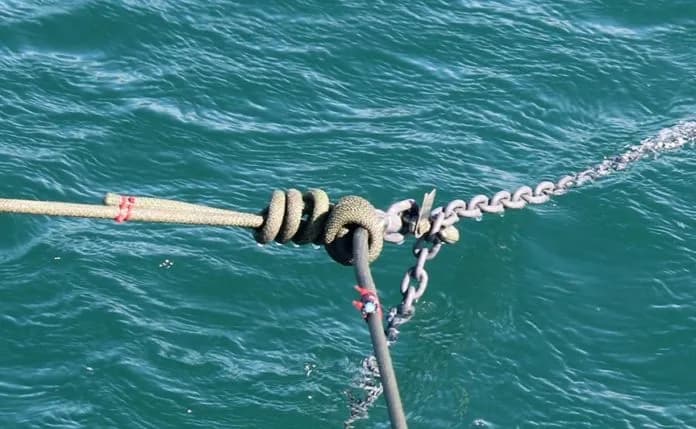
The basic physics are simple, and the cruising-world consensus is strong. Jimmy Green Marine describes anchor chain snubbing as fundamental on all-chain anchor rodes, because the line transfers strain to a suitable deck strongpoint and introduces stretch into a system that would otherwise be rigid. Mantus Marine makes the same point in bridle form: the bridle absorbs shock loads from gusts and waves, takes strain off the windlass gypsy, and reduces stress on the windlass deck joint.
Rocna Anchors adds another benefit that any anchor watch can appreciate: snubbers cut the noisy chain rumble that travels up the rode. That matters because sound is often the first sign that the system is loading and unloading hard. When the chain is quiet, the boat is usually moving more gently too.
What usually goes wrong
Most anchoring complaints blamed on the anchor are really snubber failures in disguise. If the snubber is too short, the load transfer happens too abruptly and the boat still jerks. If the material is too stiff, the setup does not cushion the shock the way it should. If the connection geometry is wrong, the chain hook or attachment point can keep hammering the roller, the bow gear, or the windlass area even though the sailor thinks the load has been “taken off.”
Practical Sailor’s earlier shock-load testing found that material and length both affect absorption, and that nylon is the preferred material. That is not a small detail. Nylon’s stretch is what turns a sharp hit into a longer, softer pull, which is exactly what a moored boat needs when the breeze rises and the rode starts to snatch.
How to assess your current setup
The easiest way to inspect a snubber system is to stand at the bow and follow the load path with your eyes. Start where the chain meets the hook and work outward from there. If the geometry does not give the line room to stretch beyond the bow, the snubber is not doing enough work.
Ask these questions:
- Is the snubber nylon, the preferred material in Practical Sailor’s testing?
- Does it extend beyond the bow enough to add real stretch, not just look tidy? Jimmy Green Marine says the line should extend 1 to 5 meters beyond the bow, depending on boat size.
- Does the chain hook or attachment move the load to a proper deck strongpoint instead of leaving the windlass in the line of fire?
- Is the system arranged to reduce chafe, or is the line rubbing where the bow hardware, roller, or chain could saw it up over time?
If the answer to any of those is no, the symptoms usually show up at night first: anchor-dancing, noise, hard jerks, and the feeling that the whole boat is being shaken awake. Those are load-management failures, not proof that the anchor itself is bad.
Matching the configuration to the use case
A short-scope, all-chain rode calls for the most deliberate snubber setup. That is where an extended nylon snubber and a proper chain hook do their best work, because the goal is to move the load off the chain and into a line that can stretch. Rocna notes why that matters: shock loads can increase the chance of dragging or over-stress the chain, so reducing the peak matters as much as reducing the noise.
When gusts and waves are the main problem, a bridle or dual-legged snubber can be the better fit. Mantus Marine’s bridle logic is aimed at exactly that sort of motion, spreading strain and calming the boat as it swings. If the main concern is protecting the windlass and adding shock absorption without overcomplicating the bow, West Marine’s chain hook approach shows the core idea cleanly: the hook transfers load to a nylon rode, relieves stress on the windlass, and adds the stretch the chain alone cannot provide.
That choice architecture matters because not every anchorage loads the boat the same way. A lunch stop in settled water, a breezy overnight in a packed harbor, and a real cruising night with chop and wind shifts do not ask the same thing of the snubber. The best setup is the one that matches the force pattern you are trying to tame.
Why the numbers matter
The scale of anchor gear makes the safety case hard to ignore. The U.S. Navy said in 2015 that one 90-foot shot of carrier anchor chain weighs 20,500 pounds, and that twelve shots of chain collectively hold a 60,000-pound anchor. Those are big-vessel numbers, but they underline the same point cruisers face in miniature: anchor systems are serious load paths.
The Naval Safety Command’s 2026 anchoring risk card pushes that idea even further, warning not to let the chain take charge when dropping anchor and to control lowering speed. That is the same mindset a good snubber system demands. You are not just stopping a boat; you are controlling how force moves through it.
The habit that pays off
The best snubber is the one that turns a hard, brittle overnight setup into something forgiving. In practice, that means nylon, enough length to stretch, a real deck strongpoint, a chain hook that actually transfers the load, and enough spares aboard to replace a tired line before it fails at the worst time. Practical Sailor’s earlier testing said to carry multiples, and cruising life makes that advice feel less like caution and more like common sense.
When the breeze comes up and the chain starts to sing, the boat tells you exactly what it needs. If the load is handed off cleanly, the snubber takes the hit, the gear stays happier, and the night gets quieter.
This article was produced by Prism’s automated news system from verified source data, official records, and press releases, then run through automated quality and moderation checks before publishing. The system is built and supervised by the people who set the standards it runs under. Read our full AI policy.
Did this article answer your question?