How IRC rating and sail choice unlock speed on existing boats
The quickest speed gains often come from rule-smart sail choices, not new gear. IRC can reward the right headsail plan and make practice time pay back harder.

The fastest gain may already be on the boat
The easiest speed to find is rarely hidden in a catalog. In IRC, the sharpest gains often come from understanding how the rule shapes your sail plan, then using training time and crew coordination to make that plan work on the water. Stu Bannatyne’s point is practical: if you want an existing boat to go quicker, start by making better decisions about rating, geometry, and how your crew actually sails the boat.
That matters because IRC is not just a spreadsheet exercise. It reaches into the way a boat is rigged, which headsails it carries, and how much complexity is worth the trouble. For club racers and performance-minded cruisers alike, the real question is not whether you can buy more speed, but whether the boat you already own can be made easier to sail fast.
IRC rewards the right shape, not just the biggest sail
One of the most useful takeaways from the IRC discussion is how much sail geometry influences both performance and rating. The article notes that a flying headsail with a 60% mid-girth can be allowed under IRC without the same penalty as a conventional masthead genoa. That is a major clue for owners who are deciding whether a big overlapping headsail is still the right answer for their boat.
The lesson is simple: sail choice is not only about raw area. A boat’s rig configuration and sail inventory need to make sense together, because the rating rule can change the value of every square foot you add. If you are tuning a club racer or simplifying a cruiser, the smartest setup is often the one that gives you the best blend of actual boat speed, manageable handling, and a rule position that does not punish the package unnecessarily.
A sail plan should match the rule and the crew
A lot of DIY performance work goes sideways when owners focus on hardware in isolation. Bannatyne’s message pushes the other way. The sail plan should reflect how IRC treats the boat, how the rig is configured, and how much practice time the crew can realistically invest in handling the setup well.
That is where the “speed without spending” idea becomes more than a slogan. If a sail plan asks for complicated maneuvers but your crew only has limited time to learn them, the theoretical advantage can disappear fast. A simpler inventory, used well, often beats a more exotic one that is sailed tentatively or trimmed inconsistently.

Rating down can be part of going faster
The most counterintuitive part of the story is the value of rating down. IRC can make a boat more competitive by reducing the penalty attached to the way it is configured, even if the immediate result is not the biggest sail number on the dock. The piece’s Transatlantic Race example is a good case in point: that campaign could rate with no headsails as defined by IRC, which lowered the rating and changed how the passage was sailed.
That kind of decision is exactly where DIY sailors can waste money if they chase the wrong benchmark. The instinct is often to add more gear, but the article shows that the smarter move may be to shape the inventory around the rule so the boat sails its best race on paper and on the water. Sometimes the advantage comes not from pushing for more canvas, but from making the rule work for the boat rather than against it.
The sweet spot is often in the fractional flying headsail
The piece also points to a particularly interesting opening in the fractional version of flying headsails. Bannatyne and the article frame that version as having a strong sweet spot, which makes it worth paying attention to if you are deciding whether a new headsail is actually a high-return change or just an expensive novelty.
For owners who are used to thinking in terms of masthead genoas, this is a meaningful shift. A fractional flying headsail can change how the boat accelerates, how easily it is handled, and how it fits within the rule. The performance gain is not just theoretical. It is tied to the way the sail plan interacts with IRC and the way the crew can use the boat in real conditions, especially when passage-making or racing offshore.
Where DIY owners should focus before buying anything new
The strongest message for hands-on sailors is to put the decision-making first. Before buying new sails or extra gear, look at three things:
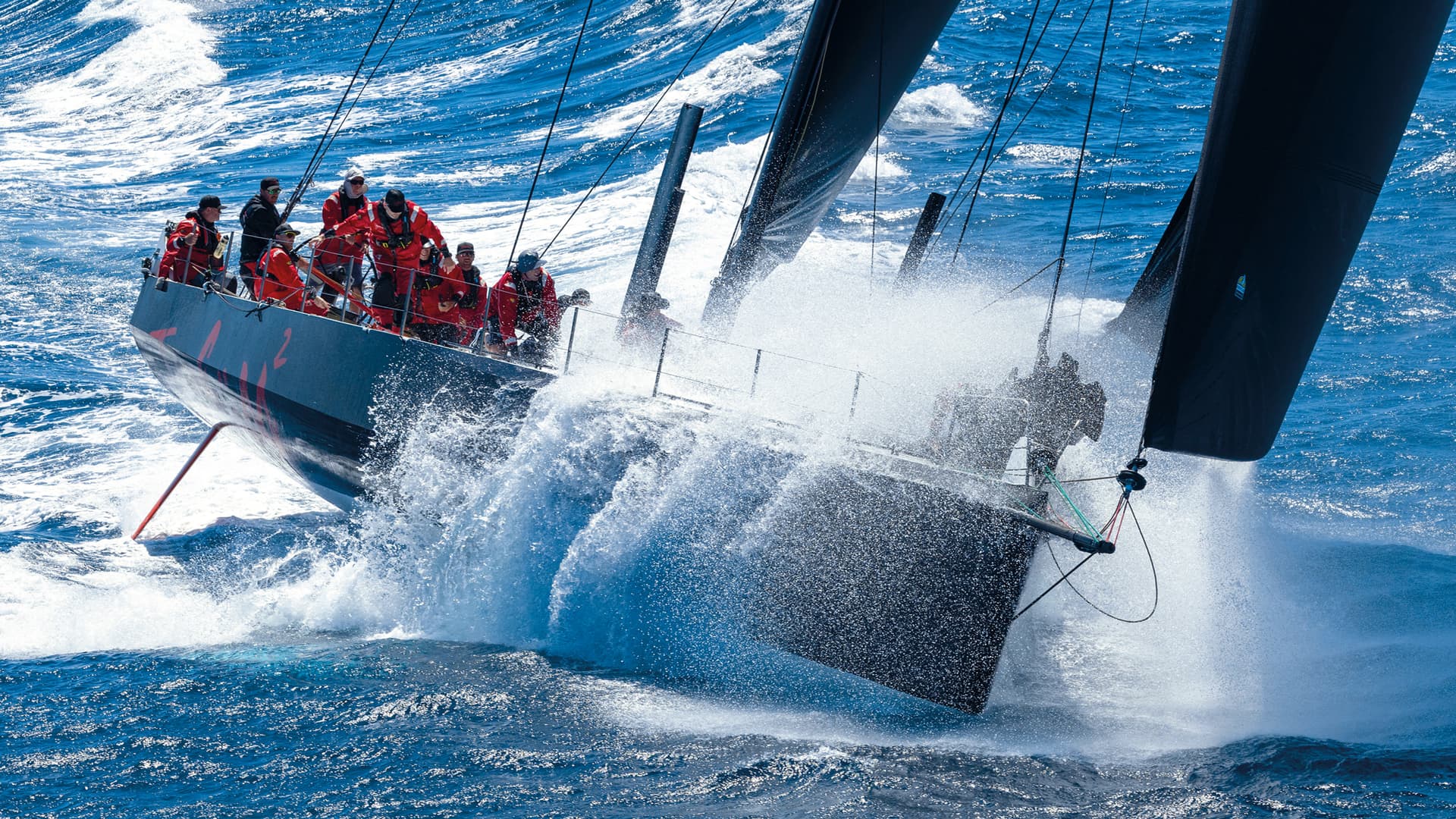
- Sail geometry: A 60% mid-girth flying headsail can sit differently in the rule than a conventional masthead genoa, so the shape of the sail matters as much as its size.
- Rig configuration: The way the boat is set up affects what kind of inventory makes sense and how much benefit you get from each choice.
- Training time: Bannatyne’s emphasis on maximizing the benefit of training time is a reminder that a fast setup only pays if the crew can use it confidently and consistently.
That combination is where real-world performance lives. A club racer wants a setup that can be driven hard on a short course without turning every maneuver into a project. A cruising owner wants a boat that stays manageable offshore but still makes good miles. In both cases, the best return often comes from a cleaner, more deliberate sail plan rather than another round of purchases.
The smartest speed is the kind you can repeat
IRC can tempt owners into rule-chasing, but the article’s deeper point is that the best gains are usually the least glamorous ones. A better sail inventory, a smarter rating position, and more effective use of training time can unlock speed on existing boats without sending the budget into orbit. The boats that benefit most are not always the ones with the flashiest new kit. They are the ones whose owners understand how the rule, the rig, and the crew fit together.
That is the real value here: not a magic upgrade, but a sharper way to think. If the boat is already in the shed or on the mooring, the fastest path forward may be to stop asking what to buy next and start asking what IRC is already telling you to sail.
This article was produced by Prism’s automated news system from verified source data, official records, and press releases, then run through automated quality and moderation checks before publishing. The system is built and supervised by the people who set the standards it runs under. Read our full AI policy.
Did this article answer your question?