How to choose the best boat hook for safer docking
The right boat hook does more than snag lines: it buys control when the dock gets tight and the crew is short. Match the pole to the job, not the marketing.
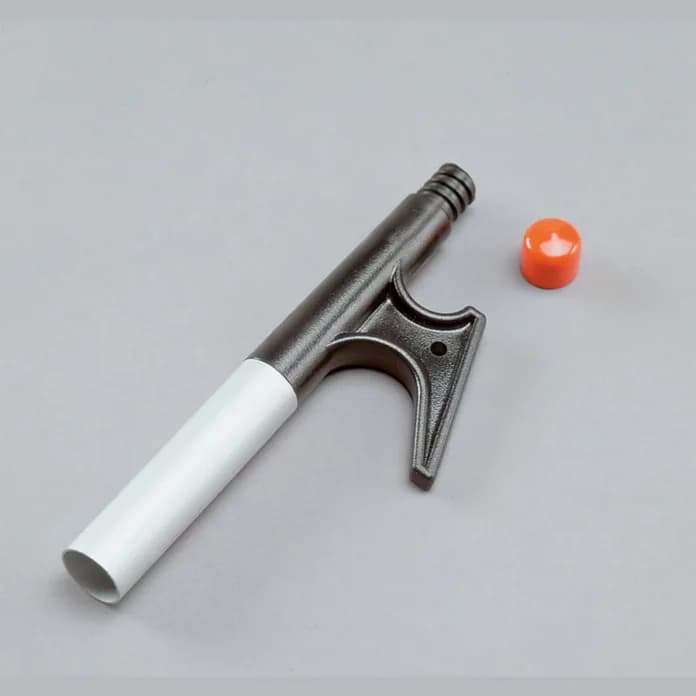
A boat hook looks simple until the moment you actually need one. In a tight berth, with wind pushing the bow off and one hand already committed to a spring line, the wrong hook slips, flexes, or fails to reach the thing that matters most. Practical Sailor’s 2016 search for the “ultimate” boat hook treated it as a working piece of seamanship gear, not a novelty pole.
What a boat hook is really for
Dictionary.com defines a boat hook as a hook mounted at the end of a pole, used to pull or push boats toward or away from a landing, or to pick up a mooring. That simple job description covers a lot of real cockpit and dockside work, from easing a bow clear of a piling to grabbing a mooring pendant before it disappears under strain.
The Ensign, the magazine of America’s Boating Club and United States Power Squadrons, identifies boathooks as critical for docking and mooring, and that is the heart of the decision. The best boat hook is not the one with the most clever shape on paper, but the one that works when the load is awkward, the reach is just barely enough, and the crew is short-handed.
Choose by the job you actually do
The first question is whether you are mostly retrieving, fending, or reaching. A hook that is good at snagging a line or mooring pendant may not be the best tool for pushing off cleanly from a piling, and a stout fending hook can be overkill if you mainly need to pick up a line that is a few feet beyond arm’s reach.
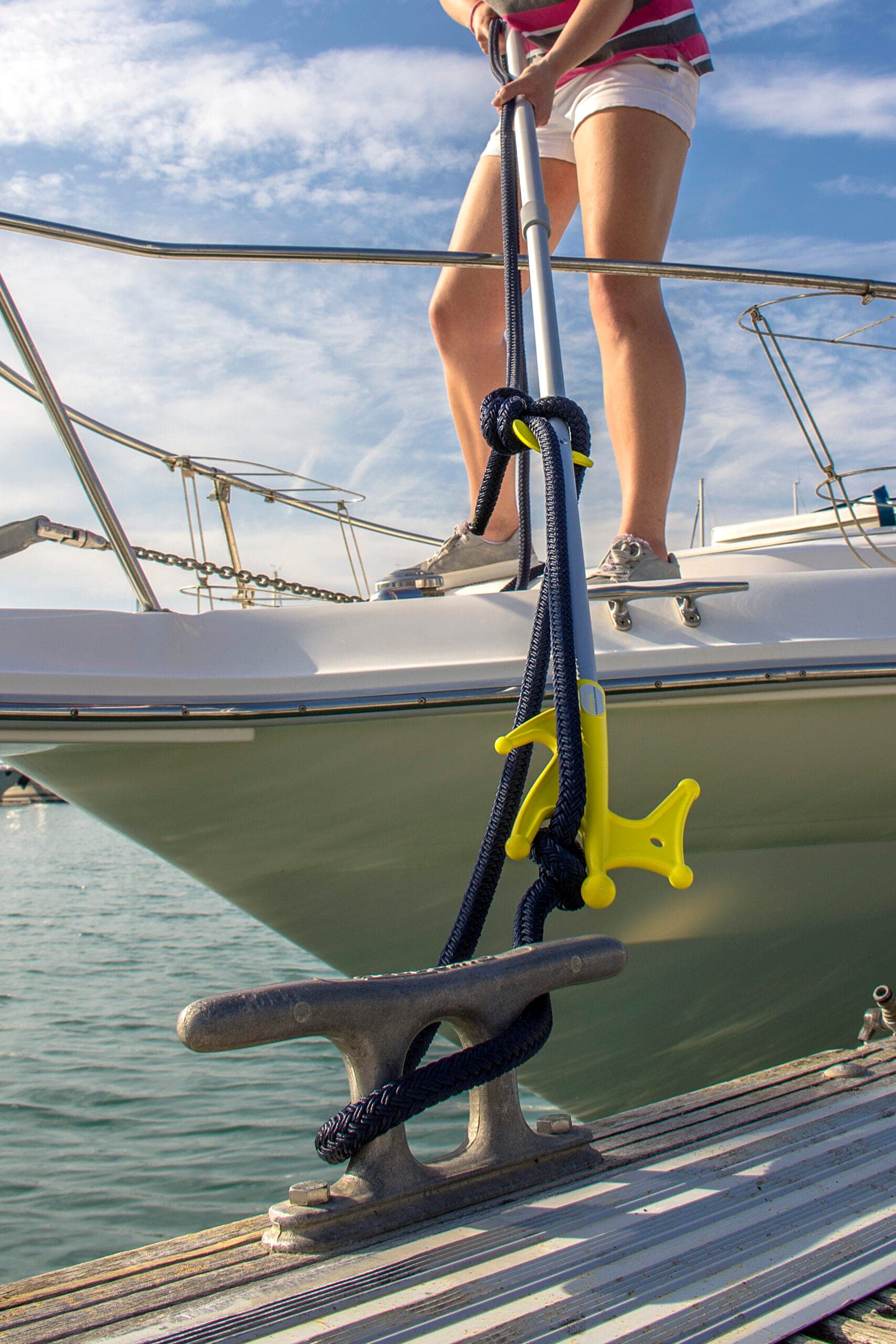
For line handling, look for a head that catches securely without needing perfect alignment. America’s Boating Club guidance on towlines and ropes treats lines as indispensable for docking, mooring, towing, and securing vessels, so a hook that controls them cleanly can reduce the scramble on deck. If you spend a lot of time handling dock lines alone, the hook’s geometry matters as much as the pole length.
For fending off, strength and control matter more than finesse. A boat hook that bends too easily loses usefulness the moment you need to push the boat away from a dock edge or a piling. A hook that cannot take pressure becomes dead weight in the very moments you need it most.
Reach is useful only if you can control it
Extendability helps, but only to the point where the pole remains manageable. A long pole is valuable for grabbing a mooring pendant or reaching an awkward dock line, yet long reach also makes the tool harder to place precisely in wind or current. The sweet spot is enough extension to solve the problem without turning the hook into a floppy lever.
That is where build quality shows up fast. A light pole is easier to swing repeatedly, but if it is too light or too flexible, it can be hard to hold against a load. A sturdier shaft gives you better control when the boat is moving against the dock, and that control is what keeps the task from turning into a fumble at the gunwale.
Stowability matters more than it looks
Yachting Monthly reviewed both a stowable boat hook and a hook designed for catching a mooring buoy, reflecting a real split in how sailors use these tools. If you only need the hook occasionally, compact storage may be the difference between carrying it and leaving it behind. On a small boat or in a crowded cockpit, a hook that breaks down, rolls, or stows cleanly can be the one you actually have ready when needed.
Revolve Tec USA launched its rollable boat hook in 2021, a sign that stowability is not a side issue anymore. Hook & Moor’s “The ultimate Boat Hook” branding points in the same direction, with design marketing centered on easier handling around moorings. Those products are not the same, but they show where the market has pushed: sailors want a tool that stores neatly and still deploys fast when a pendant or line is sliding out of reach.
Durability is not just about materials
A boat hook sees a rough mix of use: salt, sun, impact, and repeated loading at odd angles. That is why durability is not only about whether the pole is strong, but whether the whole assembly stays usable after being knocked around on deck or pressed against a dock edge. The hook head should stay secure, the pole should resist flex that makes control sloppy, and any moving parts should not become the weak point.
US5003907A, titled “Boat hook,” appears in Google Patents, a reminder that the tool has been the subject of formal design work, not just casual improvement. That is what you would expect from something sailors use in close quarters, where a small mechanical flaw can mean a missed line, a harder landing, or extra strain on the crew.
Why the safety angle is real
Practical Sailor covered person-overboard retrieval techniques on 2024-07-01, and the same hardware mindset applies at the edge of the boat. US Sailing rescue guidance treats man-overboard situations as serious and life-threatening, and that changes how you look at simple deck tools. A boat hook can extend your reach, help manage a line, or keep you from leaning too far into a dangerous gap.
That does not mean a boat hook replaces proper seamanship. It does mean the right one can reduce the number of times you are stretched out over the water, scrambling to reach something that is just beyond your arm. In close-quarters docking, those extra inches and that extra bit of control are the difference between a clean landing and a messy recovery.
A practical way to narrow the choice
When you are comparing boat hooks, focus on the task first and the marketing second. The best fit usually comes down to these questions:
- Will you use it most for retrieving lines, fending off, or picking up a mooring pendant?
- Do you need a fixed, sturdy feel or a compact design that stores easily?
- Can you control it one-handed when the dock is moving relative to the boat?
- Does the hook geometry actually catch the load you handle most often?
- Will it stay reliable after repeated use in salt, sun, and contact with hard surfaces?
Practical Sailor published “Sailboat Accessory Hooks” in 2019.
This article was produced by Prism’s automated news system from verified source data, official records, and press releases, then run through automated quality and moderation checks before publishing. The system is built and supervised by the people who set the standards it runs under. Read our full AI policy.
Did this article answer your question?