How to service a sailboat winch for smooth, reliable sailing
A winch that turns hard or slips under load is overdue for service. Clean it, oil the pawls, grease the gears, and the next trim will feel quieter and safer.
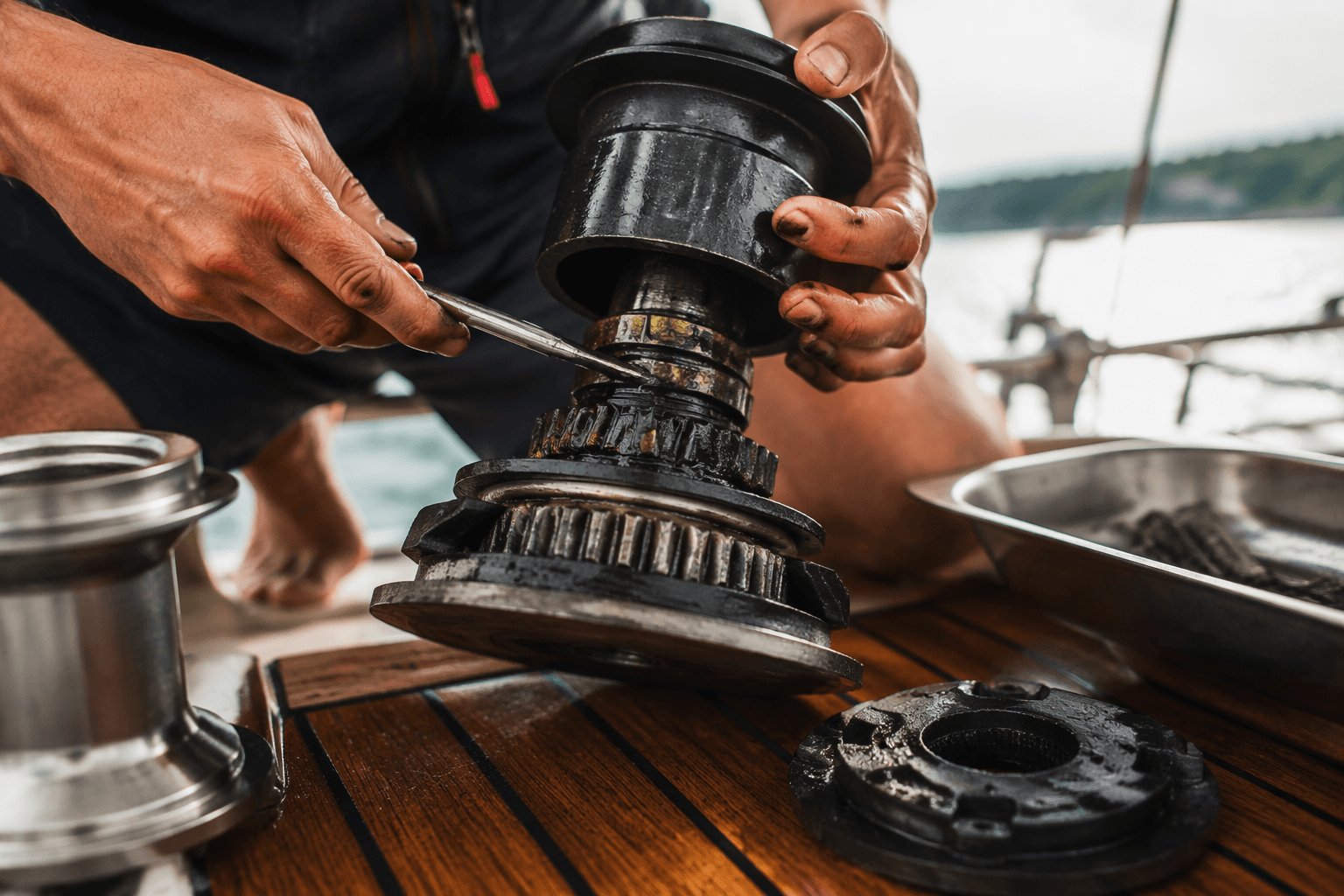
The first warning usually arrives at the handle. It spins with more resistance than it used to, the drum feels gritty instead of smooth, or the self-tailing jaws stop feeding line cleanly when the load comes on. When a winch starts doing that, you are not looking at a small annoyance, you are looking at a control problem that can turn a routine sheet trim into a wrestling match.
Watch for the warning signs
A healthy winch should make load handling feel predictable. If the ratchet action gets lazy, the handle chatters, or the drum slips under strain, the mechanism is asking for service. SpinSheet’s March 14, 2023 winch-service guide recommended annual service to maintain performance and safety.
Salt, old grease, UV exposure, and a little water intrusion slowly turn a smooth mechanical advantage into a draggy one. Harken gear is designed for minimal maintenance, but it still needs periodic upkeep, frequent fresh-water flushing, and regular inspection for damage. On a boat that lives in spray or saltwater, or sits with humidity baked into the locker, the interval gets shorter fast.
What the service actually fixes
The difference between a winch that feels vague and one that snaps to attention usually comes down to a few small parts. The pawls and springs are what keep the ratchet working under load, while the gears and bearings carry the mechanical strain. Across Harken and Lewmar winches, grease belongs on the gears, while pawls get only a light touch of oil.
Harken manuals call for pawls and springs to be lubricated lightly with oil and warn against using grease on the pawls. Several Harken manuals also call for grease to be applied lightly and evenly to the gear teeth, often with a brush. Lewmar service manuals give the same basic instruction, lightly oil the pawls and grease the gears, and older Lewmar instructions repeat it even more directly: remove the pawl gears, clean them, lightly oil the pawls, and grease the gears.
Too much grease can slow pawls down or make them stick open, and once a pawl stops doing its job, the ratchet action that keeps the winch secure under load starts to fail.
Strip it down with the right tools
A proper service does not require a machine shop, but it does reward organization. Harken’s technical manual for a one-speed ratcheting winch lists the basic kit: screwdriver, small knife, brush, rags, solvent, oil, and grease. A small pick for springs, a parts tray, and a phone for photos make reassembly much easier when you are staring at a handful of tiny pieces that all seem determined to roll into the bilge.
1. Remove the handle, top cap, and drum, then lay the parts out in order and photograph each layer before you lift it off.
2. Clear out the old grease with a brush, rags, and solvent, paying attention to the teeth, pawl pockets, and any packed grime around the base.
3. Inspect as you go. Rounded gear teeth, pitted bearings, cracked pawls, weakened springs, corrosion around the base, or a drum that no longer spins freely after cleaning all point to parts that need replacement rather than another round of grease.
4. Lubricate correctly. Apply a very light coat of proper winch grease to the gears and teeth, and use only a light oil on pawls and springs.
5. Reassemble in the same order you took it apart, then test the winch under a light load before you trust it with full sail trim.
Know when it needs parts, not just cleaning
Pawls, pawl springs, bearings, and grease or oil are routine service items in Harken materials, and its service kits can include winch grease, pawl oil, pawls, springs, a handle repair kit, and stickers. Lewmar maintenance packs can include pawl springs, grease, lubricating oil, a brush, and a manual.
If the winch still feels rough after a careful clean, do not keep over-lubing your way around a worn part. Replace the broken or tired component. A cracked pawl or weak spring is not a cosmetic issue, it is the part that makes the winch hold when the sheet is loaded hard.
Keep the next service easier
Flush deck hardware frequently with fresh water and avoid caustic cleaners such as teak cleaner.
This article was produced by Prism’s automated news system from verified source data, official records, and press releases, then run through automated quality and moderation checks before publishing. The system is built and supervised by the people who set the standards it runs under. Read our full AI policy.
Did this article answer your question?