How to keep diesel fuel tanks free of microbial slime
Diesel slime usually announces itself as a clogged filter and a dying engine, not a tank full of goo. Keep water out, treat early, and clean the tank when biocide can’t reach the sludge.
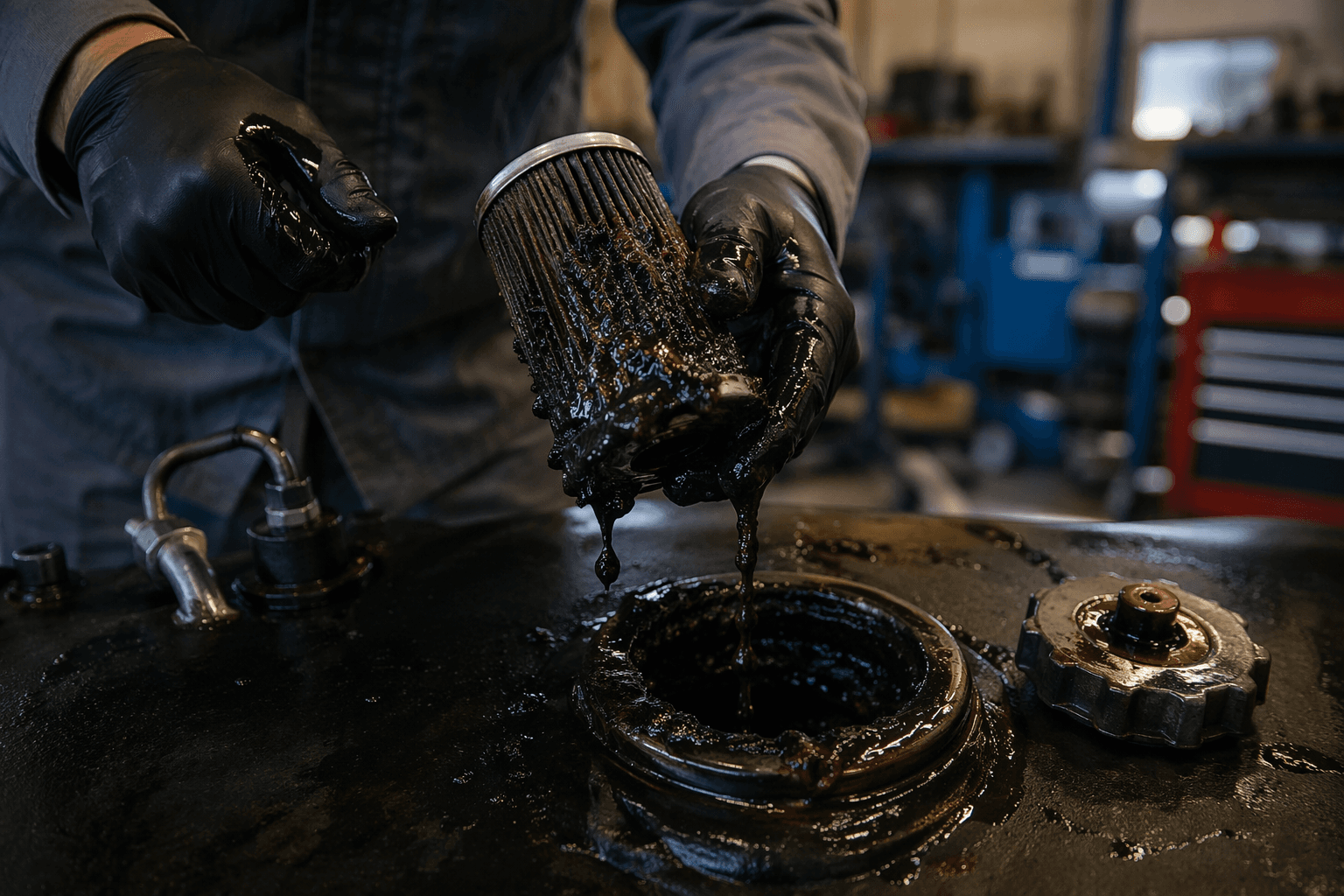
The first warning is usually mechanical, not chemical: the engine starts to hunt, the filters clog, and the boat loses power at exactly the wrong moment, often in chop or while trying to dock. By the time rough running shows up, water has already let bacteria and fungi take hold where fuel and moisture meet.
The bug usually shows up at the filter first
Sediment and slime usually announce themselves at the filter, where contaminated marine diesel can restrict flow enough to stop an engine. The culprit is not algae, because algae needs sunlight. In a dark tank, the real trouble comes from bacteria and fungi, with the broader marine catchall HUM-bugs covering bacteria, fungus, mold, yeast, and the rest.
The symptoms are easy to mistake for a different fuel-system issue. A boat can run fine for hours, then start losing power when sediment and slime load the filter enough to restrict flow. Once that happens, the tank contamination is already turning into repeated filter changes, poor performance, and a propulsion risk you can feel at the helm.
Biocide is useful, but it is not a tank rescue plan
Microbial contamination has been a serious maintenance issue for a long time. ASTM D6469 calls uncontrolled microbial contamination in fuels and fuel systems a “largely unrecognized but costly problem,” and ASTM published a version in 1999 and updated it again in 2020. It is a long-running engineering problem across the petroleum chain, including the fuel that ends up in boat tanks.
The U.S. Environmental Protection Agency label for BIOBOR JF lists marine diesel boats and ships as intended uses and gives a maximum treatment level of 270 ppm for contaminated tanks and 135 ppm for clean-tank maintenance. That is a maintenance framework, not a magic eraser. Biocide can help prevent growth and suppress active microbes, but it does not automatically strip away the sludge and residue already stuck to tank walls, corners, and pickup areas.
If the tank is already fouled, adding chemical treatment alone can buy time without fixing the underlying mess. You may slow the bug down, but you still have the dead biomass, the loosened residue, and the sediment waiting to plug the next filter.
When the tank needs physical cleaning
Once you are seeing repeated filter plugging, persistent low-power symptoms, or a shutdown that keeps coming back after a filter change, the tank has moved beyond simple treatment. At that point, the job is no longer “dose and go.” It is physical cleaning, because the contamination has become a layer of sludge and residue that biocide cannot remove on its own.
If contamination has coated the bottom of the tank or settled in corners where circulation is poor, the engine will keep finding it. A contaminated tank can turn into an unscheduled project, and in the marine world that means lost time, repeated filter service, and reduced or no propulsion when the crew least wants it.
What you can do this week to keep water out
Keeping water out of the tank makes life much harder for the microbes that create slime and sediment in the first place. Sealed fuel caps and vent arrangements that reduce moisture intrusion are not glamorous upgrades, but they are exactly the kind of boring hardware that prevents expensive problems later.
A good week-of-maintenance checklist looks like this:
- Check the fuel cap seal and make sure it closes tightly.
- Inspect vent arrangements for any path that lets moisture work its way in.
- Treat the tank as a water-exclusion problem, not just a fuel-additive problem.
- Keep up with filters so contamination shows itself early instead of on passage.
- Use anti-bug treatment as prevention, not as a substitute for tank hygiene.
Modern marine diesel often comes as ultra-low sulfur diesel or biodiesel-blended fuel, and that makes fuel quality and storage discipline even more important. ASTM later revised its biodiesel specification to add a stricter No. 1-B grade after filter-clogging and contamination concerns.
Marina and storage habits matter too
EPA marina guidance stresses spill prevention and smart pollution-prevention practices for petroleum handling, because leaks and sloppy transfer habits create environmental problems and maintenance headaches at the same time. UK oil-storage guidance from GOV.UK and HSE likewise emphasizes tank design, protection, and leak prevention as part of keeping stored oil from becoming a failure point.
Microbial slime starts with water intrusion, poor protection, and stale fuel sitting long enough for organisms to colonize the interface between fuel and moisture.
This article was produced by Prism’s automated news system from verified source data, official records, and press releases, then run through automated quality and moderation checks before publishing. The system is built and supervised by the people who set the standards it runs under. Read our full AI policy.
Did this article answer your question?