How to re-seize mainsail slides before offshore failure
A loose slide can ruin a luff offshore. Catch the wobble early, carry the right spares, and a simple re-seize can keep the sail working until you can fix it properly ashore.
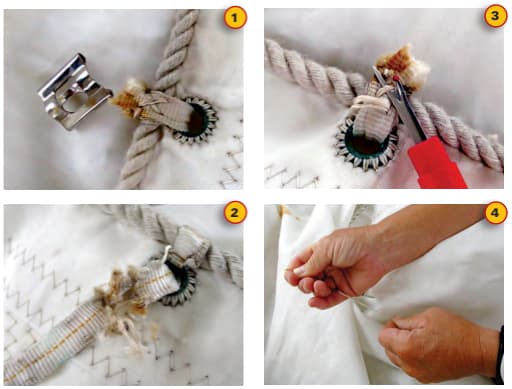
A mainsail slide that starts to lift away from the luff is the sort of quiet failure that can become a loud problem miles from help. The load, chafe, UV, and flexing that sailmakers build around do not announce themselves all at once; they wear on the seizings until one day the slide is no longer really held by the sail at all. If you catch that wobble before the outer layer is doing all the work, the fix is usually straightforward.
Why this repair belongs in your offshore toolkit
This is not just a mainsail issue. The same failure mode can show up on a mizzen or a trysail, which matters because those are often the sails you depend on when conditions are already inconvenient. Good sail maintenance treats the luff hardware as consumable, because slugs, slides, rings, and hanks can all be replaced as long as the sailcloth foundation is still serviceable.
That is the key judgment call. If the sail body is still sound, you are not facing a loft-only problem. You are dealing with a hardware attachment that can be renewed with basic tools and materials, which is why this repair belongs in the same mental category as other essential cruising fixes, not in the “send it away and hope” pile.
What to carry before you leave the dock
If you want a field repair to be realistic, the parts locker has to match the problem you are likely to see. West Marine’s current sail-slide lineup shows how standardized this hardware has become, with plastic sail slides, plastic sail slugs, nylon/stainless steel sail slugs, and stainless steel sail slides all readily available. That tells you two things: replacement is normal, and you should not assume one generic part will fit every mast groove or luff attachment.
A smart onboard kit should cover the hardware you can actually lose, loosen, or wear through.
- Spare slides or slugs that match your existing luff system
- Enough seizing material to remake the attachment cleanly
- A way to clear dirt, spiderwebs, and leftover gunk from the mast groove
- A spare plan for the sails you rely on most, especially the main, mizzen, and trysail
The point is not to haul a sail loft aboard. It is to make sure you can restore function when a sailmaker is nowhere near the horizon.
How to spot a slide that is about to fail
The inspection is simple, and it should happen before weather forces the issue. Look for any slide or slug that can be lifted away from the bolt rope or webbing, because that wobble is the warning that the attachment is no longer sharing load the way it should. When the slide is loose, the fabric or remaining strands are taking more strain than they were meant to carry, and that is a bad place to discover weakness in rough weather.
SAIL Magazine’s guidance on sail care is worth keeping in mind here: sail slides can take a lot of strain, especially at the headboard and tack, and UV can degrade plastic while webbing can chafe through. That means the most heavily loaded slides deserve the closest look, and it also means a piece that looks fine from a distance may be hiding a broken margin of strength right where the hardware meets the cloth.
If your mainsail luff drags in the mast groove, do not ignore that either. Good Old Boat notes that dirt, spiderwebs, and leftover gunk in the groove can make the sail stick, which increases friction and can magnify wear at the very point you are trying to protect. A slide that is fighting a dirty track is working harder than it should, and the seizing pays the price.
Re-seizing underway, without pretending it is a loft job
The repair itself is less mysterious than most cruisers fear. Good Old Boat’s guidance treats re-seizing as a repeatable skill, not a specialist art, and that is the right way to think about it offshore. The exact wraps can vary, but the logic does not: hold the slide tight to the luff, remove the wobble, and make sure the seizing, not the remaining wear, is carrying the load.
1. Get the sail down or eased enough that you can work safely.
2. Clear the area around the slide and inspect the attachment point, the luff, and the track.
3. Re-seat the slide so it sits firmly against the sail with no visible play.
4. Apply a tight, secure seizing and finish it so it cannot creep loose under movement.
5. Check the result by lifting and loading the slide by hand before you trust it again.
SAIL Magazine’s advice matters here too: a lasting repair usually means lowering the sail and working on it in a dry, ergonomic position. If you are trying to do proper needle-and-twine work while the boat is bouncing, use the repair only to get you to calm water or harbor, then redo it properly.
When the onboard fix is enough, and when it is not
The decision point is simple: if the sailcloth foundation remains serviceable and the problem is a worn, loose, or failed attachment, a temporary re-seize or replacement slide can keep you going. If the hardware itself is badly degraded, the webbing has chafed through, or the luff area has stretched or damaged enough that the slide will not hold securely, you need a proper repair ashore.
That is where the distinction between field repair and long-term fix becomes important. Offshore, you are trying to preserve function and prevent escalation. Ashore, you are rebuilding reliability, ideally with the sail down, dry, and supported so the repair can be done cleanly instead of strained through another watch of flogging and flexing.
The seamanship lesson hiding in plain sight
The best time to inspect slide seizings is not in the dark with the boat moving hard and the weather already against you. It is the calm, balmy anchorage, when a little wobble is just a maintenance job and not the first sign of a sail that is about to go unserviceable. A small defect at the luff can pull the sail out of position fast, and once that happens, the problem stops being cosmetic and starts being operational.
That is why this repair matters. A properly re-seized slide is not just tidier hardware, it is one more way to keep the sail where it belongs when the offshore miles start asking hard questions.
This article was produced by Prism’s automated news system from verified source data, official records, and press releases, then run through automated quality and moderation checks before publishing. The system is built and supervised by the people who set the standards it runs under. Read our full AI policy.
Did this article answer your question?