How to replace a shroud with swageless terminals
A tired shroud is not a cosmetic job: on an older rig, the real call is rebuild with swageless terminals, hand it to a shop, or replace the whole stay.
On Pelorus, the Paceship PY26 that Cliff Moore rebuilt after Hurricane Bob, the damaged headstay and starboard upper and lower shrouds were the kind of rigging work that determined whether the boat was ready for the next season or still sitting on the hard.
Why this was a replace-now job
The Pelorus rebuild appeared in Good Old Boat, Issue 119, March/April 2018. Pelorus had taken damage to the bow and starboard side in Hurricane Bob in 1991, and once the rigging is involved you are no longer talking about cosmetics. Standing rigging is the fixed rigging that supports the mast, while running rigging is the adjustable line work, so a hit to the headstay or shrouds goes straight to the boat’s ability to stay upright and sail as intended.
The headstay, also called the forestay, connects the mast to the bow, and the shrouds provide lateral support, which means damage on the bow and starboard side is not isolated in one corner of the boat. If those pieces are compromised, the decision is whether to trust the entire rig at all.
Hurricane Bob was the second named storm and first hurricane of the 1991 Atlantic hurricane season. It formed from low pressure near The Bahamas on August 16 and made landfall in New England on August 19, 1991. It was the most costly hurricane to hit New England, caused extensive damage across the region, and its name was retired in 1991.
What swageless terminals buy you
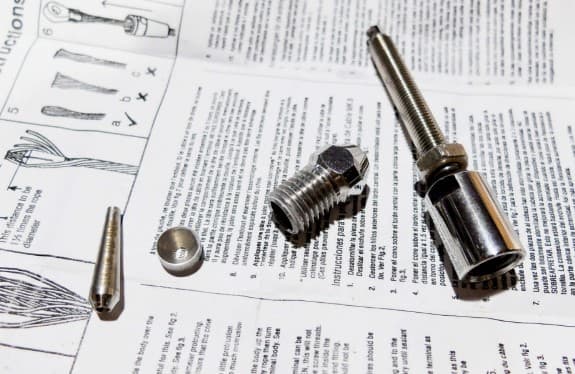
The repair centers on swageless compression fittings, the key do-it-yourself signal. Swageless terminals let someone build or rebuild standing rigging without automatically sending every wire to a shop for machine swaging.
That choice has a practical upside: you can tackle the job on your own schedule, with your own tools, and with a better feel for how the rig actually goes together. It also carries the responsibility that comes with any load-bearing job on a sailboat. The fitting has to be compatible with the wire and the stay it is replacing, and the assembly has to be done with the same attention you would give to any other part of the mast support system.
For an older boat like Pelorus, the attraction is clear. A 26-foot AMF Paceship 26 that has already lived through a hurricane and a rebuild is exactly the sort of boat where owners end up learning what each piece of standing rigging does and why it matters.
DIY fabrication, rig shop help, or full replacement
This is the part most sailors get backward. The question is not simply whether you can do the job yourself, but how much of the system you actually trust once the old wire comes off. If the damage is tightly scoped, like the Pelorus example with the headstay and the two starboard shrouds, DIY fabrication with swageless terminals can be a smart way to regain control over cost and timing.
A local rig shop makes sense when you want a second set of eyes, help matching the hardware, or confidence that the assembly is right before the boat leaves the yard. That middle path usually costs more than doing the work yourself, but it buys time and reduces the chance that a small measurement mistake becomes a mast problem later.
Full replacement is the blunt option, but it is often the right one when the rig has a storm history, the boat is older, or the wire and fittings no longer inspire confidence. Standing rigging is not where you want to save money by stretching a questionable component for one more season.
A simple way to think about the tradeoff is this:
- DIY fabrication keeps you close to the job and can reduce outside labor.
- Rig shop help costs more, but it gives you expertise and a check on compatibility.
- Full replacement is the biggest spend, but it gives the cleanest break from unknown history.
The pre-launch checklist that actually matters
Before you launch, the important question is whether the rig is structurally boring again. On an older sailboat, especially one with storm damage in its past, that means treating the headstay and shrouds as critical systems, not accessories. If the bow has been hit, if the starboard side has been compromised, or if the boat has already been rebuilt once, the standing rigging deserves the most conservative answer you can give it.
For a practical pre-season pass, keep the decision anchored to the parts that carry the load:
- Confirm that the headstay, the forestay, is sound enough to connect the mast to the bow without doubt.
- Check the shrouds as lateral supports, especially where a previous impact hit the bow or one side of the boat.
- Treat swageless terminals as a deliberate build choice, not a shortcut.
- If any part of the standing rigging feels like a compromise, do the work before the boat is back in service.
This article was produced by Prism’s automated news system from verified source data, official records, and press releases, then run through automated quality and moderation checks before publishing. The system is built and supervised by the people who set the standards it runs under. Read our full AI policy.
Did this article answer your question?