How to replace Catalina 22 standing rigging without overspending
A Catalina 22’s aging rig can be replaced smartly if you price wire, fittings, and labor separately, and avoid bargain hardware where a mast failure starts.

The cheapest-looking standing-rigging plan is often the one that costs the most later. On this Catalina 22, the upper shrouds had already been replaced, but the backstay and forestay were still original from 1981, and the lower shrouds were a mix of mismatched replacements and tired originals. That is the kind of combination that turns a routine refit into a safety decision, because standing rigging is not cosmetic gear, it is the system that keeps the mast up.
Why this job is not the place to gamble
Standing rigging is widely treated as safety-critical, and the usual rule of thumb is replacement somewhere around 10 to 15 years of age. Sail Magazine has also warned that once rigging gets past that window, the real danger is not always what you can see: internal corrosion, poor swaging, work hardening, and wire misalignment can all lead to failure without obvious cracks or other warning signs. On a small cruiser, that matters even more because one failed terminal can turn into a mast-down event fast.
That is why the first question is not, “Can I stretch it another season?” It is, “Where can I save money without lowering the reliability of the rig?” In this case, the answer was not to hunt for the absolute lowest sticker price on a marine-branded kit. It was to separate the hard parts of the job, then decide which parts of the bill were worth paying for and which could be handled with careful sourcing and your own labor.
What the Catalina parts route really costs
The obvious next stop was a well-known Catalina parts supplier, but the numbers made the replacement look steep in a hurry. Catalina Direct lists a Catalina 22 adjustable backstay at $519.44 and a Catalina 22 forestay assembly for pre-1985 boats at $125.22. Those are not outrageous prices in the abstract, but they show how quickly a full standing-rigging refresh can climb once you start adding assembly, hardware, and the right vintage-specific parts.
Catalina Direct also says its technical support line is staffed by sailors with decades of experience, and that matters when you are matching parts to a specific hull and rig configuration. Its product notes also show that Catalina began supplying boats with Seldén masts and standing rigging in 2010, which is a reminder that Catalina 22 replacement parts are not one-size-fits-all. The year on the hull, the mast setup, and whether the boat carries older or newer fittings all affect what belongs on the boat.
The smarter savings move: compare wire shops, not just marine shops
The breakthrough came from looking beyond the obvious marine-retail answer. After vague quotes, dead ends, and the temptation to build everything from parts, the project shifted toward a local industrial rigger that already worked with stainless steel wire rope and had direct experience building sailboat rigging. That changed the equation from “Can I save money by doing all the labor myself?” to “Can I buy the right components from the right source?”
The comparison was striking. The local industrial rigger came in at about $1.13 per foot complete, while the Catalina parts retailer worked out to roughly $4.00 per foot complete. On the material-only side, West Marine was about $1.02 per foot for cable only, and McMaster-Carr came in around $0.85 per foot for cable only. That spread is exactly why the lowest-risk savings often come from shopping carefully, not from cutting corners on the rig itself.
What to ask for when you order
At Broadway Industrial Supply, Cory helped make the project feel less like marine retail theater and more like a straightforward rigging job. The company apparently fills a lot of stainless-steel wire orders for architectural railings, which is useful context because the hardware expertise overlaps more than many boat owners assume. The chosen setup used 316 stainless steel wire with thimbles and Nicro Press sleeves rather than roller-swaged terminals.
That choice matters because roller-swaged fittings are often promoted as having fewer parts to maintain or fail, and a higher percentage of breaking strength, but they are also more expensive. For a budget-conscious owner, the point is not that roller-swaged terminals are bad. It is that they are not automatically the best value for every Catalina 22, especially when the owner is already paying for multiple stays and shrouds.
- Confirm the boat’s vintage and mast configuration before pricing any stay.
- Replace obviously suspect parts together, not one by one.
- Specify 316 stainless wire, not vague “stainless” hardware.
- Match terminals, sleeves, and thimbles to the actual wire plan before crimping starts.
- Treat bargain fittings as a red flag, not a bargain, if their quality is unclear.
A practical ordering checklist looks like this:
Where DIY labor makes sense, and where it does not
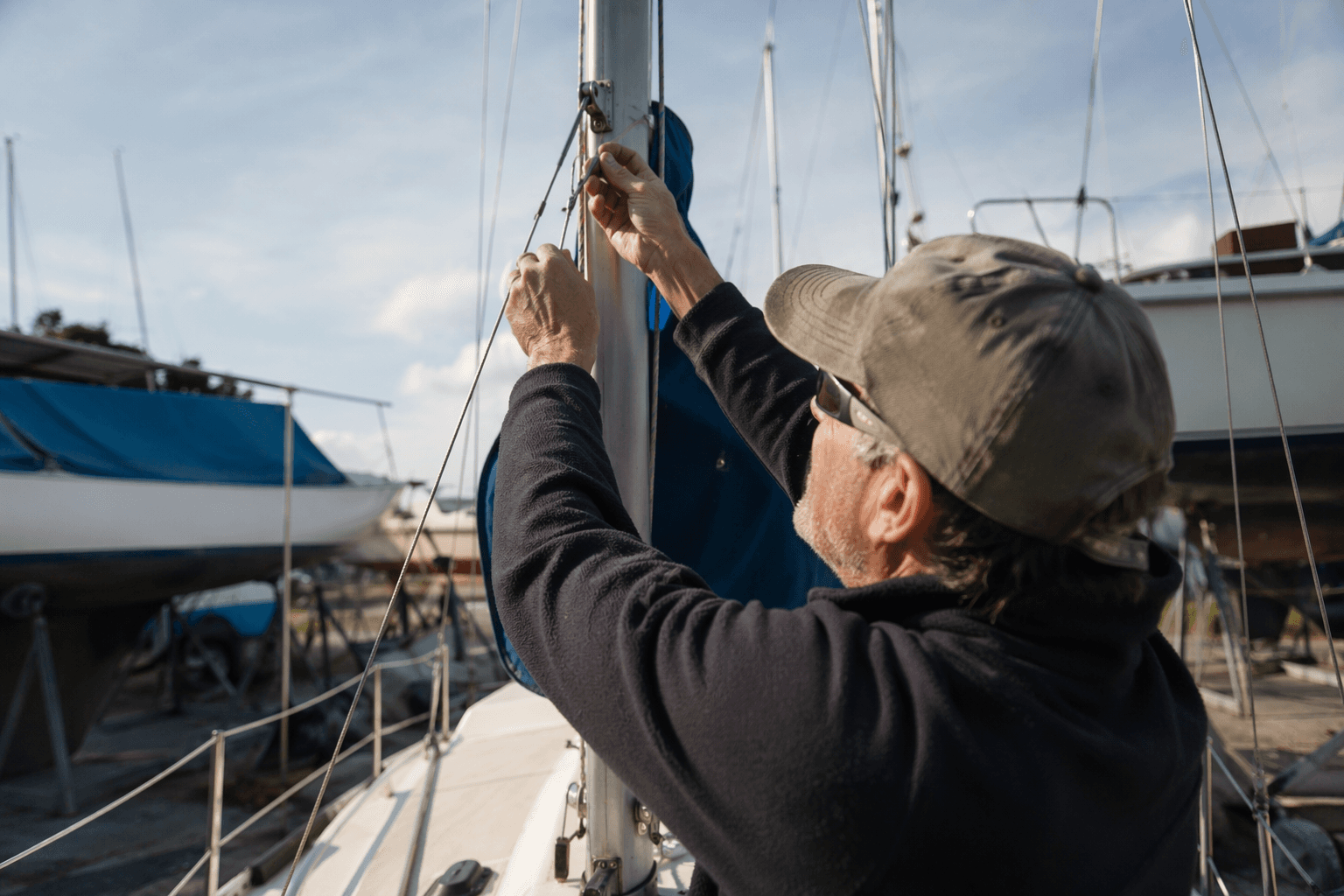
This is one of those jobs where your own labor can save real money, but only if you stay honest about what you are buying. The labor of measuring, planning, and installing can be yours; the structural responsibility of holding the mast up should not be handed to cheap, questionable hardware. If you are redoing standing rigging, the smart place to economize is in sourcing and setup, not in the metal that keeps the rig alive.

That is the practical lesson from this Catalina 22 project. Buying a marine-branded kit is not the only safe path, and it is certainly not always the cheapest path. The better move is to compare local industrial suppliers, verify the boat’s rig vintage, and insist on quality components even when the terminal style or brand name is different from what a catalog pushes first.
The takeaway for older small cruisers
A Catalina 22 with original 1981 standing rigging is already in the danger zone where replacement stops being optional maintenance and starts being insurance against a very expensive day. The lesson is not to overbuy the fanciest package on the shelf. It is to pay for the parts that preserve trust in the rig, avoid guesswork, and use your own labor where it does not compromise safety.
That is how you keep the bill under control without turning a standing-rigging job into a mast-loss story.
This article was produced by Prism’s automated news system from verified source data, official records, and press releases, then run through automated quality and moderation checks before publishing. The system is built and supervised by the people who set the standards it runs under. Read our full AI policy.
Did this article answer your question?