How to restore a worn Albin Ballad rudder for precise steering
A loose helm is more than a nuisance. This restoration turns a worn Albin Ballad rudder into a haul-out checklist for bushings, geometry, fairing, and smarter repair decisions.
A vague helm is not a small problem
A rudder that feels sloppy, squeaks, or wanders under load is already telling you something useful: the steering system is wearing out before it fails outright. Doug Henschen’s restoration of the rudder on his 1976 Albin Ballad 30 shows how that first hint of play can lead to a full rebuild that restores precise steering, not just basic function.
That matters on an older production cruiser like the Albin Ballad 30, a design by Rolf Magnusson built by Albin Marine in Sweden from 1971 to 1982. More than 1,500 were built, and the boat still has a devoted following in northern Europe, which makes this kind of work less like a one-off project and more like maintenance on an active classic fleet.
Open up the steering system before you trust the feel
The first lesson is to treat the rudder as structural gear, not finish work. Practical Sailor’s steering coverage makes the point bluntly: when a key steering component fails, handling can deteriorate fast enough to make a boat difficult or impossible to control. That is why a loose tiller or vague wheel deserves the same attention you would give a cracked chainplate or tired seacock.
On a haul-out, start with the symptoms you can feel underway. Look for play, squeaks, knocking, or a helm that no longer loads up the way it used to. Those are the warnings that tell you the problem is inside the steering support, not just in the cockpit hardware.
Use the old feel as your baseline
PYI Inc.’s Jefa rudder-bearing guidance is especially useful here because it recommends noting how steering feels when bearings are new so later changes can be compared against a known reference. That advice turns a subjective complaint into something you can actually measure with your hands and memory.
If you are opening up an older rudder system, compare the current feel against what a healthy helm should do: smooth, even resistance, no chatter, and no extra dead zone before the blade responds. In practice, that baseline helps you separate normal friction from wear that has crept in over years of service.
Expect surprises once the rudder is out
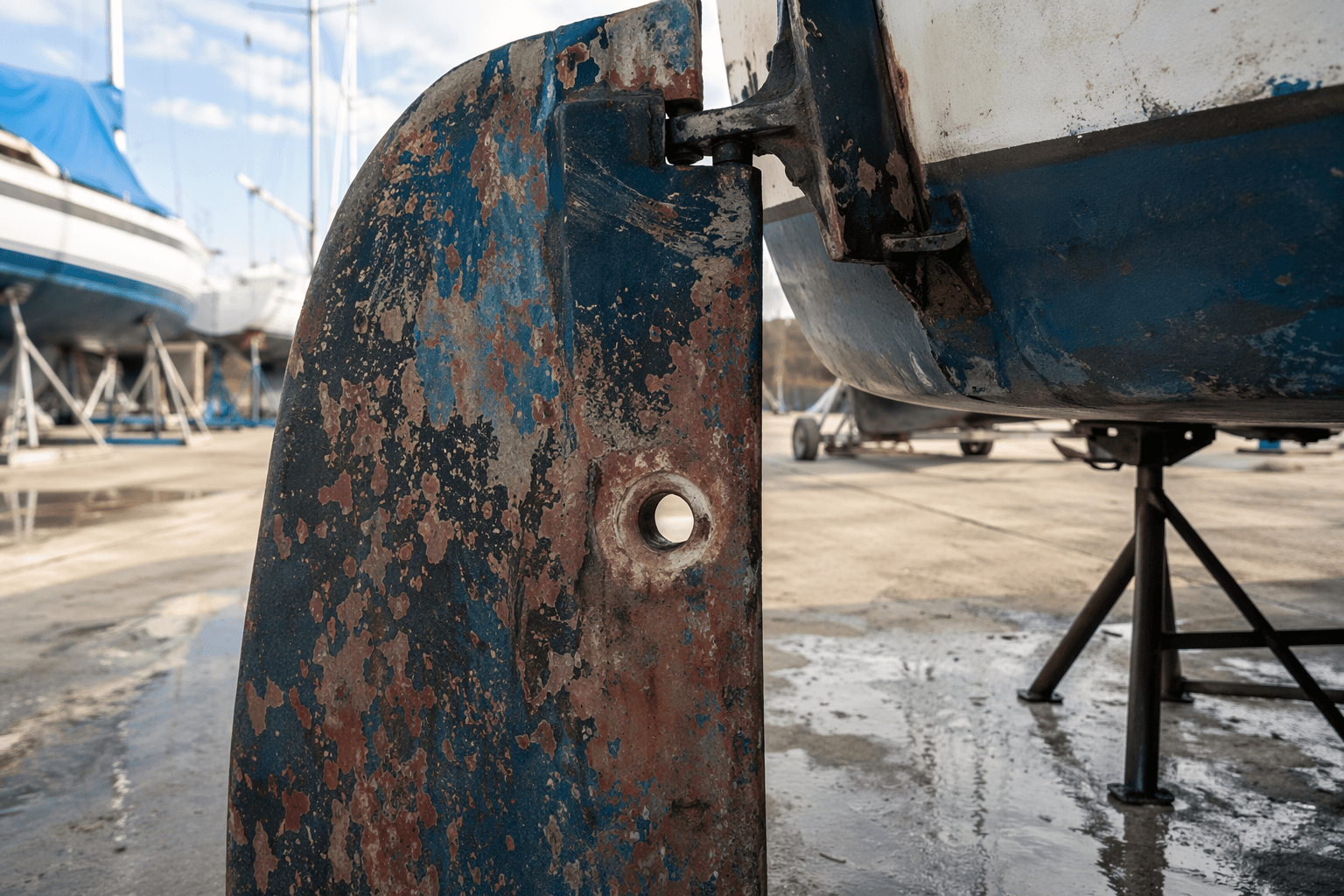
Henschen’s rebuild is a reminder that age brings hidden issues. On a 1970s fiberglass cruiser, previous repairs, worn support surfaces, and geometry that has drifted over time can all show up once the blade is down and the hardware is exposed.
That is why a proper inspection means looking beyond the obvious wear point. Check the bushings, the bearing surfaces, the stock alignment, and any evidence that the original fit is no longer true. If the rudder has been living with slop for years, the whole support system may have adapted to that looseness.
Pay attention to the signs that matter most
Rudder wear often announces itself early, but not always dramatically. boats.com notes that play between the rudder stock and its tube increases over time, and owners of tiller-steered yachts often notice the problem first at the tiller itself. On wheel-steered boats, the warning can stay hidden longer and may only become obvious when the rudder starts knocking in a quartering sea.
That distinction matters because it changes how you inspect. A tiller may show the problem as looseness or vagueness at the helm, while a wheel can mask the wear until the boat is loaded from the side. Either way, the warning signs are telling you the same thing: the support system is no longer holding the blade where it belongs.
Fair the blade, not just the repair
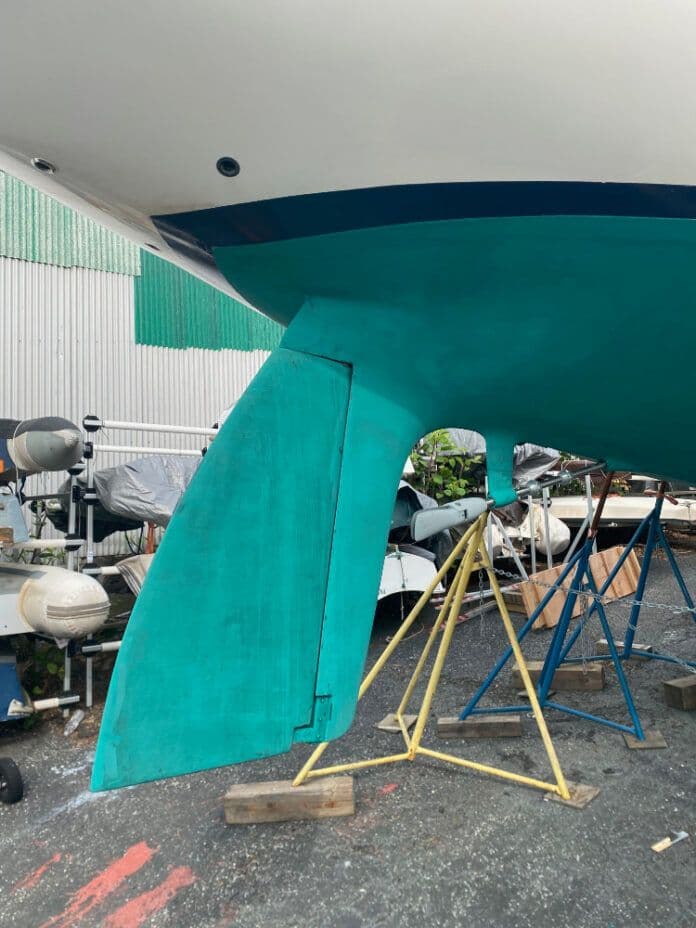
Henschen’s project was not about bolting in fresh parts and calling it done. The rudder came back as a well-faired foil with brand new bushings, which is the difference between a boat that merely steers and one that tracks cleanly again.
Fairing matters because a rudder that is structurally sound but hydrodynamically rough still carries drag and can feel awkward at the helm. A clean foil shape helps the repair pay off in real use: less drag, more predictable response, and a steering feel that matches the boat’s lines instead of fighting them.
Know when repair is enough and when replacement is safer
The practical decision point is whether the wear is limited to serviceable parts or has moved into the rudder structure itself. If the trouble is play, worn bushings, tired bearings, or an alignment problem that can be corrected, the restoration path makes sense and can extend the life of the boat by many seasons.
Replacement becomes the safer call when the blade can no longer be brought back into proper geometry or the support surfaces cannot be rebuilt cleanly. The value of Henschen’s approach is that it does not treat replacement as the automatic answer; it proves that careful diagnosis, patient fabrication, and a willingness to fix the right small parts can preserve a classic boat without overbuilding the problem.
Treat the rebuild like a future maintenance plan
The final lesson is that steering work should leave you with more than a smooth haul-out memory. Once the rudder is back together, the next owner or future you needs a clear reference point for how the helm now feels, because that is how wear gets caught early the next time.
That is what makes this Albin Ballad project useful beyond one boat. It translates a loose, uneasy helm into a concrete checklist, opening up the right parts, reading the right symptoms, rebuilding the right surfaces, and returning the blade to a shape and feel that make offshore trust possible again. When the helm stops wandering and the boat tracks as it should, the hidden slop below the waterline is no longer a mystery, just another piece of critical gear put back in order.
This article was produced by Prism’s automated news system from verified source data, official records, and press releases, then run through automated quality and moderation checks before publishing. The system is built and supervised by the people who set the standards it runs under. Read our full AI policy.
Know something we missed? Have a correction or additional information?
Submit a Tip