how to wire a 1/2/B battery switch safely on boats
The 1/2/B switch looks simple until a bad wire or an alternator gets caught in the middle. Here’s how to keep, rewire, or replace it without betting your bank on folklore.
The 1/2/B switch is not a magic battery saver
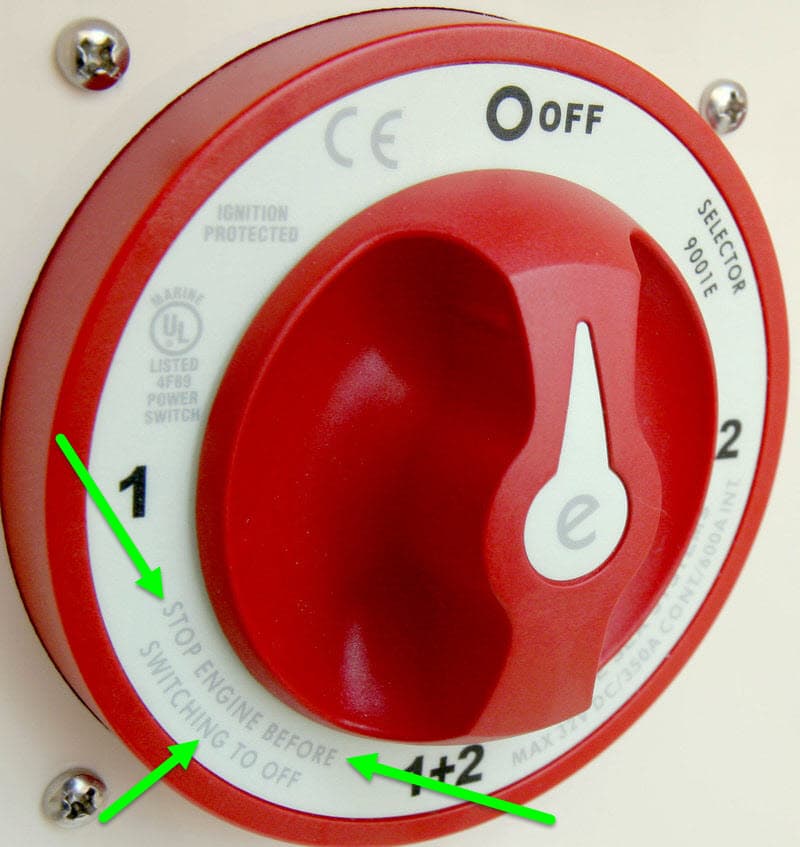
The little rotary selector by the helm has outlasted a lot of bad dockside advice. On many sailboats and powerboats, the factory pattern is straightforward once you stop guessing: the alternator circuit often returns through the starter feed wire to the common, or C, post of a 1/2/B switch, and that common post is live in positions 1, 2, or BOTH, then isolated when the switch is OFF. That architecture is why the knob can feel like a shortcut and still behave like a system, because it ties engine starting, house loads, charging, and bank separation together in one place.
The catch is that most owners learn the selector by rumor, not by circuit logic. Blue Sea Systems’ battery-management guidance makes the bigger point clearly: switching and charging are part of safe, reliable operation, not a convenience feature you can wing. ABYC has spent decades writing marine safety standards for boat design, construction, equipage, repair, and maintenance, which is a good reminder that this hardware sits in the world of standards, not superstition. When the wiring is right, the switch helps you isolate faults and recover from a dead bank. When it is wrong, it can drain batteries, confuse charging, and turn a simple cross-connect into a problem you only notice when the engine will not start.
What belongs on the common post, and what absolutely does not
The C post exists to manage the flow between the battery banks and the boat’s loads. In the usual legacy setup, the starter feed and alternator return are part of that logic, so the selector can feed the engine and charge path through the chosen bank or banks. That is why the positions matter: 1, 2, and BOTH are not just labels, they are separate electrical states that determine whether one battery, the other battery, or both are part of the circuit.
The most important owner error is the simplest one: do not connect DC negative to a 1/2/B switch. That warning is not a fine point, it is the line between a workable selector and a dangerous misunderstanding. Negative belongs in the boat’s negative distribution and return path, not on a battery switch that is meant to manage positive-side selection. If your wiring looks improvised, or if the negative is somehow threaded into the selector, the system should be treated as suspect until it is corrected.
Why “BOTH” is not the same as redundancy
A lot of skippers treat BOTH like an all-weather safety net, as if turning the knob to the middle means the boat is now twice as reliable. The problem is that redundancy is only useful when the banks are actually independent and the charging path is understood. Yachting Monthly has pointed out that many yachts use a rotary Battery 1, Battery 2, Both switch to solve a failed-start-battery problem, especially if the engine battery dies in a difficult harbor-entry situation. That is a real use case. It is not the same thing as assuming both batteries are always helping, always protected, and always charged the way you think.
The better mental model is bank separation first, cross-connect second. If one battery is weak, you want to know which loads are on it and whether the other bank is isolated enough to remain ready. Yachting Monthly also notes that domestic batteries can be separated and measured independently when troubleshooting low voltage, which is exactly the kind of discipline that keeps one flat bank from poisoning the rest of the system. The selector is useful because it gives you control. It is dangerous when you use it to hide uncertainty.
The two habits that hurt the most: switching under load and trusting the alternator blindly
The old folklore says you can just twist through the middle and everything will be fine. That is how switches and alternators get punished. Blue Sea Systems’ e-Series Dual Circuit Plus battery switch uses a make-before-break contact design specifically so switching can happen without power interruption, which shows how much engineering goes into preventing a momentary open circuit. The point is not that every old 1/2/B switch works that way. The point is that many do not, and a live alternator can be unhappy if the battery path is interrupted.
That is where alternator damage risk enters the picture. If the engine is charging and the selector is moved carelessly, the alternator can be left with a bad path or no path at all. Blue Sea Systems addresses that concern in its selector switch with AFD, which includes an Alternator Field Disconnect. That feature exists because charging systems and switching systems interact, and older boats with incremental owner upgrades often do not have the kind of protection modern hardware assumes. If your boat still uses the legacy selector, the alternator side of the circuit deserves the same attention as the battery side.
Keep it, rewire it, or replace it
The right answer depends on what is actually on the boat, not on how tidy the knob looks from the cabin side.
Keep it if the selector is genuinely wired correctly, the negative side is separate from the switch, the banks are identifiable, and you understand what the C post is doing. A sound legacy setup can still serve an older boat well, especially if you want simple manual control and the wiring has not been turned into a nest of owner modifications.
Rewire it if the selector works but the circuit language is muddy. That means cleaning up the starter feed, confirming the alternator path, separating DC negative properly, and making sure each bank can be isolated and tested. Blue Sea Systems’ wiring schematics cover everything from a simple single-battery, single-engine setup to a four-battery-bank system, and that range is useful because it shows how quickly a “simple” boat can become a multi-bank system after a few upgrades. If your boat has grown by addition rather than design, rewiring is often less dramatic than it sounds and far safer than hoping the old layout still makes sense.
Replace it if the switch design itself is too old for the way the boat is used now. Modern battery switches are built around features like make-before-break contacts, combined-bank capability, and in some models an Alternator Field Disconnect. Those are not luxury extras. They are responses to the real failure modes that legacy selectors expose, especially on boats that get cruised hard, repaired over time, and modified by several different hands.
The practical test before you trust the knob offshore
Before you leave the dock, look at the selector as a system, not a convenience. Ask whether the engine starts on the expected bank, whether the house loads are separated the way you think, whether the alternator has a safe charging path, and whether OFF really isolates what it should. ABYC’s long-running standards work exists to reduce accidents, and the reason that matters here is simple: battery switching is one of those jobs where a small wiring mistake can become a large seamanship problem.
A 1/2/B switch can still be a good tool on an older boat, but only if it is treated as real electrical architecture. Once you understand the common post, the charging path, and the difference between isolation and imagined redundancy, the little rotary knob stops looking like folklore and starts looking like what it is: the mechanical heart of a boat that either charges and starts cleanly, or does not.
This article was produced by Prism’s automated news system from verified source data, official records, and press releases, then run through automated quality and moderation checks before publishing. The system is built and supervised by the people who set the standards it runs under. Read our full AI policy.
Know something we missed? Have a correction or additional information?
Submit a Tip