How to tow an inflatable tender without losing it at sea
A tender left on a short painter can become a rescue, theft, or haul-out problem in one blow. Kerry Pears shows when to tow, when to hoist, and how to keep the dinghy attached.
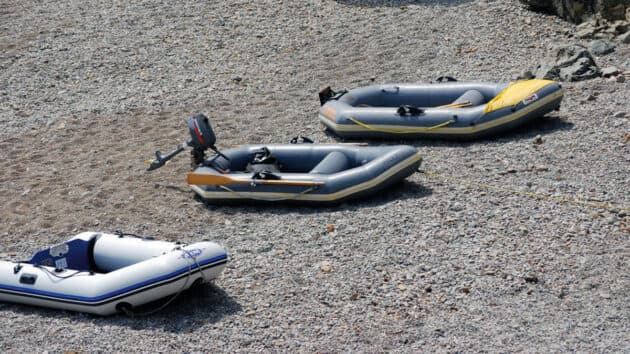
A dinghy can go from background clutter to a real offshore problem faster than most skippers expect. One blow, one short painter, and a neighboring boat’s tender was gone overnight, broken loose and ending up in a reed bed after the towing eye failed under repeated snatching. That is the whole danger in miniature: what looks like a minor mooring choice can turn into damage, a lost boat, or a mess you only notice after the fact.
Start with the right question: tow it, or stow it
The smartest seamanship decision is often not how to tow, but whether to tow at all. Kerry Pears’ advice leans hard toward lifting the tender aboard whenever conditions or passage length make towing a liability, because the loads on a towed dinghy are enormous, especially with the outboard still mounted. Small inflatables can even get airborne in strong gusts, which means the dinghy is no longer just dragging, it is jerking, yawing, and trying to tear its fittings apart.
For shorter hops, Pears favors getting the tender up on chocks on the forecabin roof with a halyard, where it can sit securely between the cutter stay and the mast. That keeps the boat out of the wake, out of the spray, and out of the chain of failures that starts with a painter and ends with a torn fitting. For longer offshore legs, she recommends deflating the tender, turning it upside down, and covering it so it cannot foul the staysail and is not beaten up by UV.
If you do tow, strip the load down first
Towing an inflatable with the outboard still hanging on the transom is asking the boat to carry more punishment than it was designed for. Other towing guides make the same point: the engine adds hazard, increases stress, and can damage the motor itself. One practical rule keeps showing up because it works: remove the outboard, and remove any other heavy loose items before you put the tender astern.
That matters because the failure is rarely graceful. A short painter in a breeze can make the tender snatch, then snatch again, and every jerk multiplies the load at the attachment point. The first thing that gives may be the eye, the painter, or a fitting that looked strong enough right up until the moment it was not.
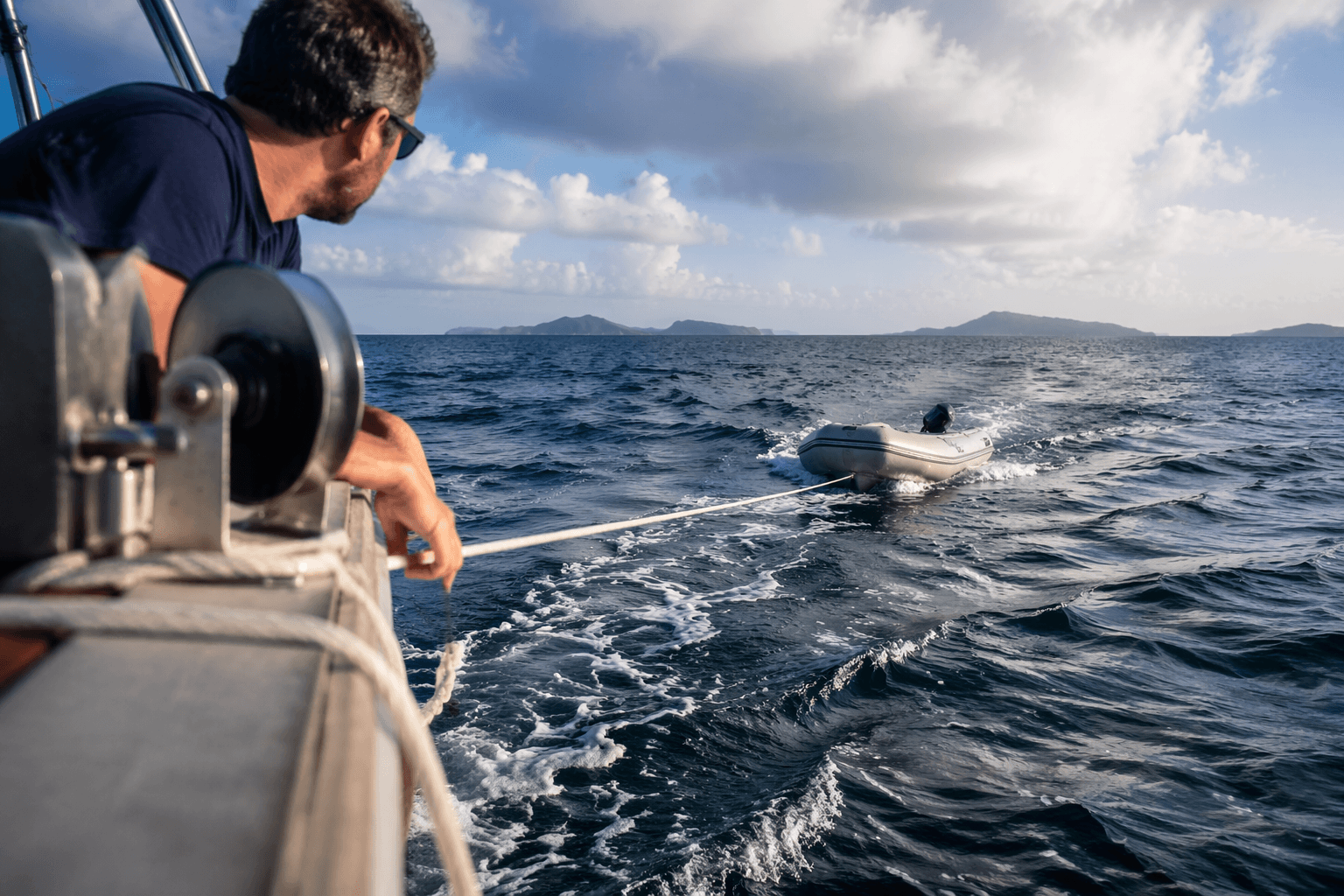
When you rig the tender for towing, think about what you are trying to prevent: drag, chafe, capsize, and a collision with your own boat or someone else’s. A painter that is too short keeps the dinghy in the nastiest part of the wake and invites repeated shock-loading. A painter that is too loose gives the tender room to wander, surf, and make trouble of its own.
Rig for control, not optimism
Pears and John have spent years rescuing errant tenders, and their setup reflects that real-world experience. They rig two painters, one long and one short, so they can manage the dinghy at anchor or in windy conditions without losing control of it. That gives you options: a longer lead when you need separation and a shorter one when you need to keep the tender close and predictable.
The attachment point matters just as much as the line length. Any weak point in the system, including a stressed towing eye, becomes the place where the whole arrangement fails. The cautionary tale from that blown-away dinghy is not just that the boat got loose, but that constant snatching overloaded and broke the towing eye. If you are going to tow, make the tender’s load path as direct and strong as you can, and tie down anything that can move, shift, or bounce.
Make theft harder than the opportunity
The tender is not only a seamanship problem. It is also a theft target, and outboards are especially attractive. Pears points out that using your yacht name on the dinghy can advertise that the boat may be unattended, which is exactly the kind of clue a thief likes. A better move is to make the tender distinctive with bold markings or paint, then lock the outboard to the transom so it is not an easy grab.
That advice fits the broader theft picture. The National Insurance Crime Bureau reported 4,461 watercraft thefts in the United States in 2022, with Florida at 891, the highest of any state. The bureau also says boat theft and fraud cost owners and insurers millions of dollars every year, and the Royal Yachting Association says outboard theft appears to be growing, with organized and opportunist thefts on the rise.
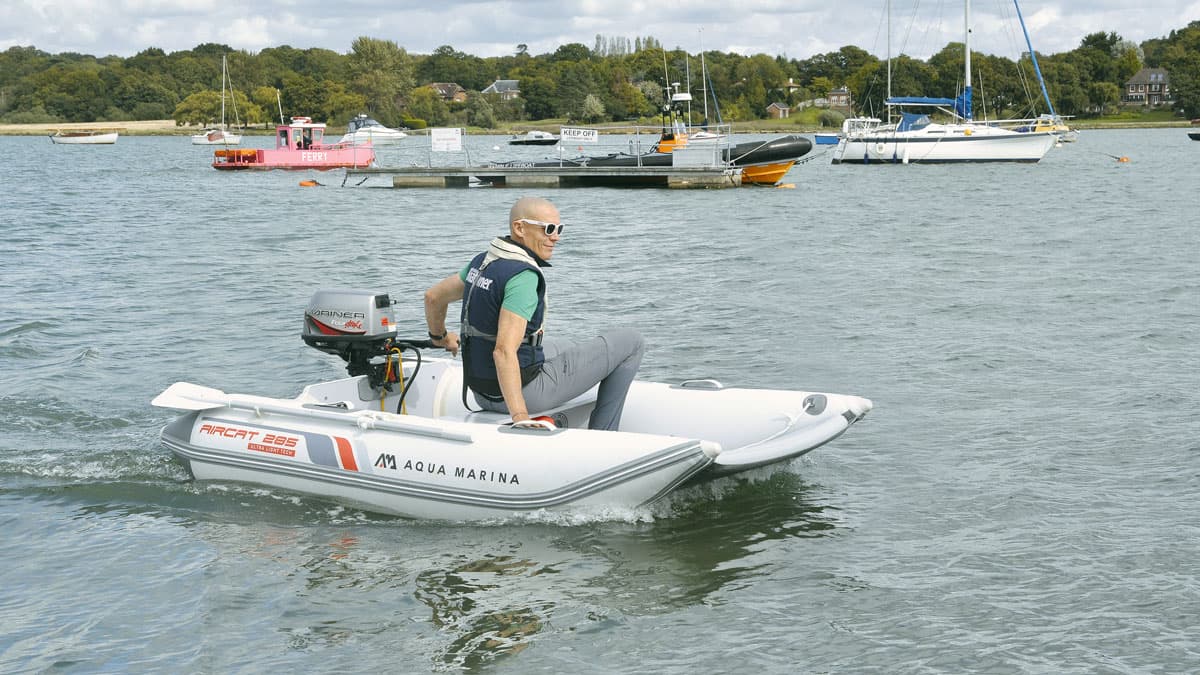
In higher-risk places, Pears and her husband add a long wire strop through the padlock hasp and onto a shore strongpoint. That extra step turns a quick snatch into a harder job, which is often enough to move your gear out of the easy-target category. It is the same principle as good seamanship everywhere: make the easy mistake difficult to repeat.
Run the pre-departure check before weather, darkness, or leaving the boat
The tender decision is not something to leave until the sky has already gone grey or the marina has gone quiet for the night. Before weather closes in, before darkness cuts your visibility, and before you leave the boat unattended, check whether the tender should be hoisted, deflated, or at least locked down more aggressively. A little extra effort at the dock is far cheaper than a search, a repair, or a replacement.
- Is the outboard removed if the tender is being towed?
- Are loose items tied down firmly?
- Is the painter long enough to control the dinghy, but not so short that it snatches?
- Are the attachment points strong and secure?
- If the boat will be unattended, is the engine locked and the tender made less tempting to steal?
That check should be simple and ruthless:
Federal boating rules are compiled by the U.S. Coast Guard and the eCFR, and those rules sit alongside the practical reality that weather and seamanship still decide what survives the night. The difference between a safe tender and a lost one is usually not luck. It is whether you saw the failure coming and chose the option that kept the little boat from becoming a drag, a theft, or a collision problem.
That is why the short-painter dinghy in the opening story matters so much. The loss did not begin with the reeds; it began with a setup that trusted a tender to weather a blow without enough margin. The safest boats are the ones that assume the water will test every weak point, then rig so the tender does not get the last word.
This article was produced by Prism’s automated news system from verified source data, official records, and press releases, then run through automated quality and moderation checks before publishing. The system is built and supervised by the people who set the standards it runs under. Read our full AI policy.
Know something we missed? Have a correction or additional information?
Submit a Tip