Jester Challenge marks 20 years of low-budget solo seamanship
The Jester Challenge marked 20 years with four boats on the 2026 Newport run, still built around low-cost self-reliance and DIY seamanship.

The Jester Challenge has spent 20 years proving that offshore sailing does not need a big budget, a sponsor caravan or a polished production to matter. Built around ordinary boats and ordinary skippers, it has kept faith with the phrase “Seamanship without showmanship” and with the idea that a single-handed passage should be tested by preparation, judgment and nerve, not by spectacle.
For the Newport leg, the start was set for 10 May 2026 from Plymouth, and the format stayed true to its roots: no entry fees, no race, and only guidelines rather than a thick rulebook. The challenge alternates between a full Atlantic crossing to Newport, Rhode Island, and a shorter passage to Baltimore, Ireland in odd years. The official Jester Helm, formed in 2021, coordinates the challenge, but each skipper remains fully responsible for the boat, the gear and the decision-making.
That approach reaches back to Blondie Hasler, who developed the original Jester in 1951 as a radical cruising boat with self-steering and an enclosed central steering position. The broader solo-Atlantic tradition that followed, including OSTAR, was conceived in 1956. The Jester culture still carries that lineage in a form that makes sense to DIY sailors: simplify the boat, trust the fundamentals and make the most of what can actually be maintained at sea.

Practical Boat Owner’s long-running coverage has shown how that philosophy works in real yards and real budgets. In 2015, Basil Panakis was profiled after already completing the challenge twice in a 25ft Contest 25 he bought in Plymouth in 2007 for £5,200. His refit was not cosmetic. It included reinforcement of the mast step and chainplates, plus a stainless-steel arch to support the deckhead and bulkhead, exactly the kind of work that turns a modest boat into a credible offshore proposition.
The numbers behind the event underline its small-scale character. Seven solo skippers crossed the line in the 2018 Jester Challenge. In 2025, the Baltimore challenge drew 15 boats from Plymouth and 10 from Pwllheli. A Vertue Yachts newsletter said the 2026 Newport challenge had four entrants, including Eden Marindin, One Day, Wingding and Raven. That scale has kept the atmosphere personal, with skippers swapping offshore preparation tips instead of chasing headlines.
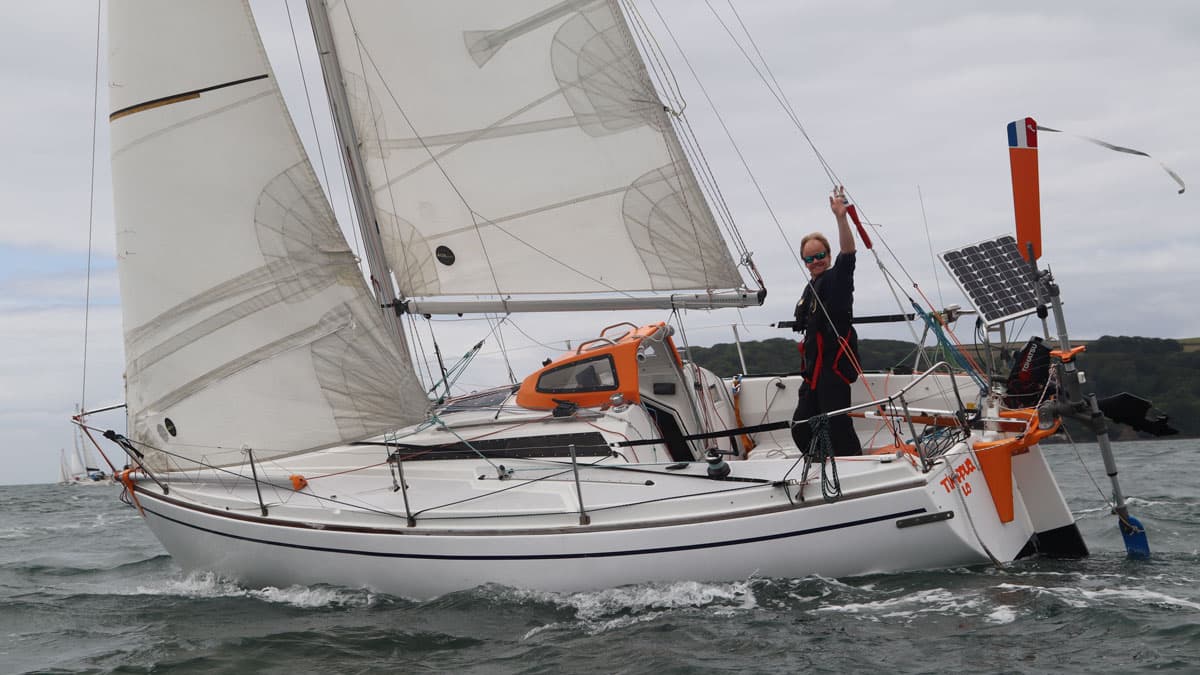
The cautionary edge remains impossible to ignore. In June 2023, Minke was found drifting in UK waters after skipper Duncan Lougee went missing during the Jester Baltimore Challenge, a sharp reminder that low-budget seamanship is still seamanship, with all the risk that implies. After 20 years, the challenge still asks the same hard question: can an ordinary boat, prepared properly, be trusted to carry one person offshore without showmanship getting in the way?
This article was produced by Prism’s automated news system from verified source data, official records, and press releases, then run through automated quality and moderation checks before publishing. The system is built and supervised by the people who set the standards it runs under. Read our full AI policy.
Did this article answer your question?


