MacGregor 26M owner asks hull thickness before remounting fuel filter
A simple fuel-filter remount on a 26M becomes a lesson in laminate, load, and access. Get the fastener choice wrong and a small bracket can turn into cracked fiberglass or a fuel failure.

The hole is the problem, not just the bracket
A MacGregor 26M owner facing a fuel filter and water separator remount is really asking a bigger question: how much structure is behind that motor-well wall, and what happens if the fastener choice is wrong? On a boat where the previous owner simply screwed hardware into place, the safest move is not to repeat the old mistake, but to figure out whether the wall can take the load, whether a backing plate fits, or whether the whole mount belongs somewhere else.
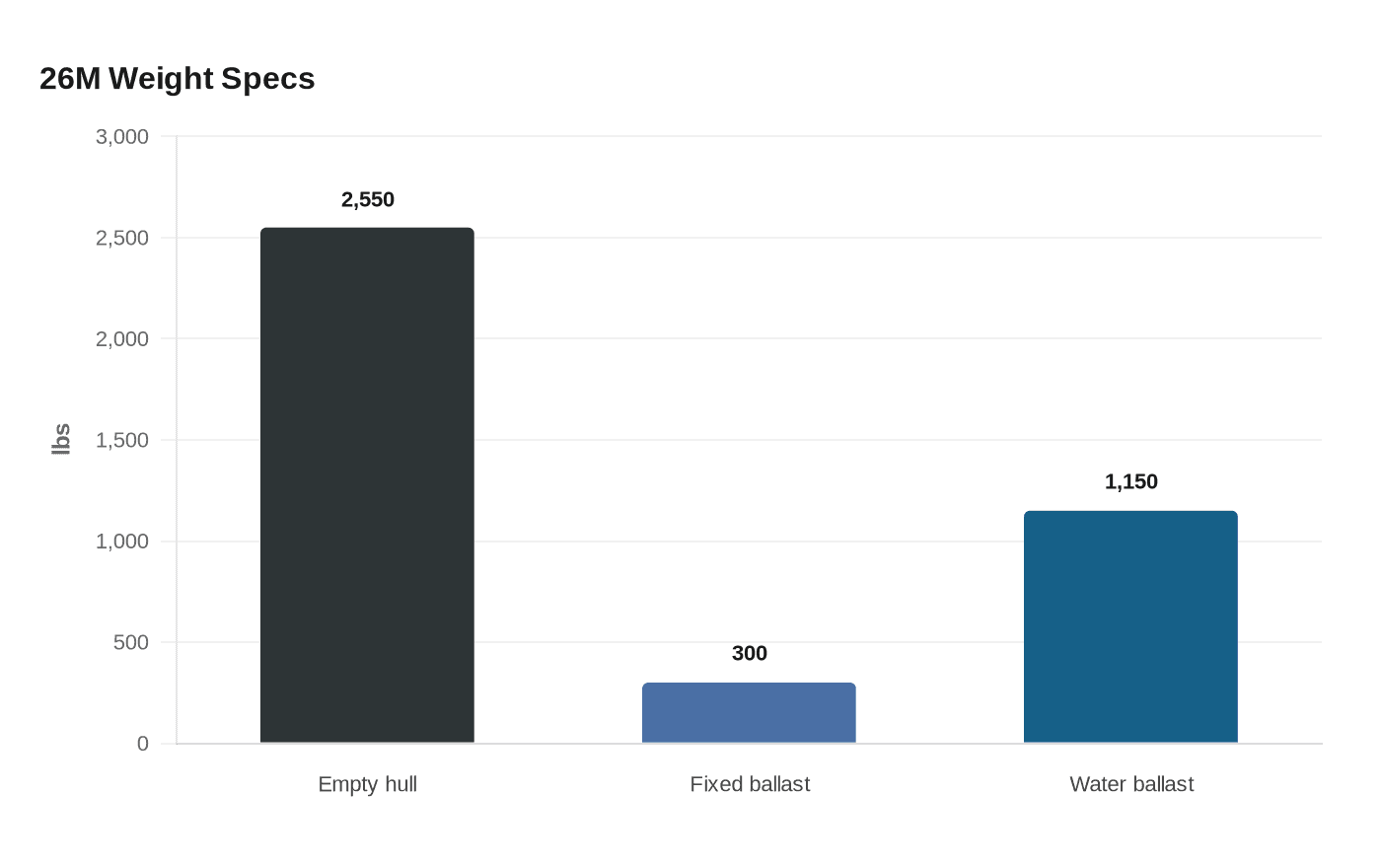
That caution matters more on a 26M than on a lot of production sailboats because this is a trailerable hybrid powersailer built for versatility and shallow-water use, not a heavy cruiser laid up with excess laminate everywhere. Published specs put the boat at 2,550 pounds empty hull weight, with 300 pounds of fixed ballast and up to 1,150 pounds of water ballast. The design sold on affordability and range, and that makes careful mounting decisions part of the ownership experience, not an optional upgrade.
Why the 26M makes a small mount a structural question
The 26M replaced the MacGregor 26X, and by 2012 the line had reached about 3,000 boats, so these are not rare one-off repairs. They are the kind of ownership problem that keeps coming back because owners keep adding, moving, and correcting hardware on a light, multi-use hull. The factory brochure even says the deck liners are bonded in place and that fiberglass thickness is greatly increased where load-carrying items are located. That is the key clue: some places were built to accept hardware, and some were not.
Earlier MacGregor 26 coverage from Practical Sailor makes the same point in a different way. The original MacGregor 26 was described as having a solid fiberglass hull and a plywood-cored deck, and many deck fittings lacked backing plates. Later reporting found high-load areas with about 3/4 inch of fiberglass, while low-load areas were only about 3/16 inch to 3/8 inch thick. That spread explains why one fastener location can feel reassuring and the next can be a disaster waiting to happen.
How to judge thickness without creating a bigger repair
The first rule is to work from the least invasive check possible. If the old mount is already there, use the existing holes as your inspection window before you commit to a new pattern. Look for crushed laminate, hairline cracking, elongated holes, or any sign that the previous screws were biting into more air than fiberglass.
From there, treat the wall as a structure, not a sheet. A depth gauge, a carefully controlled pilot, or a stop set on the drill can tell you far more than forcing a larger bit through by feel. If the material changes suddenly, or if you find a cored section rather than solid laminate, stop and reassess before you enlarge the hole.
What you are trying to learn is simple: is this area thick enough for the loads the separator will see in service, or does it need help? A fuel filter and water separator may not weigh much, but it lives in a vibration zone and carries fuel-system consequences if it loosens. That makes clean fastening and good load spread far more important than raw screw length.
When reused holes are fine, and when they are not
Not every old hole has to be abandoned. If the laminate is sound, the hole pattern still matches the bracket, and the screws can be set without bottoming out or crushing the material, reusing the location can be the cleanest fix. The key is to size the fastener to the structure you actually have, not the structure you wish was there.
If the wall is thin, or if you can reach behind it, a backing plate is the stronger answer. Practical Sailor’s notes about missing backing plates on many MacGregor deck fittings are a reminder that distributed load is a better habit than point loading. Even a small plate or a large washer can make the difference between a mount that stays put and one that starts working loose under outboard vibration.
Blind access changes the calculation. The 26M motor-well area is hard to reach from inside, which is why well nuts or other blind-fastening solutions become especially relevant here. They can solve an access problem, but they do not erase the need to respect the laminate. If the wall is too thin or too weak for the hardware, a blind mount is still a weak mount.
When epoxy-fill and relocation make more sense
There are times when the best repair is to stop using the old location altogether. If the holes are wallowed out, if the laminate is cracked, or if the old spot sits in a thin or awkward part of the structure, epoxy-fill the holes and move the separator to a better area. That is not overkill. It is what keeps a small mounting job from becoming a cracked-laminate job later.
This is especially true for anything in the fuel system. A loose filter bracket can mean more than noise or annoyance. It can lead to leaks, chafe, or a failed mount where the hardware should have been boringly secure from the start. On a boat designed to be light, quick, and adaptable, that kind of failure is exactly what careful owners are trying to avoid.
The MacGregor lesson behind the filter bracket
The broader lesson is the one MacGregor owners keep relearning: these boats reward attention to structure. Roger MacGregor’s line was designed to be practical and efficient, but practical does not mean casual. When factory notes say reinforcement increases at load-bearing points, and when field reports show thickness varying from 3/16 inch to 3/4 inch depending on location, the right answer is to measure first and fasten second.
That is why the fuel-filter question matters. It starts with one screw pattern in one motor-well wall, but it ends with the difference between a clean, serviceable mount and a repair that invites fuel-system failure or cracked laminate the first time the outboard starts shaking the boat awake.
This article was produced by Prism’s automated news system from verified source data, official records, and press releases, then run through automated quality and moderation checks before publishing. The system is built and supervised by the people who set the standards it runs under. Read our full AI policy.
Did this article answer your question?