Major hull-to-deck repairs force interior teardown on Nicholson 35 Levity
A leaking hull-to-deck joint on Levity turned into a cabin teardown, exposing how fast a “simple” leak can spread into decks, joinery and structure.
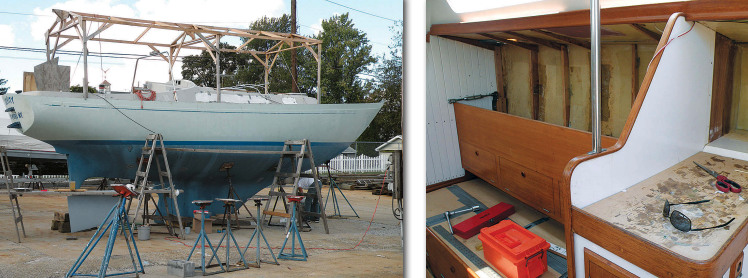
When Levity’s hull-to-deck joint started leaking badly, the repair did not stop at the seam. Mary Broderick and Stephen Perry had to pull out interior paneling and cabinetry on the Nicholson 35, a messy decision that showed how quickly a suspected leak can become a structural job on an older cruiser.
Levity was built by Camper & Nicholsons in 1973, part of a Nicholson 35 line the company’s in-house team designed as an offshore cruising sailboat. The first Nicholson 35 was completed in 1971, and 228 boats were built before production ended in 1985. Practical Sailor called the model a “real-live, serious ocean cruiser,” and said just over 200 were built over more than 10 years, with many ending up in England and some reaching the United States in the mid-1980s.
The Perry-Broderick story shows why that reputation comes with responsibility. Stephen Perry said he and Mary Broderick bought Levity on March 30, 1998, expecting a five-year upgrade program for offshore cruising. Instead, the boat’s hull-to-deck joint leaked badly enough that, over time, it damaged the decks and interior. By 2002, the problem forced a major haulout, and what started as a planned improvement campaign stretched into a 10-year restoration.
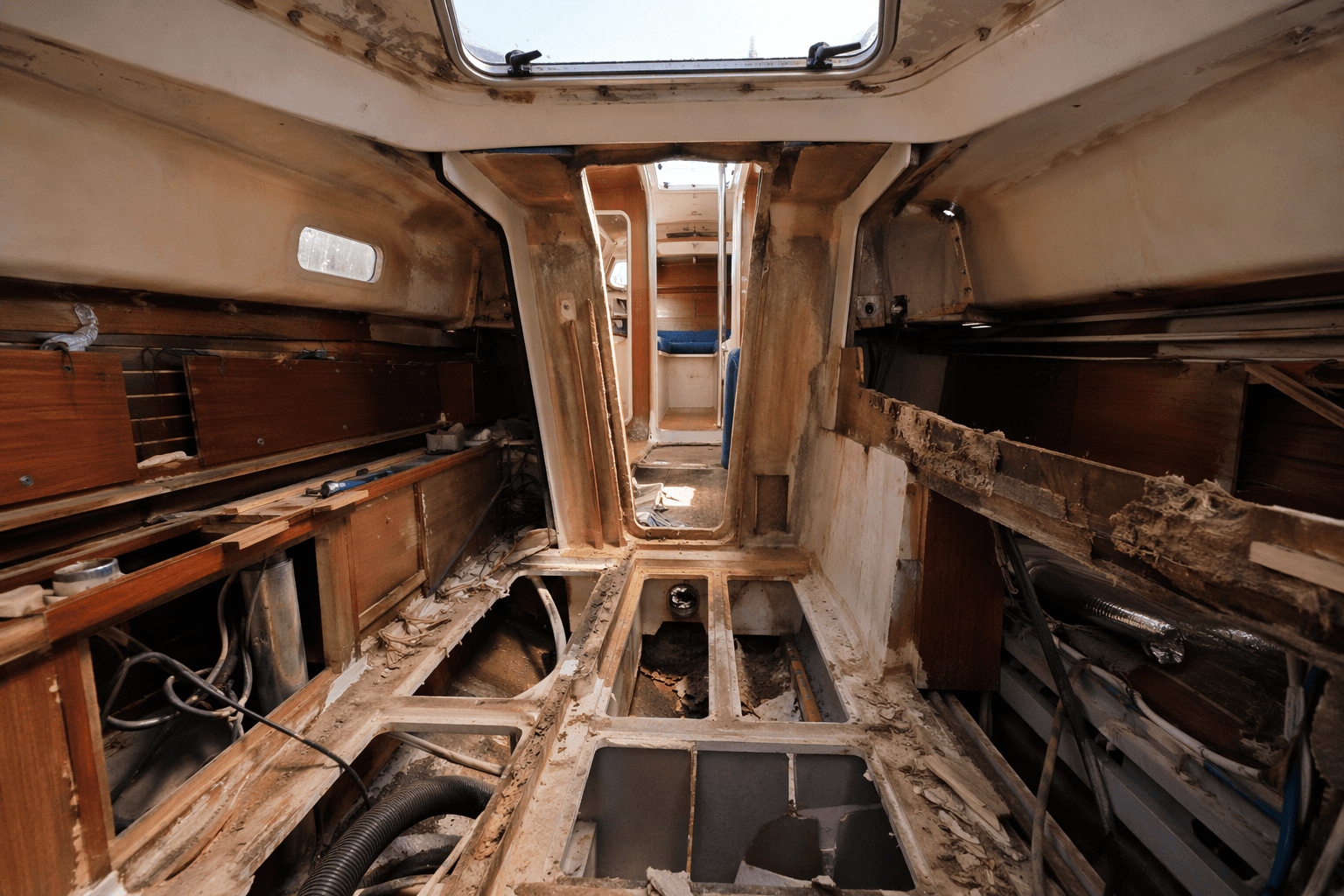
The warning signs did not end at the deck joint. Perry said their surveyor had warned them the rudder was waterlogged, and when he checked it later he found extensive fiberglass delamination and wet, foamy mush inside. That kind of hidden damage is what makes older cruisers so deceptive from the dock: the visible leak is often just the entry point for a broader failure inside the laminate, around fastenings, or under trim and joinery that looks untouched until it is opened up.
Practical Sailor’s deck-leak guidance explains why these repairs can spread so far. Leaks along the hull-and-deck interface can come from the joint itself, from the fastenings that hold the laminates together, or from rail fastenings above the joint. Once the source sits behind fittings or under a rail, the fix often means removing hardware and rebedding it properly, not just smearing on sealant.
Levity’s teardown is a hard reminder that on an older fiberglass cruiser, the real cost of a leak is often hidden inside the boat. By the time the furniture comes out, the decision is no longer about cosmetics. It is about whether the joint, the deck and the interior are still worth saving together.
This article was produced by Prism’s automated news system from verified source data, official records, and press releases, then run through automated quality and moderation checks before publishing. The system is built and supervised by the people who set the standards it runs under. Read our full AI policy.
Did this article answer your question?