Narrower hurricane cone still leaves sailors exposed to danger
A narrower cone is not a safer one. Sailors need to plan around the wind, surge, and post-tropical leftovers that still reach well outside the line.
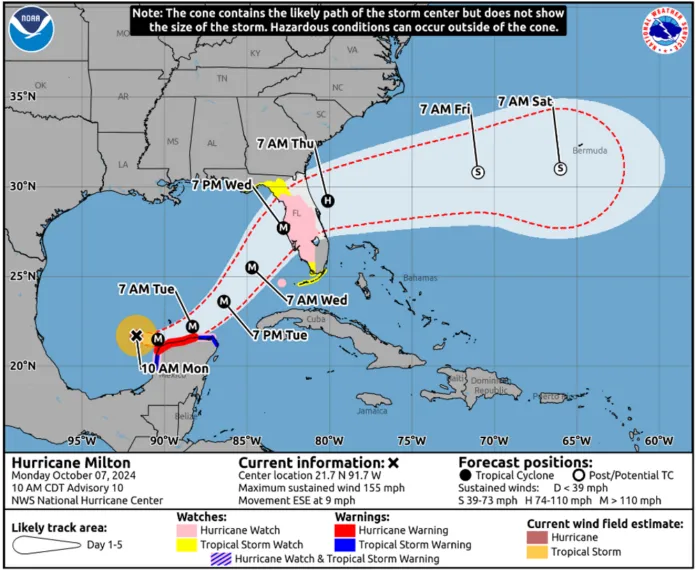
A tighter hurricane cone can lull a skipper into a false sense of calm, and that is exactly the trap to avoid this season. The National Hurricane Center’s updated graphics reflect better track forecasts, not a smaller danger zone, so your passage plan, haul-out timing, and harbor decisions still have to account for hazards far outside the cone.
What changed at the Hurricane Center
The key change is simple: the cone is being refined because the forecast center track is getting better. NOAA says the cone represents the probable path of the storm center and is built from forecast positions at 12, 24, 36, 48, 60, 72, 96, and 120 hours, with the five-day center track staying inside the cone about 60% to 70% of the time. NOAA’s 2024 verification report says official track forecast errors set records for accuracy at every forecast time period and were up to 75% smaller than they were a few decades ago.
That improvement matters, but only if you read the graphic correctly. The cone is about where the eye or center is most likely to go, not about where the worst weather will be, and NOAA says hurricane-force and tropical-storm-force winds can extend hundreds of miles beyond it. In other words, the white space outside the cone is not a clean bill of health for a boat, a marina, or a passage plan.
How sailors should use the cone now
For cruising sailors, the first change is mental: stop treating the cone as a pass-fail line. Roland Stockham’s warning in Practical Sailor is rooted in seamanship, not theory, and it matches NOAA’s guidance that the cone only shows track uncertainty, not impact footprint. If you are choosing whether to leave, whether to sit tight, or whether to shift to a different harbor, the cone is only the start of the conversation.
That is especially true when storm remnants are involved. NOAA and the National Weather Service have both stressed that tropical cyclone hazards can persist after a storm becomes post-tropical, and that these systems can keep producing dangerous conditions far from landfall. Stockham points to remnants that can march up the eastern seaboard, ride the Gulf Stream across the Atlantic, and still reach the Pacific Northwest and British Columbia with strong winds and heavy rain.

The practical takeaway is blunt: if a system is anywhere near your sailing window, you need to watch more than the centerline. Use the cone alongside the wind field, storm surge products, marine warnings, and local harbor conditions, because NOAA says the 2026 cone will also include inland tropical storm and hurricane watches and warnings. That broader picture is especially important if your route touches the continental U.S., Puerto Rico, U.S. Virgin Islands, or Hawaii, where surge and wind hazards can drive decisions long before the eye itself is nearby.
What this means for passage planning and haul-out timing
If you are planning a passage, the cone should push you toward earlier, more conservative decisions, not later ones. A small shift in the forecast center can still leave your boat in the path of damaging wind or surge, so the safe move is to build in extra margin for lay days, alternate harbors, and an early return-to-base option. Stockham’s Cork Harbour example is the right reminder here: he sat for a week while hurricane remnants brought severe gales and 30-foot seas, a clean illustration that distant systems can still shut down cruising plans.
For haul-out timing, the new graphics cut both ways. Better track forecasts can help you avoid hauling too early and paying for unnecessary yard time, but they can also tempt you to wait too long because the cone looks “narrow.” Do not make that mistake. NOAA says storm surge watch and warning graphics can be issued as early as 72 hours before hazardous conditions, usually around 48 hours before, so if your boat needs to be out of the water, the decision should be tied to those surge and wind alerts, not to the centerline alone.
How to update your onboard routine
This season rewards boats that already have a disciplined weather routine. Before every move, check whether the system has only a forecast cone or also watches, warnings, and post-tropical hazards. If the storm is still organizing, remember that NOAA says watches and warnings can be issued even before a system fully becomes a tropical cyclone, which matters when you are deciding whether to relocate, double up lines, or leave the boat and the harbor entirely.

- checking the latest NHC advisory and not just the map
- comparing the cone with wind radii and surge products
- asking whether your current anchorage or marina leaves room for a shifted track
- deciding in advance when you will stop “watching it” and start moving the boat
A solid onboard routine should include:
That discipline matters even in a season NOAA expects to be below normal. The 2026 Atlantic outlook calls for 8 to 14 named storms, 3 to 6 hurricanes, and 1 to 3 major hurricanes, but NOAA still emphasizes that even one storm can do serious damage. For sailors, that means the right response to a smaller cone is not complacency, it is sharper judgment.
Why the communication shift matters
The cone has a long history, and it has also had a long history of being misunderstood. NOAA introduced the graphic on the NHC website in 2002, and research from NOAA and the University of Miami has shown that people often read the area outside the cone as safe when it is not. That communication problem is exactly why the 2026 cone will add inland watches and warnings, while NOAA’s experimental version uses ellipses designed so the center stays within each ellipse 90% of the time, with public comment open through November 30, 2026.
For sailors, the lesson is not to wait for a perfect graphic. It is to treat the cone as one tool in a larger seamanship routine, then move early when the other products start to line up against you. The narrower cone is better forecasting, but the boat still lives in the wider weather field, and that is the part that can sink plans long before it sinks a hull.
This article was produced by Prism’s automated news system from verified source data, official records, and press releases, then run through automated quality and moderation checks before publishing. The system is built and supervised by the people who set the standards it runs under. Read our full AI policy.
Did this article answer your question?