Offshore Watchkeeping That Works, Matching Crew Fatigue, Weather, and Safety
A watch plan fails fast when fatigue, weather, and traffic are ignored. Gary Jobson’s race stories show why the only schedule that matters is the one your crew can actually sustain.
A rota that survives the night
Offshore watchkeeping looks tidy on paper right up until the boat starts pounding through swell, the autopilot is working hard, and everyone is running on less sleep than they expected. That is the lesson Gary Jobson pulls from three long-distance races aboard a 66-footer, the Block Island Race at 186 miles, the Annapolis to Newport Race at 473 miles, and the Marblehead to Halifax Race at 361 miles. His point is not that one schedule is magically correct, but that the best watch plan is the one the crew can actually live on without the quality of lookout, seamanship, or morale falling apart.
That is why the classic four-hours-on, four-hours-off rotation is only a starting point. Some larger crews can stretch to a four-on, six-off pattern, while merchant vessels often use four-on, eight-off. The attraction of the longer rest block is obvious, but offshore sailing is rarely won by the prettiest spreadsheet. It is won by the system that still works on the third night, after the first burst of optimism has drained out of the cabin.
The rule behind the routine
This is not just a comfort issue or a sleep-management exercise. COLREG Rule 5 requires every vessel at all times to maintain a proper lookout by sight and hearing, and by all available means appropriate to the prevailing circumstances and conditions. That means the watch is part of collision avoidance, not a luxury for when the crew feels fresh.
The broader maritime world treats fatigue the same way. The International Maritime Organization says fatigue mitigation became a formal safety concern after the Maritime Safety Committee raised it in 1999 and approved practical guidance in 2001. That framing matters for cruising boats because it places rest, scheduling, and alertness in the same safety bucket as gear maintenance and passage planning. World Sailing also leans on incident reporting and safety education to support safety standards and policy, which is another reminder that watchkeeping lives inside a wider safety culture, not outside it.
What fatigue science says about sea watches
The offshore world keeps rediscovering the same uncomfortable fact: humans do not run like engines. A peer-reviewed study of high-seas watchkeepers found that international merchant ships generally use a four-hours-on, eight-hours-off system, and it also found that watchkeepers slept less than day workers, 5.5 hours versus 5.8 hours. That gap sounds small until it gets layered onto multiple nights, irregular meals, wet gear, and interrupted rest.
A Royal Canadian Navy comparison went even further. The best watch system it evaluated for fatigue and quality of life at sea was a straight eight-hour shift system. That does not mean every cruising boat should copy a navy arrangement, because bunk space, crew size, and passage style are different. It does mean longer rest blocks matter when the boat, the weather, and the crew can support them. Jobson’s argument lands in exactly that space: the best rota is the one that preserves performance and morale, not the one that looks elegant on paper.
The handoff is where watch plans succeed or fail
The most overlooked part of a watch system is not the middle of the night. It is the handoff. Jobson says preparing to come on watch can take 15 to 20 minutes, and longer in rough weather, which turns the turnover itself into part of the safety system. If that handoff is rushed, the next watch steps outside with incomplete information and a higher chance of missing a change in wind, traffic, or sea state.
His examples are the kind that matter on an actual cruising boat. Keep boots and foul-weather gear easy to grab so the off-watch crew can get below quickly and stay warm enough to sleep well. Make hot tea before going on deck so the watch starts with some comfort instead of a cold shock. Ask the outgoing watch captain what has been happening, and review progress with the navigator before anyone swaps places. That short conversation can reveal a wind shift, a course change, a target ETA, or a developing concern that never makes sense to discover alone in the dark.
Why conditions change the best schedule
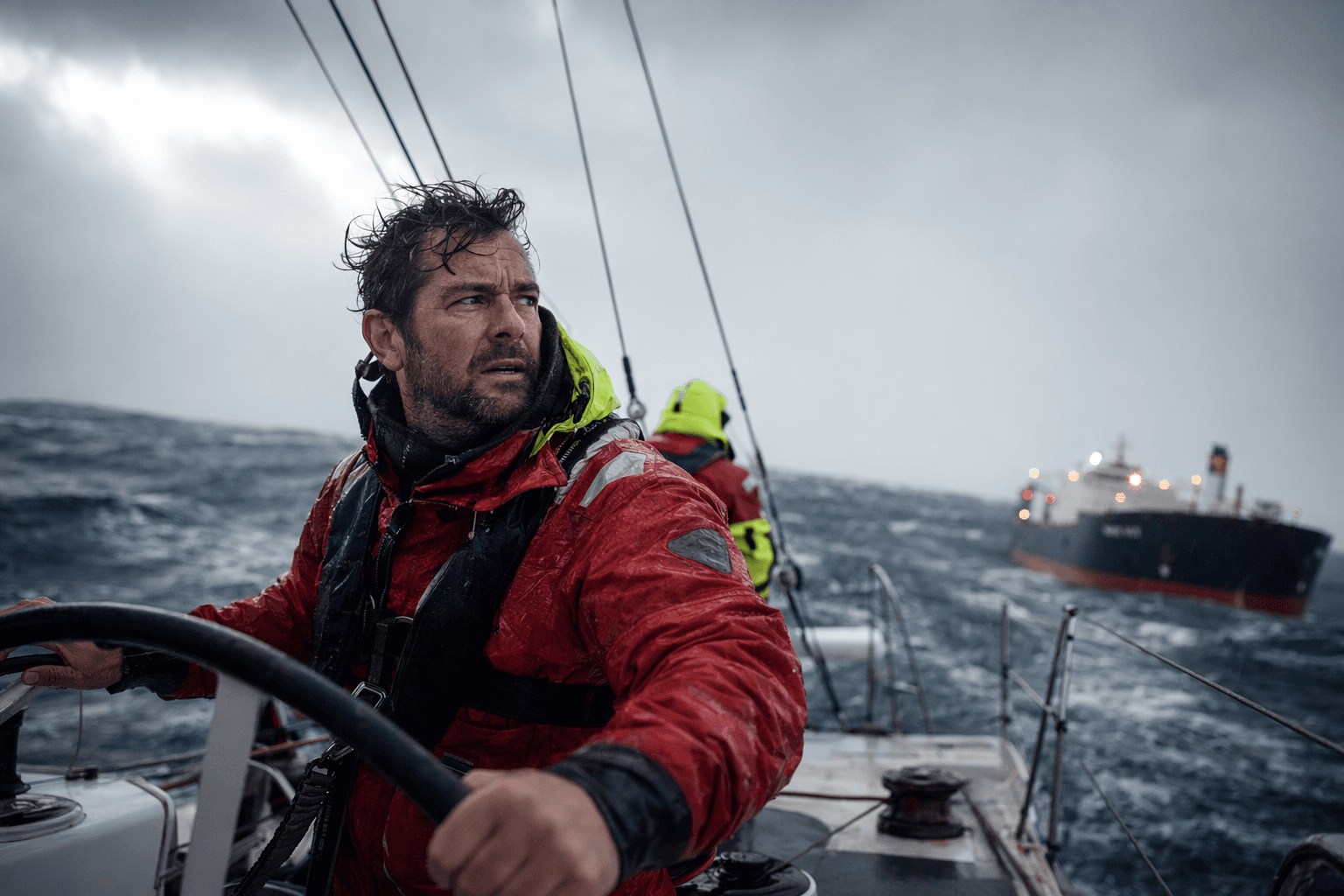
A watch system that works in mild weather can fail hard once the boat enters fog, rough water, or heavier traffic. Jobson describes coming on watch in fog with the boat pounding into swells at 10.8 knots, a reminder that offshore watchkeeping is about situational awareness as much as sleep. In that kind of scene, the crew cannot lean on autopilot alone or assume the sea will stay predictable until sunrise.
That is where crew skill and boat systems start to matter as much as the schedule itself. A confident crew can manage a tighter rotation and still keep good lookout discipline. A tired, green, or undersized crew may need shorter stints, more overlap at handoff, and a simpler passage plan so nobody is improvising in the dark. The more traffic there is, the less room there is for drift in attention, which is why the watch must be matched to how much mental bandwidth the situation actually demands.
A practical offshore plan usually comes down to a few questions:
- How much sleep can each watchkeeper really get over several nights, not just the first one?
- Is the autopilot reliable enough to reduce workload, or does it need constant babysitting?
- Are you in open water with room to rest, or in a traffic lane where lookout needs to stay sharp?
- Does the weather allow a stable routine, or will the next front, squall, or fog bank force shorter, more alert watches?
- Can the crew handle the rhythm without morale collapsing by the second or third night?
Those questions matter because the wrong system gets expensive fast. A tired crew makes worse calls, misses more cues, and recovers more slowly when conditions change. A watch plan that ignores fatigue can turn a manageable passage into a hard, unsafe one.
The system that keeps the boat moving
Jobson’s real message is plain: offshore watchkeeping is a system, not a slogan. The best rotation is the one that fits the crew’s stamina, the weather, the traffic, the boat’s pace, and the quality of the handoff. On a well-run cruising boat, the watch plan is what keeps decision-making sharp over long miles, and that is what turns a difficult passage into a sustainable one.
This article was produced by Prism’s automated news system from verified source data, official records, and press releases, then run through automated quality and moderation checks before publishing. The system is built and supervised by the people who set the standards it runs under. Read our full AI policy.
Did this article answer your question?