Old socks protect turnbuckles and finish during mast removal
An old sock can do more than keep rigging tidy: it shields turnbuckles from grit and knocks, saving finish and easing winter layup.
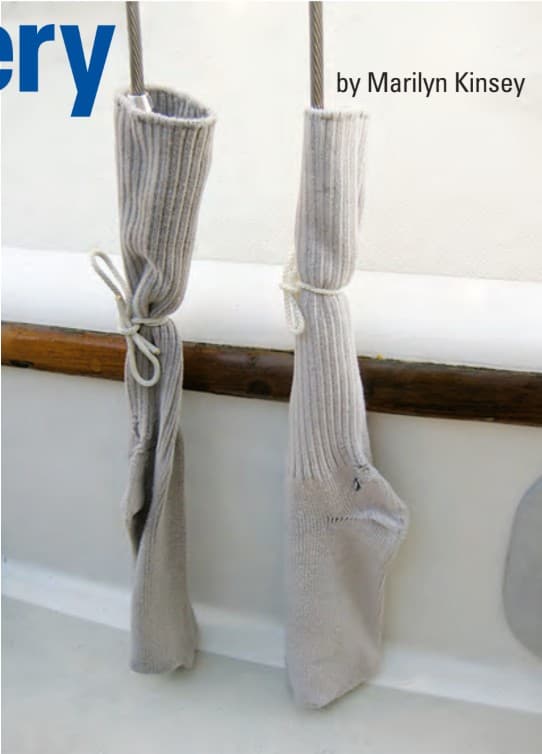
The mast is down, the crane is gone, and the small damage starts where you least want it: on the turnbuckle, the deck, the brightwork, or the portlights. Marilyn Kinsey’s answer is almost laughably simple, but that is why it works so well. Slip an old sock over each turnbuckle after the shroud comes off the chainplate, tie it in place, and let a scrap of fabric do the quiet work of protecting both the boat and the rig.
A low-tech cover for a high-friction moment
Kinsey uses the sock trick during annual haulout, when the mast comes off and the boat is laid up for the winter. That is exactly when rigging hardware tends to get bumped, dragged, stacked, and moved around on mast stands, with plenty of chances for a metal fitting to kiss gelcoat or scratch varnish. The sock gives the turnbuckle a soft bumper, so the hardware does not ding the deck, brightwork, or portlights while everything is being handled.
The appeal is not novelty for novelty’s sake. It is a tiny piece of discipline that formalizes what many sailors already try to do in a looser way, with rags, tape, or whatever is at hand. Kinsey’s version costs almost nothing, can be repeated every year, and turns an ordinary household item into a dependable part of the layup routine.
How the routine works at haulout
The process is straightforward enough to become muscle memory. After disconnecting each shroud from its chainplate, the sock goes over the turnbuckle and gets tied off so it stays put. That keeps the threads and fittings covered while the rig is off the boat, stored, or shuffled through a yard where things inevitably get knocked around.
The other half of the routine happens at the end of winter. Kinsey cleans the turnbuckles, re-lubricates them, and then puts on fresh clean socks until reinstallation. That detail matters because a cover is only useful if it is not hiding old grime inside it, and the whole point here is to keep the hardware ready for a clean spring setup.
Why clean threads matter so much
This is not just about keeping the boat pretty, although that alone would be enough for a lot of owners. Dirt and gravel can work their way into turnbuckle threads during storage, and contaminated or corroded threads are much harder to adjust when the boat goes back together. Anyone who has tried to tune rigging with stubborn hardware knows how quickly a winter shortcut becomes a spring headache.
The sock helps prevent that slow, abrasive damage. It keeps grit out, reduces the chances of corrosion taking hold on exposed metal, and adds a layer of protection against the little knocks that happen whenever spars are off the boat and gear is being moved by hand. For a sailor who wants a fast layup routine, that is a better payoff than a more elaborate protection method that takes time, money, and extra parts.
Why this beats fancier fixes for a lot of boats
For owners who drop the mast every year, trailer their boats, or store spars in a yard where gear gets handled often, the sock method is especially practical. It does not need a custom sleeve, a proprietary cover, or a careful inventory of specialty parts. It is reusable, instantly replaceable, and familiar enough that it is easy to keep up with from one season to the next.
That matters because off-season protection is not just about surviving the winter. It is about preserving the finish around the rigging and making sure the hardware itself does not come back in rougher shape than when it went away. In that sense, the sock is doing two jobs at once: guarding the boat’s surfaces and guarding the rigging threads.
The bigger rigging lesson hidden inside the hack
The reason a small trick like this resonates is that standing rigging is not decorative gear. BoatUS defines standing rigging as the stainless-steel shrouds and stays that keep the mast upright while transferring the loads from the mast and sails to the hull through the chainplates. That makes every shroud, stay, and threaded fitting part of a safety system, not just a maintenance chore.
West Marine’s rigging guidance reinforces that point. Regular inspection, cleaning, lubrication, and replacement of worn parts can prevent unexpected failures and costly repairs, and winter storage can conceal corrosion and loosen fasteners. Its stainless-steel rigging guide also flags crevice corrosion as a particular danger, which is exactly the kind of hidden damage sailors want to avoid when hardware sits unused for months.
Sail magazine makes the same case from the spring commissioning angle: standing rigging has many possible weak points, and the pre-season check is when subtle trouble is most likely to show up. Seen against that backdrop, Kinsey’s sock cover is not just a homespun trick. It is a simple way to protect the parts that matter most before dirt, moisture, and handling wear have a chance to make them harder to trust.
A tradition of practical seamanship
Kinsey’s own sailing history gives the idea even more weight. Good Old Boat profiled her in issue 90, dated May/June 2013, and noted that she had been sailing for 60 years, with the first 30 of those without motors. Her earlier boats included a 16-foot wooden sloop, a Lido 14, a Lightning, a C&C 24, a Cape Dory 28, and a Pretorien 35.
That is the kind of background that makes a tiny maintenance habit feel earned rather than cute. The sock method comes from a sailor who has spent decades around rigs, finishes, and the practical nuisance of keeping gear ready for another season. It fits the long tradition of budget-conscious boat care because it solves an everyday problem without pretending to be anything more than what it is: a cheap, repeatable way to keep turnbuckles clean, protected, and easy to live with when the mast comes off.
When the crane leaves and the spar is on the ground, the smartest protection is often the one you can put on in a minute and trust all winter. In Kinsey’s hands, an old sock becomes part of the layup ritual, and that small habit pays off exactly when the boat is most vulnerable.
This article was produced by Prism’s automated news system from verified source data, official records, and press releases, then run through automated quality and moderation checks before publishing. The system is built and supervised by the people who set the standards it runs under. Read our full AI policy.
Did this article answer your question?


