Older sailor rigs boathook support for easier bottom prep
A boathook, a foam cradle, and a lighter sander turned Natasha’s bottom prep into a one-person job. The payoff is less fatigue, less mess, and less wasted effort.
Bottom prep is the job most owners dread
Bottom sanding is where a simple repaint turns into a grind, literally. On Natasha, Bert Vermeer was facing hard bottom paint, peeling coatings, and blisters on a 1978 Islander Bahama 30, and the work became unavoidable once the boat was hauled for an engine replacement. The problem was not just the condition of the hull. It was the physical toll of holding a heavy tool overhead for hour after hour, the kind of strain that can end a one-person project before the paint is even off.
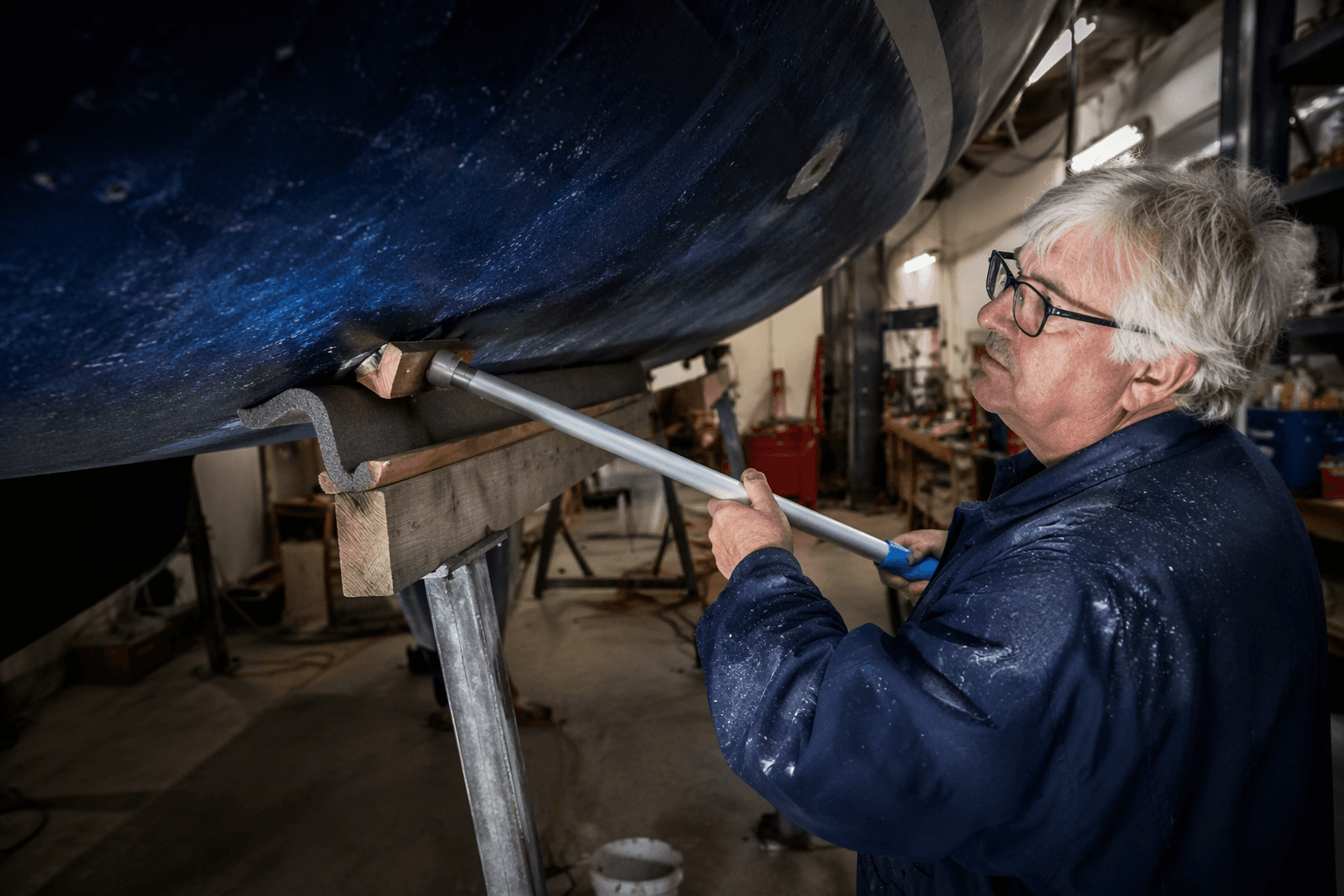
That is what makes Bert’s approach worth studying. Instead of paying for yard labor he could not afford or settling for a half-finished job, he built a support setup that let the sander do the work without making his arms carry all of it. For older-boat owners trying to stay independent, that is the real breakthrough: not a miracle tool, but a smarter way to move a familiar tool.
The core idea: take the weight off your body
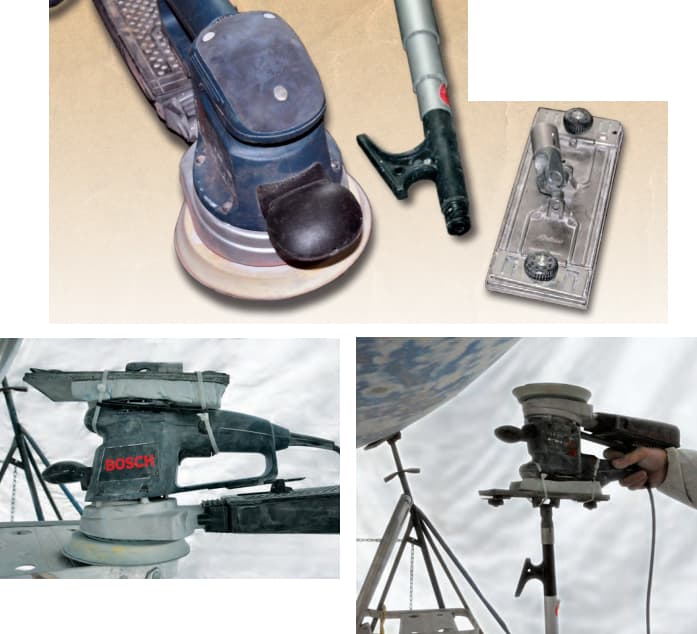
Bert settled on a Bosch 6-inch orbital sander because it was lighter and easier to control than a grinder or belt sander. That choice matters more than it sounds like, because bottom prep is already full of surprises. Once you start removing old paint, you often uncover more sanding, more loose material, and more blister repair than you expected.
To keep the sander manageable from the ground, Bert built a prop using a 3-foot extending boathook, a metal pole sanding head with a universal swivel, and a carved block of rigid foam shaped to cradle the rounded top of the sander. The foam and ties stabilized the machine while the boathook carried the strain that would otherwise have gone straight into his shoulders, neck, and back. The result was not effortless work, but it was controllable work, which is a major difference when you are doing the job alone.
How the support setup solves the one-person problem
The value of the boathook rig is that it changes the mechanics of the job instead of asking you to outmuscle it. With the sander supported, you are not trying to balance the tool overhead while also keeping the pad flat and the pressure even. That means fewer awkward reaches, less fatigue, and less chance of wandering into the gelcoat or leaving uneven patches behind.
For a DIY sailor, that also means fewer wasted passes. When you are exhausted, you start pressing too hard, moving too fast, or quitting too early. A lighter, ground-assisted setup helps you stay consistent long enough to finish the prep properly, which is especially important on a hull that still needs blister work and careful recoating afterward.
Why Natasha needed more than a quick scuff
Natasha’s bottom was not a cosmetic touch-up. Good Old Boat identifies the boat as Bert and Carey Vermeer’s fourth boat, after a Balboa 20 and an O’Day 25, and says the couple has been sailing the coast of British Columbia for more than 30 years. Bert also tends to rebuild his boats from the keel up, and the site notes that he has already taken on major jobs on Natasha, including a repower. That background explains why he treated this as a practical systems problem instead of a brute-force sanding session.
The hull itself also demanded respect. Interlux notes that aging gelcoat can become porous and brittle, which helps explain why old fiberglass boats so often show cracking and blistering instead of taking a simple new coat. Once you are dealing with that kind of surface, bottom prep is no longer a quick coat-and-go job. It becomes a process of exposing problems, repairing them, and making sure the new finish has something solid to grab.
Pick the abrasive for bonding, not just removal
A lot of bottom jobs go sideways because owners focus on stripping paint and forget about what the new coat needs to stick. West Marine says bottom-paint jobs often take longer than expected because prep work reveals additional sanding, blister repair, loose paint removal, and compatibility issues. The company also says 80-grit sanding is commonly used to create the tooth needed for new bottom paint.
That lines up with Good Old Boat’s blister-repair guidance, which recommends sanding patched blister cavities with 80 grit before barrier and bottom coats. The point is not to chase a perfectly polished surface. The point is to leave the right texture for adhesion while keeping the hull sound enough for the next layers. If you are working through old paint and repairs at the same time, abrasive choice becomes part of the plan, not an afterthought.
Safety is part of the shortcut
A lighter setup is not just easier on your body. It can also help you stay safer while sanding old antifouling paint and fiberglass surfaces. CDC/NIOSH says fibrous glass dust can harm the eyes, skin, and lungs, and OSHA has a specific fibrous glass dust exposure listing. The U.S. EPA’s antifouling-label guidance also warns you to wear PPE when sanding old antifouling paint so you do not inhale sanding dust.
That matters on an aging hull because bottom prep can stir up more than paint flakes. Once blister repair, old coatings, and fiberglass dust are all in the mix, eye protection, skin protection, and respiratory protection stop being optional extras. A supported sander does not replace PPE, but it does reduce the amount of strain you carry while you are already trying to control dust and surface damage.
What makes this approach useful beyond Natasha
Bert’s rig is appealing because it uses ordinary parts in a way that solves a common boatyard problem. You do not need specialty machinery to make a hard job more manageable. You need a lighter tool, a support point, and enough stability to let the abrasive do its work without wearing you down first.
That is the lesson tucked inside Natasha’s haulout. For an older sailor with a tired hull and a limited budget, the win is not that bottom sanding suddenly becomes pleasant. The win is that it becomes possible to keep going safely, with less fatigue and less mess, until the prep is actually ready for paint.
And that is the part older-boat owners dread most: not the sanding itself, but the moment it starts to feel like the boat is winning. Bert’s boathook support flips that equation back in the sailor’s favor.
This article was produced by Prism’s automated news system from verified source data, official records, and press releases, then run through automated quality and moderation checks before publishing. The system is built and supervised by the people who set the standards it runs under. Read our full AI policy.
Did this article answer your question?