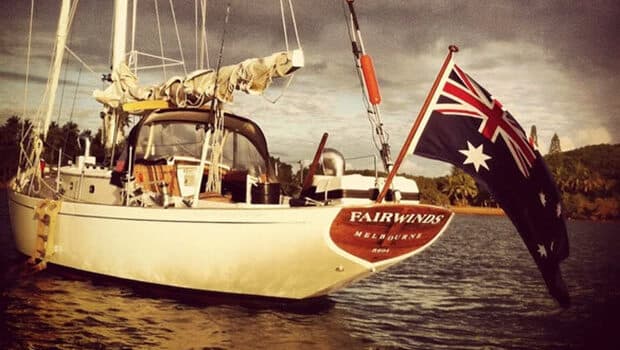
Practical Sailor reviews the rugged, refit-friendly Cabot 36 cutter
The Cabot 36 is a bluewater project for buyers who budget for refits, not marina polish, and its scarcity makes condition the whole decision.

The Cabot 36 is not the kind of older cutter you buy for bragging rights. It is a rugged, over-built 1970s Nova Scotia boat that makes sense for the sailor who wants offshore security, accepts upkeep as part of ownership, and values a platform that can be improved with tools instead of just admired at the dock.
Who should look hard at a Cabot 36
This is a boat for the buyer who thinks in terms of passages, repairs, and long-term usability. At 35.6 feet long with an 11.6-foot beam and 4.7-foot draft, the Cabot 36 sits in a practical middle ground, while its lead ballast and offshore-minded proportions give it a capsize screening formula of about 1.79, a comfort ratio of about 33.17, and a displacement-to-length ratio around 304. Those numbers point to a heavy, steady cruiser, not a light, lively performer.
That matters because the Cabot 36 was conceived as an ocean-capable yacht, with a conservative mindset that favors reliability over airy volume. If you want a boat that feels built for weather, allows you to carry gear without much drama, and can be made better one system at a time, this is in your lane. If your priority is bright interior space, modern lines, or a quick turn of speed, you are shopping in the wrong aisle.
The backstory explains the buy
Cabotcraft Industries began operating in Sydney, Nova Scotia in late 1972 or early 1973, using converted World War I naval buildings at Pt. Edward Industrial Park. The company was a partnership involving the Cape Breton Development Corporation, Fred Karp, and Jerry Goodes, and it was tied to a local worker-training and employment effort aimed at people from a recently closed mine. That origin story still matters, because the Cabot 36 came out of an industrial, problem-solving environment rather than a boutique yacht shop.
The first hull was built in 1974, production ended in 1978 when Cabotcraft went out of business, and only 49 Cabot 36s were built. In the used market, that scarcity cuts both ways. You get a distinctive boat with a real bluewater pedigree, but you also get limited parts history, fewer comparison points, and a smaller pool of documented examples to study before you buy.
There is also a memorable bit of showmanship in the story. The first Cabot 36 was reportedly towed from Maine to Maryland by an aging 1950s Mac truck for the 1974 Annapolis boat show, where it was well received. That stunt says a lot about the boat’s early positioning: it was meant to get noticed as a serious cruiser, not as a luxury object.
Why the structure still appeals to DIY sailors
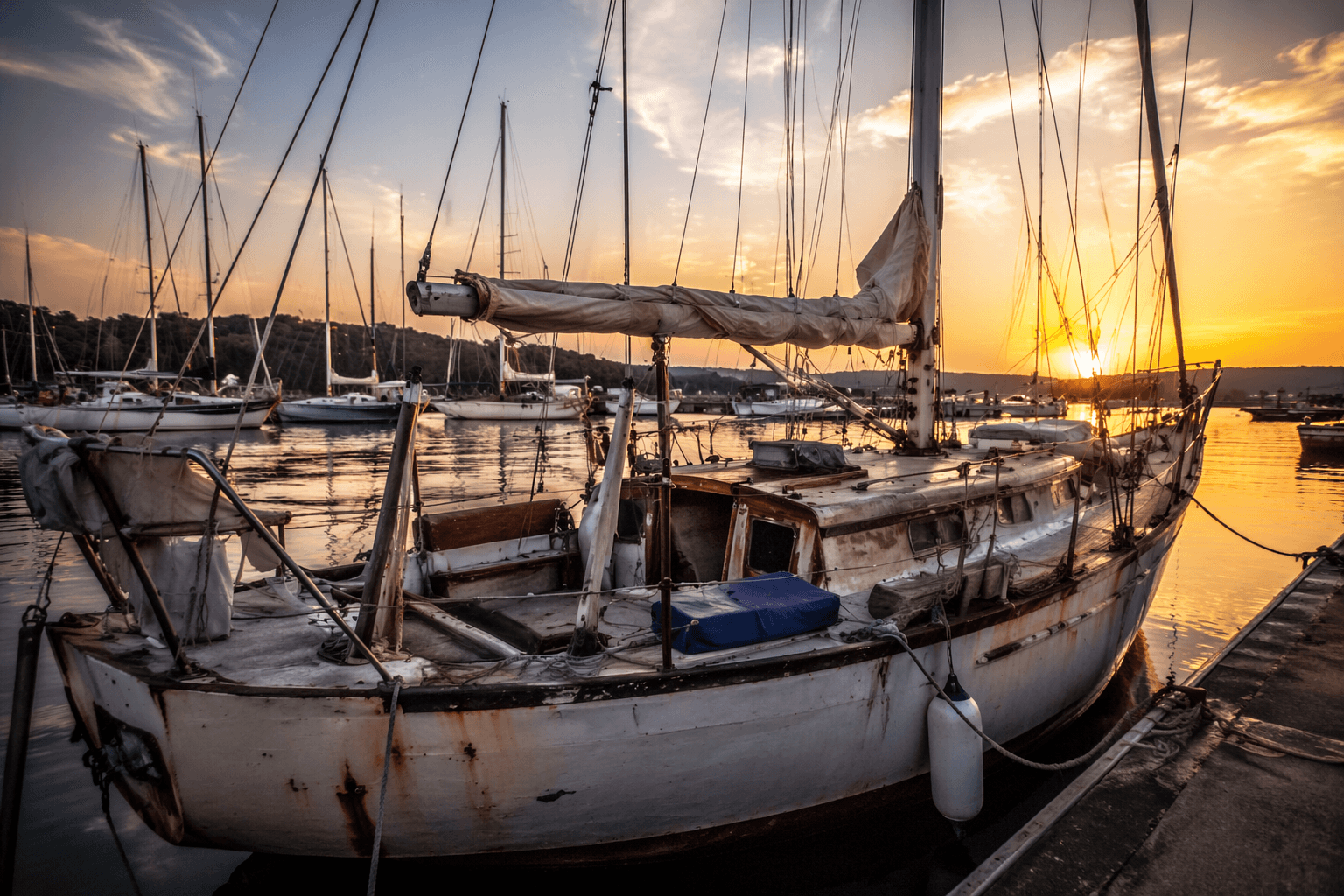
The Cabot 36 was built in an era when fiberglass and resin were plentiful, so the hull and deck were laid up with a lot of material. That heavy construction is exactly why the boat still speaks to hands-on owners. It feels like a boat you can repair, improve, and maintain without worrying that every project will uncover something fragile.
Ted Brewer and Bob Walstrom shaped the design, and Brewer’s broader philosophy shows up in the underbody. The cutaway forefoot, often described as the “Brewer bite,” trims the traditional full-keel profile ahead of the rudder to improve maneuverability while preserving directional stability. In plain sailing terms, that means the Cabot 36 keeps the reassuring manners of a conservative offshore cruiser while steering more cleanly than a pure full keel shape might.
That combination is part of the appeal. You are not buying a modern production cruiser that tries to do everything by volume and light weight. You are buying a small-batch offshore design that assumes you will maintain it, and rewards you when you do.
Where sweat equity really turns into value
The best clue to the Cabot 36’s refit potential is an example like Eala Bawn, which shows decades of thoughtful owner upgrades, including rebuilt rigging and a hinged Lexan companionway door. That is the right mental model for this boat. The value is not in pretending the boat is new, but in turning a solid old hull into a trustworthy cruising tool through selective, sensible work.
For a capable owner, the jobs that make sense are the ones that directly improve offshore usability and reduce future maintenance burden. Good candidates include:
- Rebuilding or renewing rigging when the rest of the boat justifies the investment
- Upgrading closures and access points, like the companionway door
- Finishing or improving bare-hull boats that were sold and completed by others
- Bringing older systems up to a standard that matches the boat’s offshore intent
The Cabot 36’s history of being sold as bare hulls and finished by others makes this especially relevant. That kind of boat can be a bargain if the completion work is sound and the systems are honest. It can also become a headache if the finish work was rushed, undocumented, or done without the same offshore discipline the design deserves.
Go or no-go: how to judge the deal
The go case is simple. Buy the Cabot 36 if the hull, deck, and fit-out show evidence of serious care, the refit list is finite, and the price reflects the work still ahead. A boat with solid bones and visible owner upgrades can become a strong bluewater platform without needing a full-scale rebuild.
The hard renegotiate or walk-away case is just as clear. If the boat’s limited production history means you cannot easily source parts or compare past work, then condition and documentation matter even more. Push back hard if the asking price assumes a turnkey cruiser while the boat still needs major rigging, unfinished owner work, or broad correction of deferred maintenance. Walk if the refit burden has outgrown the value of a 49-boat class and the seller is pricing it like a ready-to-go offshore cutter.
An updated version of the Cabot 36 was offered beginning in 2008 through YachtSmiths International of Canada in Dartmouth, Nova Scotia, which adds one more wrinkle for shoppers. Some examples will reflect later updates or different completion paths, so every candidate deserves its own inspection and its own arithmetic.
The Cabot 36 remains a boat for sailors who understand that a good offshore cruiser is often built in the refit, not just in the mold. If you want an older cutter that asks for work but gives back real ocean-going confidence, this is one of the few small-production designs where the maintenance story is the point, not the apology.
This article was produced by Prism’s automated news system from verified source data, official records, and press releases, then run through automated quality and moderation checks before publishing. The system is built and supervised by the people who set the standards it runs under. Read our full AI policy.
Did this article answer your question?