Seven Boat Problems Surveyors Keep Finding, and How to Fix Them
The fastest way to sink a sale or a weekend is a defect surveyors can spot in minutes. Use this triage list to catch the seven biggest troublemakers before launch season.
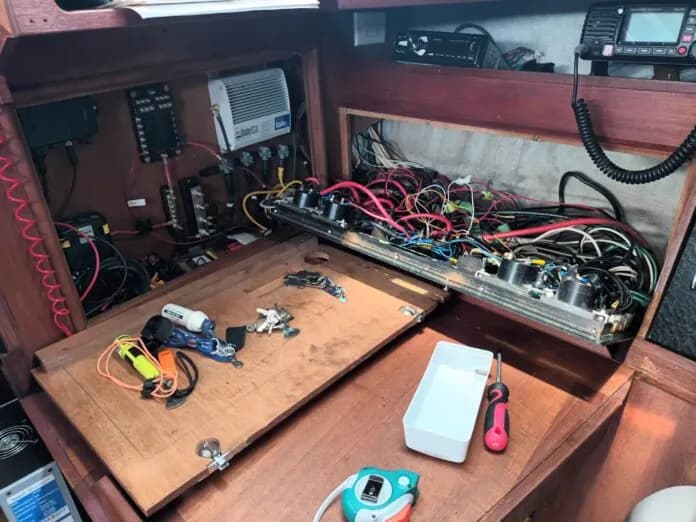
A surveyor’s sharpest tool is pattern recognition. After nearly two decades of crawling through older, neglected, and half-updated boats, Ray Ville keeps finding the same failures, and the expensive ones usually start as small maintenance oversights. Treat this as a launch-season triage sheet: handle the fast-moving problems first, and call in a pro the moment a defect touches wiring, batteries, underwater metals, or anything you cannot trace cleanly.
Messy wiring and short circuits
The quickest way to turn a weekend nuisance into a marina headache is a wiring job that was never built to a stable standard. Ville points to a 1992 Sabre 425 with wiring shorting during an inspection, the kind of failure that can hide behind neat joinery until a breaker starts hunting or a circuit starts heating. Open the panels, follow every wire you can reach, and look for loose terminals, unsupported runs, chafe, corrosion, and mystery splices; if you find heat damage, repeated breaker trips, or a circuit you cannot trace end to end, stop and bring in a marine electrician.
Lithium batteries installed like an afterthought
New technology is only an upgrade if it is installed like part of the system. The warning about incorrectly installed lithium batteries lines up with the American Boat & Yacht Council’s updated E-13 standard and the UK Maritime and Coastguard Agency’s MGN 550 Amendment 1, both of which treat safe integration as the point, not just the battery chemistry. Check that the batteries are restrained, the charger and inverter are matched, the cables are protected, and the installation has documentation you can actually follow; if the boat has DIY lithium work, uncertain battery management, or a charging setup no one can explain, bring in a pro before launch.
Corrosion in the wrong places
Corrosion is not cosmetic when it starts eating underwater metals or electrical connections. BoatUS says the two usual villains are galvanic corrosion and stray-current corrosion, and the damage can range from a pitted prop to a destroyed outdrive. Inspect anodes, bonding jumpers, terminals, and any place where salt, paint, and dissimilar metals meet; if the corrosion is returning fast, or you suspect stray current rather than ordinary wear, that belongs in the yard.
Loose systems and shaky mounting
Surveyors keep finding boats where the hardware is technically there but not really secured. Loose batteries, pumps, hoses, tanks, and electronic boxes can turn into chafe points, leak points, or impact hazards once the boat starts pounding in a chop. Crawl through the boat with a flashlight and a wrench, tug on what should not move, and look for missing backing, worn hose clamps, or gear that can shift under load; anything tied to steering, through-hulls, engines, or structure deserves professional eyes if it is not obviously sound.
Deferred maintenance that looks small until it compounds
Ville’s larger point is not that boats fail randomly. It is that neglected maintenance stacks up until one loose end becomes a costly cluster of problems, especially on older boats that have spent years with someone meaning to fix them later. Change the fluids, open the bilge, inspect seals and hoses, and do not ignore the little signs: damp lockers, a sticky switch, a hose that feels soft, or hardware that has started to work loose. If the same issue keeps returning after one careful fix, the boat is telling you there is a deeper problem behind it.
Upgrades that were installed without enough thought
A boat can pick up a long list of problems the moment somebody adds new gear without planning the whole system. Solar, chargers, inverters, electronics, and lithium banks all change loads, charging paths, and fault behavior, which is why surveyors keep watching for upgrades that were not integrated cleanly. Compare wire sizes, fusing, breaker ratings, and cable routing against the equipment that is actually aboard, not the brochure version you wish you had; if the installation mixes old and new standards in a way you cannot clearly map, let a marine electrician sort it before the season starts.
Fuel and other safety-critical systems that fail simple standards
ABYC’s updated 2025-2026 supplement includes H-24, Gasoline Fuel Systems, a reminder that fuel work still sits near the top of the safety list. Look for cracked hoses, dated clamps, loose fittings, vent problems, and any fuel smell that appears after the boat sits or runs, because small leaks turn into big problems fast. The U.S. Coast Guard’s annual accident statistics are a blunt reminder that equipment and maintenance failures live inside a broader safety picture, not just a resale sheet; if fuel odor, seepage, or a questionable tank installation shows up, that is not a DIY test run, it is a stop-sailing problem.
This article was produced by Prism’s automated news system from verified source data, official records, and press releases, then run through automated quality and moderation checks before publishing. The system is built and supervised by the people who set the standards it runs under. Read our full AI policy.
Did this article answer your question?


