Improved bridle plate reduces edge loading in anchoring gear
A small change in bridle geometry can cut edge loading, chafe, and shock where anchor loads hurt most.
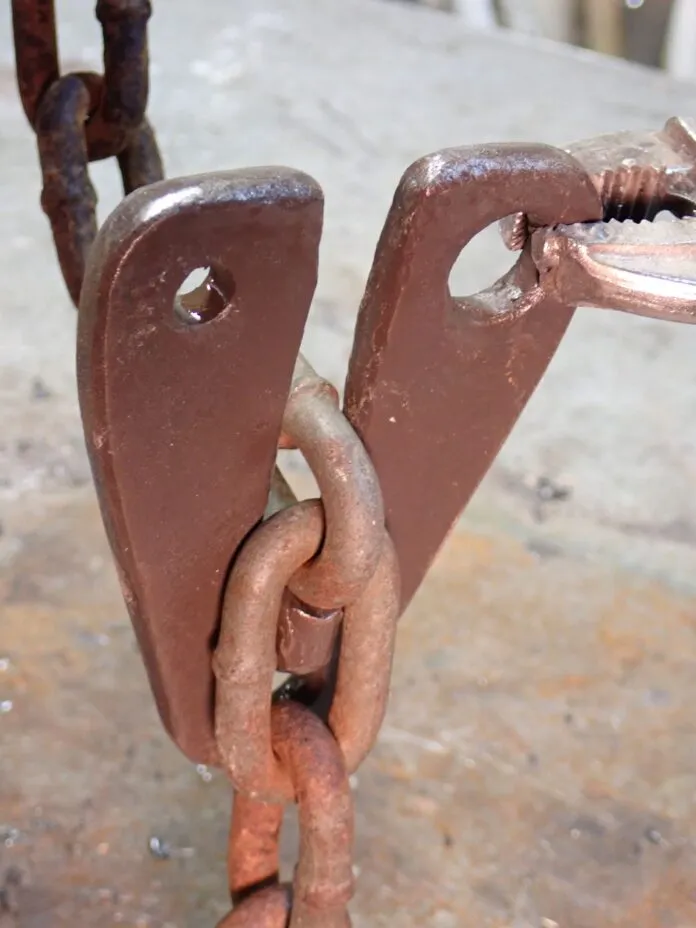
A tiny plate with a big job
The whole point of this bridle plate is to stop a small piece of metal from becoming the weak link when the boat starts tugging hard at anchor. Standard chain hooks and gripper plates can put the load on an edge instead of spreading it cleanly, and that is exactly where wear, distortion, and ugly surprises begin. The improved plate adds two small bolsters to correct that geometry, which sounds modest until you remember how much force lives in an overnight anchor load.
That is why this idea matters to anyone who actually sleeps at anchor. If the load path is sloppy, the gear sees more chafe, more alignment problems, and more shock loading than it should. If the load is carried cleanly, the boat feels calmer, the hardware lasts longer, and the whole anchoring system behaves like it was designed by someone who expects heavy weather, not a calm forecast.
Why edge loading is the real enemy
Edge loading is one of those problems that stays invisible until the metal starts complaining. Instead of the force being spread across a broad, sensible contact area, it concentrates on a corner or lip, which raises stress and makes the hardware work harder than it should. In anchoring gear, that is not just a durability issue. It can also be a comfort issue, because a poor load path turns every gust and swell into a sharper snatch.
The value of the improved bridle plate is that it attacks that weakness directly. By adding those two bolsters, Drew Frye’s design removes the edge-loading problem found in common chain hooks and gripper plates. That matters because an anchor bridle is not decorative hardware. It is part of the load-bearing chain of trust between the boat, the rode, and the bow gear.
How the redesign changes the load path
This is not a casual on-deck tweak you knock out with a drill and a Saturday afternoon. Practical Sailor presents the plate as something better suited to a manufacturer or a capable fabricator, because welding is required and galvanizing would be a smart finishing step. That tells you everything about the mindset behind the design: this is a real mechanical part, not a clever lash-up.
The gain is in the way the load is transferred. A cleaner load path means less stress concentration, less rubbing, and less tendency for the gear to twist itself into a bad angle under strain. In anchoring work, that pays off immediately. The boat is less likely to bang, the rode is less likely to grind, and the plate is less likely to make a nuisance of itself just when the wind pipes up and everyone on board wants the system to disappear into the background.
Why this matters even more with all-chain rodes
All-chain rodes are popular for a reason: they are tough, abrasion-resistant, and reassuringly solid. The tradeoff is that chain has very little stretch, so it can pass hard snatch loads straight into the bow hardware unless you insert something with give, usually a snubber or bridle. That is where this improved plate fits into the bigger system. It is not trying to replace the snubber. It is trying to make the connection between the snubber, bridle, and chain behave better under real load.
Practical Sailor’s earlier snubber testing makes the case plainly. The magazine has said a properly sized snubber can reduce anchor-rode loads by about two-thirds. Related examples put a 40-foot monohull in 60-knot conditions at about 4,140 pounds without a snubber and about 1,600 pounds with one. That is not a little improvement. That is the difference between the gear feeling like it is being bullied and the gear handling the blow in a more controlled way.
A few practical takeaways fall straight out of that:
- A snubber or bridle is not just for comfort. It is a load-control device.
- Reducing shock load also protects the bow roller, windlass, and deck gear.
- Better geometry at the bridle plate can help the whole system run more predictably.
- Less grinding on the bow roller means less wear where you least want it.
The broader research line behind the idea
Drew Frye did not arrive here by accident. Practical Sailor’s 2018 piece, “A New Bridle Snubber Hook Design,” shows a clear line of thinking that has been developing for years around custom chain-hook and bridle solutions. The newer bridle plate is part of that same effort to stop accepting obvious mechanical compromises just because they are common in chandlery bins.
Frye’s background helps explain why the work keeps circling back to load paths, chafe, and hardware robustness. Seaworthy Publications says he has written more than 200 articles, and describes him as a chemical engineer by training, a 40-year rock and ice climber, and a 30-year sailor by inclination. That combination shows up in the design thinking. Climbers and sailors both learn the same lesson in different ways: if the load path is wrong, the gear will tell you, and it will not be polite about it.
Practical Sailor’s earlier snubber coverage also noted that a doubled-snubber arrangement can help keep the chain hook off the bottom in shallow anchorages. That is a small operational detail, but it matters in real cruising life. It keeps the hook from dragging where it should not, reduces the chance of snagging, and helps the whole setup stay cleaner when you are anchored somewhere tight.
Where the market already points
This idea is not floating in a vacuum. Commercial bridle-plate systems already exist, and some of them use hot-dipped galvanized shackles and integrated swivels. That tells you the market already understands the value of stronger geometry and better corrosion protection. The improved plate is part of the same design conversation, only stripped down to the essential question: how do you keep the load from biting into the wrong edge?
That is why the concept feels so practical. It is inexpensive compared with the consequences it tries to prevent, and it addresses a problem that cruisers and anchor-heavy sailors know by feel even when they do not name it in engineering terms. You do not need a dramatic failure to appreciate the upgrade. You only need one rough night, one ugly snatch, or one piece of hardware that starts to wear in the wrong place.
A well-made bridle plate that avoids edge loading is the kind of small, smart build that can pay for itself in peace of mind. It is a better way to turn anchor loads into something the bow gear can live with, and that is exactly the sort of improvement that makes a boat feel more secure when the wind comes up after dark.
This article was produced by Prism’s automated news system from verified source data, official records, and press releases, then run through automated quality and moderation checks before publishing. The system is built and supervised by the people who set the standards it runs under. Read our full AI policy.
Did this article answer your question?


