Simple companionway cover keeps cabins dry and private
Libby Earle’s simple canvas cover turns an exposed companionway into dry, private shelter without the bulk of a full enclosure.
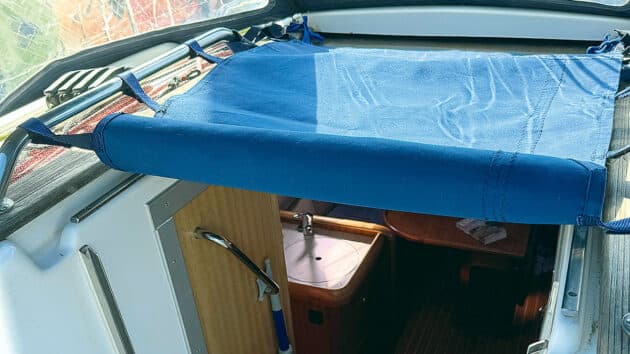
A small cover for one of the biggest liveaboard annoyances
Libby Earle’s companionway cover solves a problem every cruiser recognizes the first time rain starts blowing into the cockpit and the dockside crowd can still see straight into the cabin. On a boat like the Bavaria 34, a simple canvas panel can change that exposed threshold into something calmer, drier, and far more private without turning the stern into a bulky enclosure.
That is the appeal here: not a full sprayhood redesign, not a custom cockpit rebuild, just a tidy weekend project for anyone with a robust sewing machine and a practical streak. The result is modest but immediate. It cuts drafts, helps keep rain out, and gives crew a little privacy at anchor, on a mooring, or alongside in a crowded marina.
What makes the design worth copying
The smartest version of this idea does not try to seal the boat like a tent. It works because it balances shelter with access, using canvas to soften the cockpit without making the companionway fiddly or claustrophobic. That means thinking carefully about how the cover hangs, how it opens, and how quickly it gets out of the way when you need to move through it.
Material choice is the first decision that shapes everything else. Sailrite’s canvas guidance points straight at marine-grade fabrics such as Sunbrella, the kind used across boat covers, biminis, dodgers, weather cloths, awnings, and enclosures. That is the right cue for a companionway cover too: you want something built for sun, spray, and repeated handling, not a fabric that feels good in the sewing room and fails on deck.
Attachment method matters just as much. A cover that is too fussy will end up folded in a locker because nobody wants to wrestle with it when the weather turns. The strongest versions use snaps, straps, and a clean fastening point on the hatch so the cover can go on quickly and come off cleanly.
Visibility and airflow are the other two pieces that keep this project from becoming a dark, stuffy box. Sailrite’s tutorial includes a screen panel, and that detail is worth copying because it preserves light and ventilation while still giving you separation from the cockpit. A roll-up strap adds another layer of control, letting you open the cover when conditions improve instead of choosing between fully on and fully off.
- Use marine-grade canvas rather than a general-purpose fabric.
- Build in a screen section if you want light and airflow.
- Add a roll-up strap so the cover can be adjusted, not just removed.
- Keep the fastening line simple enough that the cover does not block everyday passage.
On the Bavaria 34, the grab rails beside the companionway make a practical difference because they give the holding straps somewhere sensible to sit and slide out of the way. That is the sort of small deck-layout detail that determines whether a cover feels integrated or awkward. If your own boat has similar handholds, arches, or nearby hardware, copy the idea by working around what is already there rather than forcing the cover to fight the boat.
How the build comes together
Sailrite’s companionway-cover tutorial shows that this is a conventional marine-canvas job, not a mystery project. The workflow starts with taking measurements, then moves through sewing a double hem, installing the screen, adding the roll-up strap, and finishing with snap fasteners. In other words, the whole project is built from the same skills sailors already use for other soft gear on board.
The sequence matters because each stage protects the next. Measuring first prevents a cover that droops into the opening or pulls too tight across the hatch; the double hem gives the edge more structure; the screen panel keeps the center from becoming a solid wall; and the snaps finish the fit so the cover stays put when the boat moves. Sailrite also frames the cover as a way to avoid relying on wooden hatch boards all season, which is a useful reminder that a good canvas solution can make the cabin feel more open, not less.
If you are adapting the idea to your own boat, the key is to keep the companionway easy to live with. The cover should protect the opening, not turn it into a project of its own every time you want to go below. That is why the best version feels like a piece of deck gear, not a temporary fix.
Why this belongs in the marine canvas tradition
A companionway cover sits in a long, familiar line of canvas work that turns exposed deck space into livable shelter. That is the same broad family that includes boat covers, biminis, dodgers, weather cloths, awnings, and enclosures, all of them built to make a boat more comfortable without changing the boat itself. The beauty of the companionway version is that it delivers a noticeable payoff with a much smaller footprint than a full cockpit enclosure.
Specialist canvas makers treat companionway covers as a recognized category for a reason. Tecsew, for example, offers companion way hatch covers as custom boat protection for sun, rain, dust, and privacy. That commercial reality reinforces what the DIY version already shows: this is not a gimmick, but a well-established answer to a real use case.
Why the Bavaria 34 example lands so well
Part of why this project feels so accessible is the boat it hangs on. Practical Boat Owner previously described the 1999 Bavaria 34 as a sell-out success, with first-year production gone before the prototype even left the factory. A boat with that kind of owner base is exactly where a simple, adaptable upgrade makes sense, because plenty of skippers are looking for small improvements that pay off every day.
That is what makes Libby Earle’s cover such a satisfying liveaboard fix. It starts with the ordinary annoyance of wind, rain, and passers-by all reaching the companionway at once, then answers it with a piece of canvas that is dry, private, and easy to live with. In the end, the cockpit feels less exposed, the cabin feels more like a cabin, and the threshold between the two stops acting like an open invitation to every gust on the pontoon.
This article was produced by Prism’s automated news system from verified source data, official records, and press releases, then run through automated quality and moderation checks before publishing. The system is built and supervised by the people who set the standards it runs under. Read our full AI policy.
Did this article answer your question?


