Simple lumber restores a tired companionway hatch on a Balboa 20
A few pieces of lumber and careful fitting revived a neglected Balboa 20 companionway hatch. The real win was a drier, safer, more secure front door to the cabin.
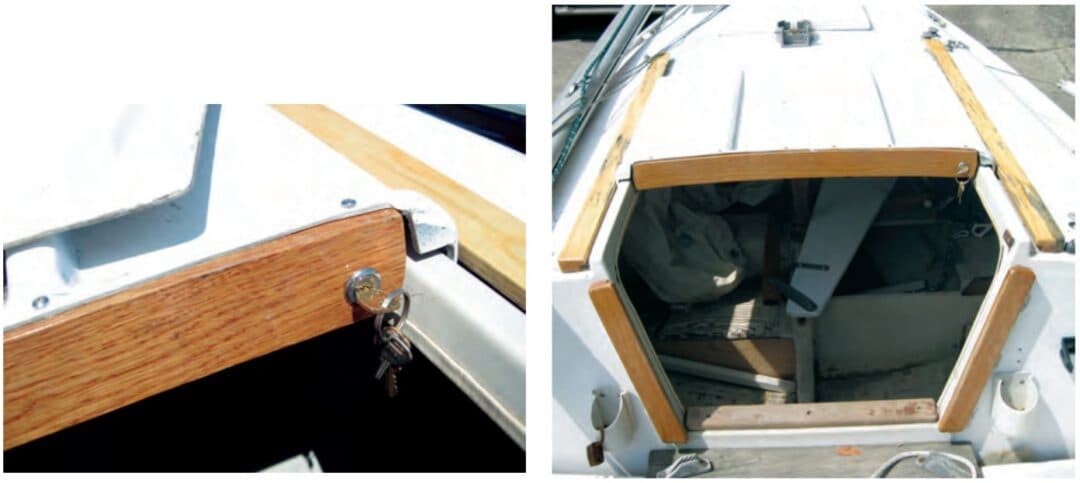
A tired companionway hatch can look like a cosmetic problem until the first wet ride reminds you it is the boat’s front door. On a 1972 Balboa 20, the fix came down to ordinary lumber, patient measuring, and the kind of careful fitting that saves a small job from turning into a soggy rebuild a season later. The payoff was bigger than appearance: a cleaner close-up, better weather protection, and a hatch that felt solid again.
Why the companionway deserves the attention
The companionway is the main stairway from deck or cockpit down into the cabin, so it gets used constantly and takes weather from every direction. On many sailboats, hatch boards slide into grooves in the frame, and the lowest board can stay in place during bad weather to cut down on water getting inside. That makes the companionway part access, part shelter, and part security system, which is why even a small repair carries more weight than it first appears.
The stakes are plain enough. A sloppy hatch makes going below awkward, lets water creep into the boat, and leaves the whole cabin looking and feeling less cared for than it is. Practical Sailor has described the companionway hatch as the primary access below, the main escape route, and the biggest single opening that can admit water in a knockdown or breaking wave. Once you think about it that way, fresh wood around the hatch stops being trim work and starts looking like maintenance you can feel every time you step aboard.
The Balboa 20 context
The boat in this project was a 20-foot American trailerable sailboat designed by Lyle C. Hess in collaboration with Richard Arthur. Good Old Boat’s data says the Balboa 20 was built by Arthur Marine and later Coastal Recreation, Inc. in Newport Beach, California, with the first examples dating to 1967. The 1972 raised-deck version of the same hull later showed up as the Ensenada 20 and RK 20, which gives this little cruiser a useful place in West Coast trailer-sailer history.

That background matters because older boats like this tend to accumulate the same quiet wear in the same places. In this case, the wooden pieces that enclosed the edges of the sliding hatch were in poor shape and were likely original teak that had been neglected for years and dried out badly. The fix did not call for exotic materials or a yard bill that would dwarf the boat’s value. It was a carpentry job, plain and simple, the kind that rewards patience more than specialized equipment.
How the rebuild sequence works
1. Template first, cut second
Start by treating the old, worn parts as a pattern, even if they are ugly and distorted. On an older hatch, the goal is not to copy every flaw, but to capture the shape that matters so the new pieces fit the grooves, cover the edges cleanly, and let the hatch move without binding. This is where the “measure twice” rule earns its keep, because a slight error here becomes a leak path later.
2. Choose lumber for stability, not romance

The original wood may have been teak, but the point of the repair was not to chase a fancy species for its own sake. Ordinary lumber can do the job if it is selected and cut with care, because the success of the repair comes from fit, not from how expensive the board looked at the lumberyard. For a companionway piece, straight grain and predictable movement matter more than show.
3. Cut for fit before you chase the finish
The hatch edges have to meet the frame cleanly, and the boards have to sit in the grooves without forcing them. A snug fit keeps the lowest board in place when the weather turns and helps the whole opening close up with less fuss. If the wood is forced into position, the repair will telegraph that stress later through sticking, swelling, or gaps.
4. Seal the vulnerable edges
The mistake that turns a simple hatch refresh into a swollen rebuild is leaving end grain and cut edges thirsty. Companionway pieces live where rain, spray, and humidity collect, so every exposed surface needs protection before the first season of use. The goal is not just a good-looking patch of wood, but a piece that resists the wet cycle that ruined the original trim.

5. Finish for use, not just appearance
A neat finish does more than make the hatch look restored. It helps the boat feel easier to live with, because a clean companionway closes better in rain, vents better when open, and signals that the boat is maintained rather than merely tolerated. That sense of care is part comfort and part value, especially on a small cruiser where every visible detail tells the next story.
Why the standards side still matters
The repair sits comfortably inside the larger rules that govern weather-exposed openings. Under 46 CFR 174.220, certain hatches exposed to the weather must be watertight, while some cabin-top or trunk hatches may be weathertight instead. The same rule also requires hatch covers to have securing devices and to be attached to the frame or coaming by hinges, captive chains, or similar devices so they cannot be lost overboard.
That regulatory backdrop matches the practical sailing advice. Companionway boards should not just fit well, they should also stay put if the boat is knocked down or inverted. That is why a worn hatch is more than a cosmetic nuisance, and why replacement jobs can run roughly $300 to $800 depending on the specifics. Once you see the companionway as the boat’s main access, main escape route, and biggest weather opening, a few pieces of lumber start to look like one of the smartest repairs you can make.
This article was produced by Prism’s automated news system from verified source data, official records, and press releases, then run through automated quality and moderation checks before publishing. The system is built and supervised by the people who set the standards it runs under. Read our full AI policy.
Did this article answer your question?