Start simple, upgrade boat electronics without overcomplicating the install
Start with the function you need most, then build a clean, compatible electronics setup that can grow without forcing a costly rewire.
Start with one real problem, not a full cockpit wish list
The smartest first electronics retrofit solves one job clearly: better navigation, steadier battery awareness, or more reliable communication. Cruising World’s May 14, 2024 primer pushes that exact mindset, arguing that sailors should begin with the most important functions and add capability in controlled steps instead of trying to build a fully integrated digital network on day one.
That matters because electronics projects fail when owners buy too much, wire too much, and then discover half the system is unnecessary or hard to maintain. A clean first install should make the boat easier to run in real conditions, not just look impressive at the dock. The right question is not “What is the biggest system I can fit?” It is “What problem do I need this boat to solve first?”
Choose the first display with cockpit reality in mind
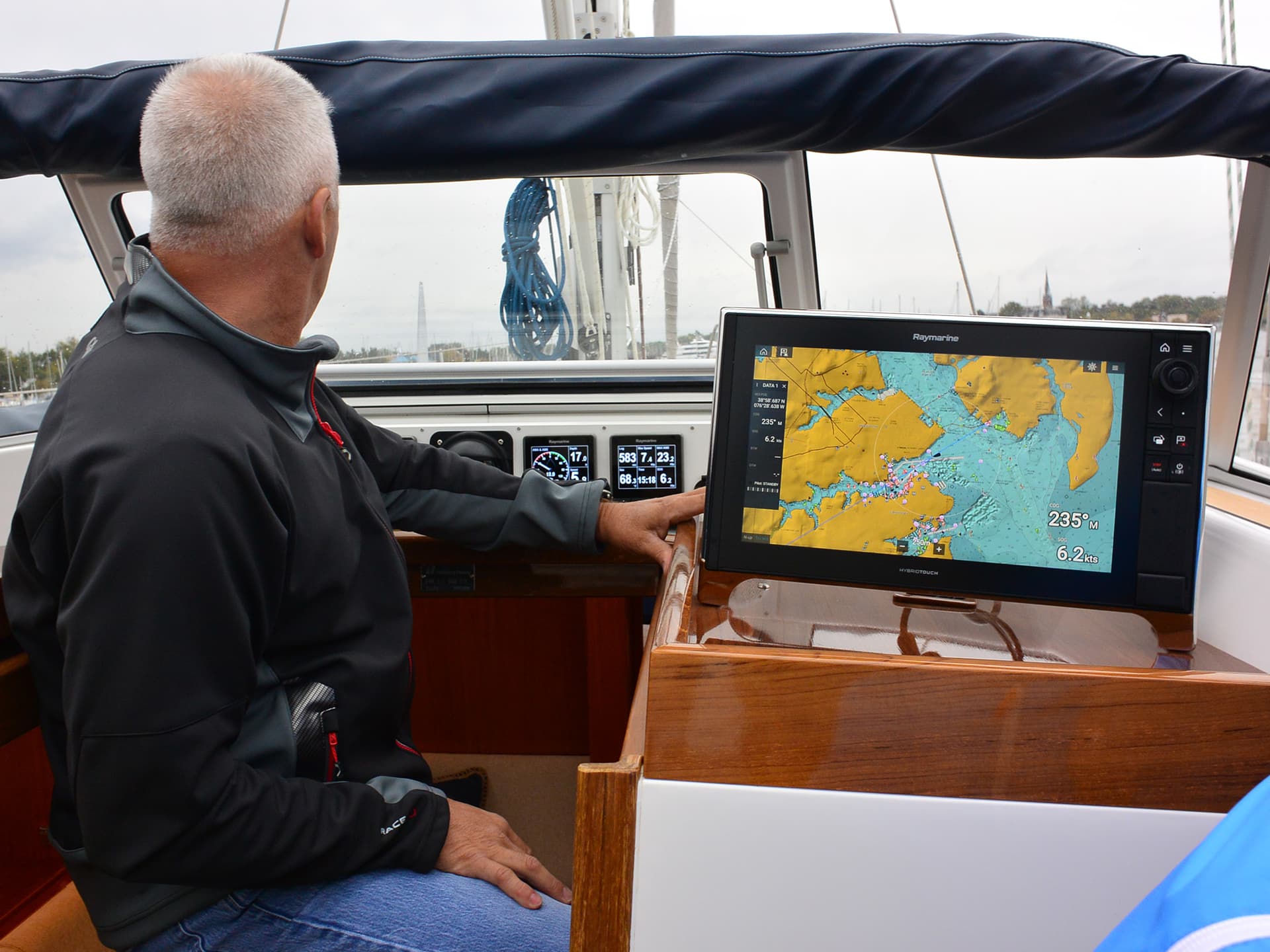
Cruising World’s primer draws a useful line between smartphone or tablet charting and a dedicated multifunction display, and it comes down to conditions. Tablets are convenient, but a dedicated MFD has the edge in sunlight readability and cockpit use, where glare, spray, and constant movement can expose the limits of a general-purpose screen.
For a first retrofit, that makes the display decision more important than the brand count on the box. If the boat’s real use includes bright-deck navigation, passage-making, or quick course checks from the helm, the MFD is usually the stronger anchor point for the system. Start with the display that supports how the boat is actually sailed, then add only the data sources that improve that job.
Build the minimum viable network around the boat’s real needs
The most practical way to avoid retrofit sprawl is to define the core functions before a single cable goes in. For many sailboats, that means charting, route information, and a few essential display functions. If the boat does those well, later expansion becomes an upgrade instead of a rescue mission.
A sensible first-step layout looks like this:
1. Pick the primary job, such as navigation, battery monitoring, or communication.
2. Choose one display path that works in the cockpit, usually an MFD if sunlight and distance matter.
3. Add only the sensors or inputs needed to support that job.
4. Leave space, power, and network capacity for later growth.
That sequencing helps because every added component creates more cabling, more power-management work, and more troubleshooting. The less unnecessary gear you install at the outset, the less likely you are to end up with an expensive panel that nobody fully understands.
Treat compatibility as the real money saver
The biggest retrofit mistake is assuming every new box has to replace every old one. Actisense notes that legacy NMEA 0183 equipment can coexist with NMEA 2000 using gateway products, which means a thoughtful upgrade does not automatically require a full rewire. That is a crucial distinction for owners with functioning gear already in the boat.
NMEA 2000 itself is built around a backbone-and-drop architecture, so the physical layout matters as much as the device list. If you plan the network well, you can modernize incrementally, keep useful legacy equipment alive, and avoid tearing out working systems just to chase a new interface. Compatibility decisions made early are the ones that prevent expensive rework later.
Wire it like a system that has to be serviced offshore
A good retrofit is not just about installation day. It is about whether the system can be understood, maintained, and repaired when conditions are messy and the boat is moving. The National Marine Electronics Association’s Basic NMEA 2000 Installer Training reflects that reality by focusing on cables, connectors, specifications, physical planning and documentation, power sources and distribution, voltage-drop calculations, network setup, and troubleshooting.
That list is basically a roadmap for DIY sailors. If you plan the cable runs cleanly, document what goes where, and understand power and voltage drop before you close up the panels, you make the boat easier to live with for years. The best first retrofit is the one that can be explained, traced, and serviced without turning the locker into a science project.
Lean on standards, not guesswork
Marine wiring is one place where standards really matter. The American Boat & Yacht Council says it has developed safety standards for boat design, construction, equipage, repair, and maintenance since 1954, and its standards library now lists 84 standards and technical information reports. That kind of framework exists because marine electrical work has to survive vibration, corrosion, and constant use.
ANCOR also says it strongly endorses ABYC safety standards for small craft, and its marine-grade wire and cable literature says the product is designed for the corrosive marine environment and conforms to standards including UL 1426 and U.S. Coast Guard Title 33, Part 183.435. For a DIY retrofit, that translates into one simple rule: use gear and wire that belong on a boat, then install them in a way that matches the standards meant to protect the boat.
Think of the upgrade as a navigation system, not a pile of gadgets
Cruising World’s 2021 electronics-upgrade coverage made the same point in broader terms, with experts urging owners to think of electronics as a navigation system rather than as isolated gadgets. That perspective keeps the project honest. A depth sounder, chart display, power monitor, and comms gear only become useful when they work together around the way you sail.
That is why the minimum viable retrofit is usually the right one. Start with the display and functions that reduce stress immediately, wire them cleanly, and leave the door open for future additions only if the boat actually needs them. On a small sailboat, the best electronics upgrade is not the most ambitious one. It is the one that gets the boat underway without creating a maintenance problem for the next owner to untangle.
This article was produced by Prism’s automated news system from verified source data, official records, and press releases, then run through automated quality and moderation checks before publishing. The system is built and supervised by the people who set the standards it runs under. Read our full AI policy.
Did this article answer your question?


