Thunderstorm Destroys Bristol 35.5 Centerboard, Owner Rebuilds It From Scratch
A thunderstorm and a snapped furling line left Nurdle with only two feet of centerboard. John Churchill’s rebuild shows how to catch the failure before it becomes a haul-out surprise.
When a centerboard failure becomes a storm problem
The worst time to learn your centerboard system is weak is when a thunderstorm has already narrowed your options to almost nothing. That is the trap John Churchill found himself in with Nurdle, his Bristol 35.5 centerboard boat, when a broken jib-furling line, a lee shore, and a hard grounding turned one maintenance item into a major structural repair.
What makes the story matter to other owners is how fast the situation escalated. Churchill had already treated the centerboard pendant as an ongoing issue when he bought the boat, and he had replaced the stainless-steel cable with Dyneema line in hopes the problem was behind him. The storm proved otherwise, and a dive on the boat later confirmed the scale of the damage: only about two feet of the original seven-and-a-half-foot board remained.
Why the Bristol 35.5’s centerboard is such a big deal
Nurdle is not just any shoal-draft cruiser. The Bristol 35.5, also known as the 35.5C, was designed by Ted Hood and Dieter Empacher for Bristol Yachts, introduced in 1978, and production listings show it continued into the 1990s. Spec sources list about 183 boats built, which means every surviving example matters to the owners who rely on the model’s shallow-water versatility.
The numbers explain the appeal. Published specs put the draft at about 3.75 feet with the board up and about 9.5 feet with it down, with roughly 7,000 pounds of ballast in the keel/centerboard version. Practical Sailor described the boat as a Ted Hood centerboard cruiser with real shoal-draft capability, and that is exactly why a damaged board is more than a nuisance. It is the foil that lets the boat move between skinny water and serious sailing performance.
How Churchill diagnosed the damage
The failure chain is the part every centerboard owner should study. Churchill had already lived with a broken pendant history before the storm, so the boat was not starting from a healthy baseline. When the weather turned violent, the jib-furling line failed, the boat lost control margin on a lee shore, the board hit bottom, and the pendant went slack.
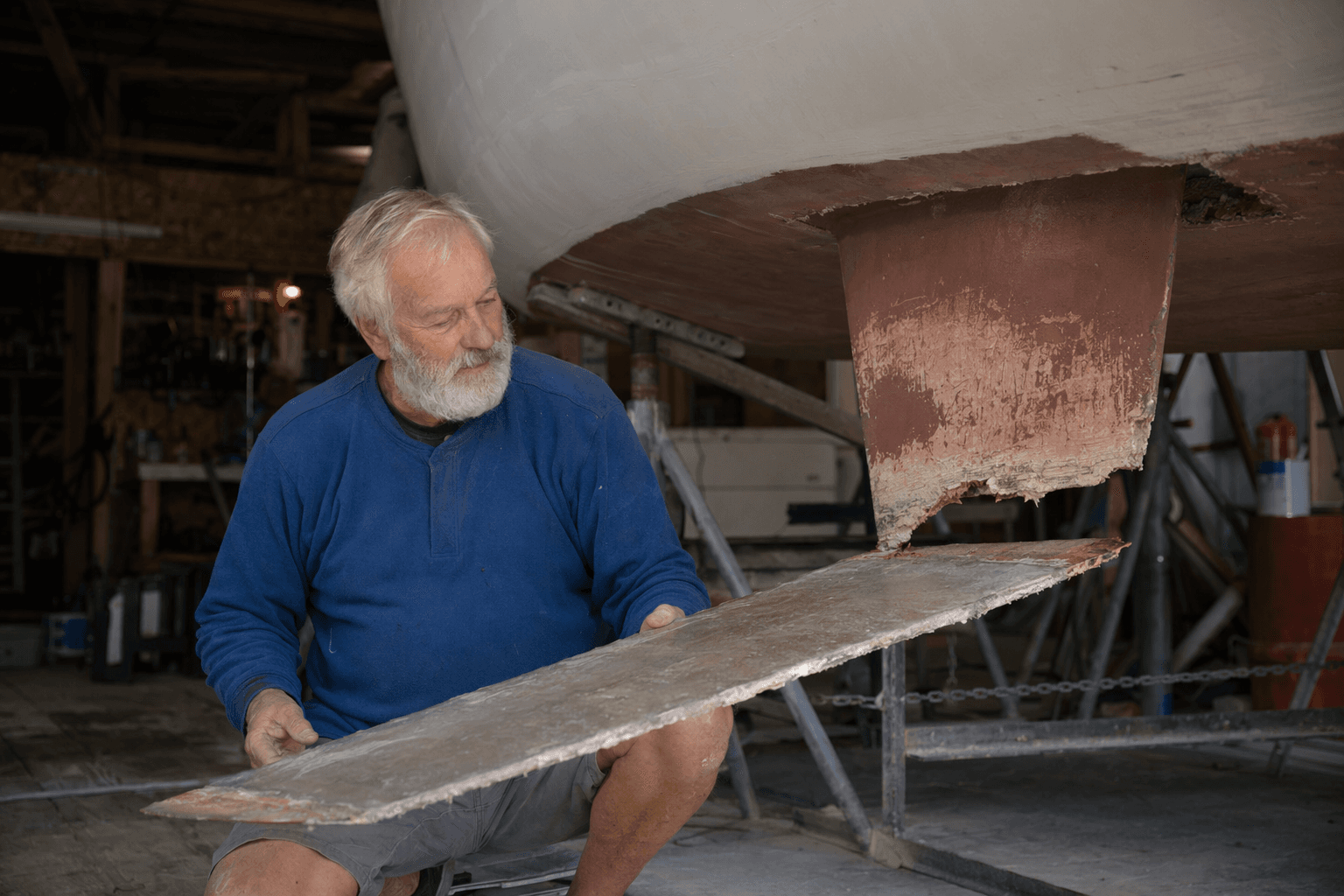
That sequence is a useful warning sign in itself. If the pendant suddenly loses tension after a grounding, or if the board no longer feels like it is carrying load the way it should, the problem may not be the line alone. In Churchill’s case, the underwater check answered the real question, and it showed the sort of damage that can hide behind a seemingly simple deck-level failure.
What the rebuild teaches about centerboard structure
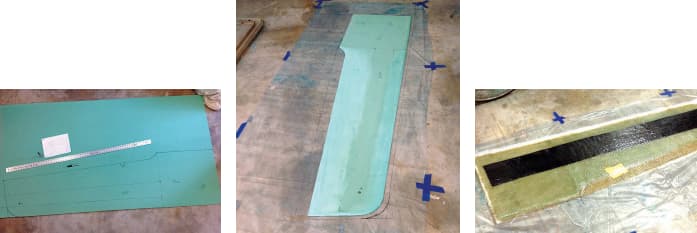
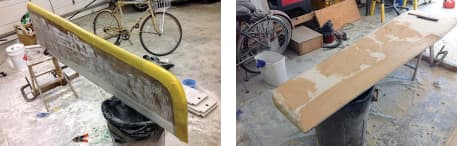
The replacement was not a patch job. Churchill rebuilt the board from scratch using fiberglass, foam, ballast set in resin, and Kevlar reinforcement around the hinge-pin area. That combination tells you a lot about what a cruising centerboard must survive: bending loads, repeated cycling, impact, and the constant stress concentration around the pivot.
Three lessons stand out for anyone considering a similar repair:
- Shape matters, because the board has to fit the trunk cleanly and move without binding.
- Weight matters, because a centerboard is not just a lifting foil, it has to carry ballast and stay balanced in the water.
- The hinge-pin zone matters most, because that area takes repeated stress every time the board goes up, down, or takes a hit.
Rough shaping and final skins are not cosmetic steps here. They are part of getting the foil geometry right so the boat can sail properly again and the board can survive the loads that likely damaged the first one.
The inspection signs that should make you stop and look harder
Churchill’s story points to a practical rule: once a centerboard system has been repaired before, you should never assume the weak point is gone forever. If your boat has a known pendant history, inspect it before the failure becomes obvious underway. A broken line, a suddenly slack pendant, or an encounter with the bottom after a storm is not the moment to wait and see.
On a boat like the Bristol 35.5, the centerboard is tied directly to performance and safety. If the boat is built around 3.75 feet of draft board up and 9.5 feet board down, then a damaged foil can change where you can go, how you tack, and how well you can keep the boat under control in tight or shallow water. The repair story is valuable because it shows that the problem often starts long before the board is visibly gone.
When DIY is still realistic, and when the yard should take over
Churchill’s rebuild shows a level of hands-on capability that many sailors can aim for, but not every centerboard repair belongs in the driveway. DIY still makes sense when you can safely remove the board, inspect the hinge geometry, laminate the new structure, place ballast correctly, and fair the foil to the needed shape. That is the zone where patience, fiberglass work, and careful measurement can produce a strong result.
A yard becomes the smarter choice when the damage reaches beyond the board itself, especially if the trunk, pivot hardware, or alignment is compromised. If the boat cannot be supported safely for a full inspection, or if the board’s geometry is so far gone that you cannot confidently restore the hinge area and ballast position, the repair stops being a home project and starts being a structural one. On a heavy, stable cruiser like the Bristol 35.5, getting that call right matters more than saving a few days.
Why Churchill’s background matters
Part of what gives the repair weight is the man doing it. Churchill grew up in Indiana, sailed Snipes as a teenager, sailed a Cape Dory 26 singlehanded to Bermuda and back, and later completed a transatlantic passage in a Bristol Channel Cutter with his father. He now lives in Florida and races and daysails Nurdle while rehabbing the boat for extended post-retirement cruising.
That matters because this was not a casual weekend patch. It was the response of a sailor who understands what a centerboard does offshore, in shoal water, and under load. Nurdle’s rebuilt board is a reminder that on older cruising boats, the hidden hardware is often the difference between a routine season and a surprise haul-out, and the owners who catch it early are the ones who keep sailing.
This article was produced by Prism’s automated news system from verified source data, official records, and press releases, then run through automated quality and moderation checks before publishing. The system is built and supervised by the people who set the standards it runs under. Read our full AI policy.
Did this article answer your question?


