Worn Masthead Sheaves Can Sabotage Halyards on Older Sailboats
A rough halyard is often a symptom, not the problem. A worn masthead sheave can chew through an expensive line long before anyone looks up.
The failure starts overhead, not at the winch
A halyard that suddenly feels gritty, binds under load, or refuses to run cleanly is easy to blame on the line. That is usually the wrong diagnosis. Up at the masthead, a worn sheave can be the real culprit, and once the groove starts to collapse or the bushing goes sloppy, the whole hoisting system pays for it in friction, noise, and damage.
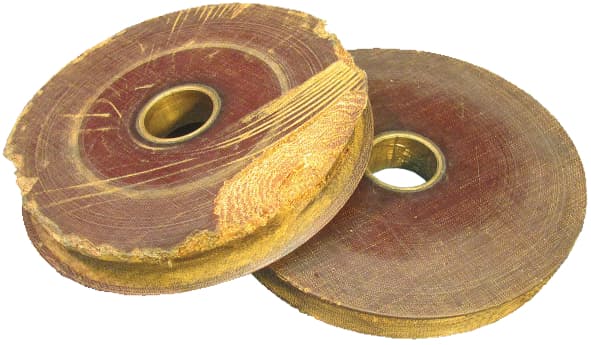
Ed Louchard’s example makes the point cleanly. Sean brought phenolic-resin sheaves, also known as Micarta or Bakelite, into the shop after trouble surfaced while he was cruising alone in the Gulf Islands on the eastern coast of Vancouver Island, British Columbia. One sheave had a groove worn deep by halyard wire and a loose bushing on its pin. The other was split and chipped, with large chunks missing. At that point, the problem was not a picky halyard. The hardware at the top of the mast was finished.
Why a worn sheave ruins a good halyard
A masthead sheave is more than a little wheel hiding under a cap. It is the turning point that lets the halyard change direction without shredding itself against hardware. When the groove wears deep, the line no longer rides correctly. When the bushing loosens, the sheave can wobble, bind, or chafe unevenly, and that creates the kind of friction sailors feel every time they hoist, reef, or drop a sail.
Rigworks’ guidance lines up with what riggers keep seeing in the field: boat owners often do not climb their masts regularly, but riggers commonly find badly damaged or worn sheaves. Halyard binding is one of the first symptoms, and it is the symptom that gets misread most often. By the time the sail starts hanging up, the wheel may already be too far gone to trust.
The giveaway signs you can catch before the failure gets expensive
You do not need to wait for a complete breakdown to know something is wrong. A careful look often starts with the halyard behavior itself. If the line feels rough in spots, hesitates under load, or seems to need extra muscle just to move, that is a clue that the sheave or its pin is no longer doing its job cleanly.
The hardware can also tell on itself once you inspect it closely:
- a groove worn deep into the sheave body
- a loose bushing or sloppy fit on the pin
- cracks, chips, or missing pieces from the wheel
- a halyard that binds even when the rest of the rig looks normal
- line wear that shows up faster than it should for the amount of use
Sean’s sheaves hit several of those marks at once. One was barely serviceable. The other was split and chipped with big pieces missing. That is not a tune-up problem. That is a replace-it-now problem.
How to inspect the masthead without guessing from the deck
West Marine’s rigging checklist makes a practical distinction here: a binocular look from deck can spot a fouled halyard sheave, but it does not replace a hands-on masthead inspection. That matters because a sheave can look only slightly off from below and still be badly worn where the line actually rides.
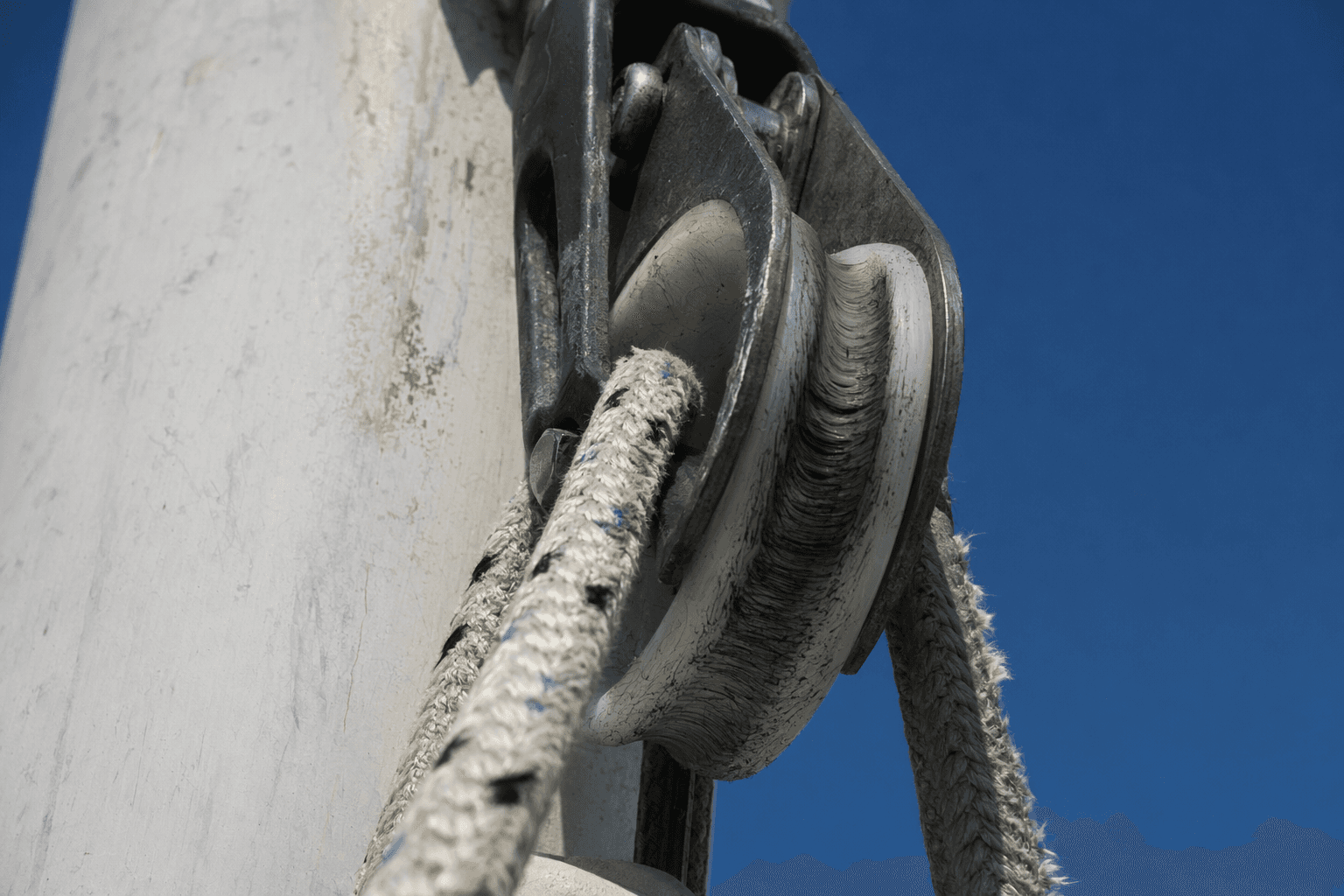
If you are going up, do it with proper gear. West Marine recommends a bosun’s chair or mast-climbing gear, plus a safety tether. Once you are there, inspect the sheave as if it were a bearing, because that is effectively what it is. Check the groove shape, the side play, the pin, the bushing, and the cheeks around it. If the wheel is cracked, split, or egged out, the answer is not more monitoring. It is replacement.
Wire-rope halyards change the wear pattern
Older sailboats often used wire-rope halyards, and many owners later convert to all-rope halyards. That shift matters because the sheave profile has to match the line it is actually handling. Older wire-rope sheaves were often V-shaped, while modern all-rope sheaves are often concave. Put the wrong line on the wrong wheel, and you invite accelerated wear even if everything else is sound.
That is part of why Sean’s case is so useful. The groove in his phenolic sheave had been worn deep by halyard wire, which explains the damage pattern and also explains why replacement became an issue. On older rigs, the upgrade from wire to rope is not just about convenience. It can be a meaningful running-rigging improvement that reduces abuse at the masthead and makes the hoist smoother.
Replace now or monitor later? Here is the real call
This is where a lot of owners talk themselves into one more season. That is usually a bad bargain. A sheave with a loose bushing, a deep groove, or visible cracking has already crossed from serviceable into suspect. If the damage is enough to alter how the line rides, it can keep chewing the halyard and may damage the pin or masthead fittings next.
Monitoring makes sense only when the wear is light, the groove is still fair, the bushing is tight, and the line tracks cleanly with no binding. If the wheel is intact but shows early wear, you can watch it and compare it against the rest of the rig during routine maintenance. But once the sheave is split, chipped, or visibly deformed, waiting is just gambling with an expensive halyard and, in the worst case, an unsafe hoist.
What Sean’s Gulf 32 tells older-boat owners
Sean said he could not find replacement sheaves to fit his boat, a Gulf 32, and that is a familiar frustration on older rigs. Parts disappear, specifications get murky, and what looked like a simple halyard issue turns into a hardware hunt. That is exactly why masthead inspection belongs in regular rig maintenance, not in the “deal with it later” pile.
The upside is that this kind of failure usually gives warning before it becomes catastrophic. If you catch it early, you can replace the sheave, evaluate the pin and bushing, and decide whether the rig is ready for an all-rope conversion. If you ignore it, the sheave keeps working like a file on your halyard until the line pays the price.
The practical takeaway
A bad halyard is often just the messenger. On older sailboats, the real problem can be a worn masthead sheave that has lost its shape, loosened on its pin, or split apart under years of use. Check it from deck if you want a first look, but trust only a hands-on inspection when the symptoms start showing up. The cleanest repair is often the simplest one: replace the worn sheave, match it to the line you actually use, and stop letting hidden hardware sabotage the rest of the rig.
This article was produced by Prism’s automated news system from verified source data, official records, and press releases, then run through automated quality and moderation checks before publishing. The system is built and supervised by the people who set the standards it runs under. Read our full AI policy.
Did this article answer your question?


