Tiny lighting upgrade turns into a puzzling wiring job aboard Maruska
A simple dome-light install aboard Maruska quickly exposed the hidden wiring traps in an older Pearson 365. The fix looked short on paper, then turned into a lesson in patience, routing, and access.
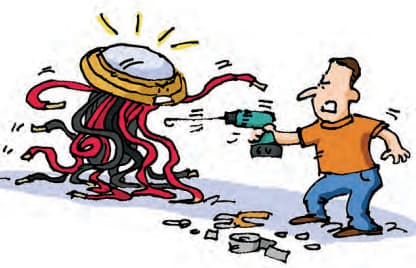
A dome light in the V-berth looked like the kind of upgrade you knock out in an afternoon aboard Maruska. Instead, it turned into a reminder that on an older sailboat, the hardest part of a “small” electrical job is often finding a path for the wire in the first place. The goal was straightforward: better cabin light and a red night-light option that would preserve dark adaptation when the berth was in use.
Why this little upgrade mattered
The appeal of the project was practical, not cosmetic. After a few nights aboard the 1976 Pearson 365 cutter ketch, it became obvious that the V-berth needed better overhead lighting, especially for cruising when you want to move around without flooding your eyes with white light. Red illumination adds a second layer of usefulness because it keeps the cabin navigable without wiping out night vision.
That is exactly why this story lands with so many DIY sailors. A cabin light is not an exotic refit, but it sits right at the intersection of comfort, usability, and electrical reliability. When the boat in question is Maruska, a Bill Shaw design with a long restoration history, even a modest upgrade becomes part of the bigger habit of making an older boat easier to live with.
Maruska is not a small, simple platform
Good Old Boat identifies Maruska as a 1976 Pearson 365 cutter ketch, and that matters because the boat’s size and structure help explain why the wiring job got complicated so fast. The Pearson 365 listed in the sail database measures about 36.4 feet LOA, 11.4 feet of beam, carries 17,700 pounds of displacement, 7,300 pounds of ballast, and draws 4.5 feet. Those are the numbers of a substantial cruising sailboat, not a compact daysailer with easy access behind every panel.
Maruska also sits inside a longer story. Good Old Boat documented the boat’s rebirth in July 2006, calling it an orphaned Pearson 365 that would rejoin the fleet of good old boats. That history gives the electrical job more context: this is a boat that has already lived through one restoration arc, and the current owner’s work is part of the ongoing process of making an older cruiser dependable, comfortable, and worth the effort.
The larger Pearson 365 and 367 world reflects the same reality. These are well-loved, actively sought-after sailboats, which means owners are often willing to dig into awkward, time-consuming projects if the result improves how the boat actually works underway.
Where the one-hour plan went wrong
At first glance, the dome-light install looked easy. There was a hollow space between the inner deck liner and the deck, the wire run seemed short, and removing trim at the hatch area suggested the cable should snake through without drama. That is the kind of visual read that makes a project feel like quick gratification instead of a puzzle.
Then the wire hit the forward bulkhead and stopped.
From there the job became less about installation and more about access problem-solving. The attempt to feed the wire through the cavity failed even after multiple adjustments. The wire was shifted left and right, duplex cable gave way to a single conductor, and both a straightened coat hanger and an electrician’s fish were pressed into service. Nothing gave a clean path past the obstruction.
That is the part of the story every older-boat owner recognizes. The empty space you see is rarely as open as it looks, and bulkheads, liners, old routing choices, and hidden fastening points can turn a clean-looking run into a dead end. The frustrating part is not that the boat is defective. The frustrating part is that the boat is doing exactly what old boats do: hiding the problem until the wire reaches the wrong spot.
How to think about a cabin-light job before you drill
The Maruska install is a good model for how to approach a small electrical project before you cut into trim or commit to a hole in the cabin top. A simple light can absolutely be a one-hour job, but only if the route is obvious and the access is honest. On older boats, it is smarter to assume the opposite until you prove otherwise.
A practical approach looks like this:
1. Map the route before drilling, including the liner cavity, the hatch area, and the point where the wire might meet a bulkhead.
2. Check whether the visible void is actually continuous, or whether a hidden barrier stops the run partway forward.
3. Decide early whether the wire size and cable type fit the route you really have, not the route you hope for.
4. Protect finished surfaces before enlarging access or testing new entry points, because cosmetic damage is often harder to fix than the wiring itself.
5. Keep the fishing tools ready, but be willing to stop if each new attempt only confirms that the path is blocked.
That last point is the most useful one. A single cabin light can quietly become a weekend rabbit hole when the first access point lies to you. The job still needs to be done, but the smart move is to treat it with the same respect you would give a larger refit: plan the path, expect the blockage, and avoid creating extra damage while you search for the real run.
The lesson Maruska leaves behind
Maruska’s dome-light project is not really about a lamp. It is about the gap between what a boat looks like from the outside and what it takes to make one small improvement inside. A short wire run, a hidden bulkhead, and a one-inch access hole were enough to turn convenience into a test of persistence.
That is the lesson hidden inside the puzzle. On an older Pearson 365, even a tiny lighting upgrade can expose the boat’s deeper complexity, and the difference between a quick install and a long fight is usually how well you respect the unseen spaces before the drill ever comes out.
This article was produced by Prism’s automated news system from verified source data, official records, and press releases, then run through automated quality and moderation checks before publishing. The system is built and supervised by the people who set the standards it runs under. Read our full AI policy.
Did this article answer your question?