Watertight chainplates, fixing a stubborn leak on a 1965 sailboat
A 1965 Allied Seabreeze 35 kept leaking at the chainplates until the owner treated the penetration like structure, not a bedding job.
Why this leak keeps coming back
A chainplate leak that survives repeated rebedding is rarely a simple sealant failure. On Secret Water, Art Hall’s 1965 Allied Seabreeze 35, most of the boat’s deck leaks had already been stopped, but the chainplates kept beating every fix. That is the lesson here: once water keeps returning around a rig load path, you are not dealing with a nuisance drip anymore. You are dealing with a penetration that can threaten the deck, the hardware, and the structure around it.
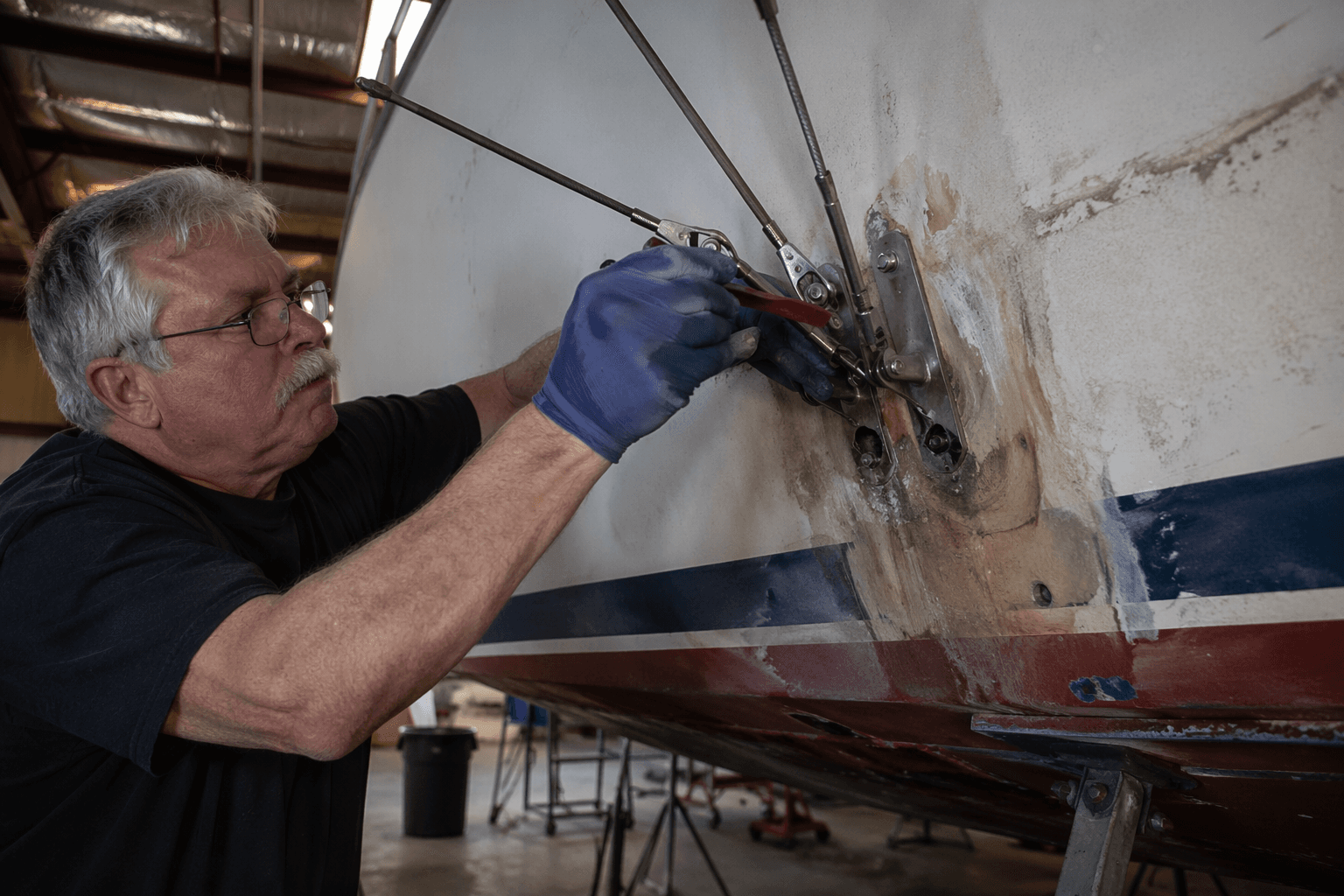
Chainplates are especially unforgiving because they have to do two jobs at once. They carry standing rigging loads, and they pierce the deck at a point where water can sneak into wood, core, and fastener beds. Salt water against stainless steel can create crevice corrosion, and once corrosion starts in a loaded fitting, the problem can move from wet trim to real failure. That is why older-boat chainplate leaks deserve the same attention you would give a rudder post or a mast step.
Look past the obvious bedding line
The first mistake is assuming the leak lives only at the visible seam. On older boats, the water may be wicking through damaged core, past tired bedding, or along old fastener paths that were never cleaned out properly. Sailing Magazine’s core-repair guidance notes that wet core and delamination often show up near deck hardware and around chainplates because the area is constantly under load and prone to leaks. In other words, pressure and water work together to enlarge the damage.
That is why a rebedding that simply scrapes out old caulk and lays in a fresh bead often fails. If the deck core is already compromised, the leak can keep traveling under the surface and reappear somewhere else. c34.org makes the same point in plainer terms: leaked water can cause deck rot and delamination, and it can damage interior woodwork too. If the stain is showing on the overhead, the problem has usually been active for longer than it looks.
What Secret Water got right, and why it mattered
Allied Boat Company gave Secret Water a useful head start. The builder used a generous deck flange, and the chainplates sit well outboard, so they do not pass through balsa core. That matters because it removes one of the most common hidden failure points. Even so, the leak persisted, which shows how stubborn a chainplate penetration can be even when the basic layout is decent.
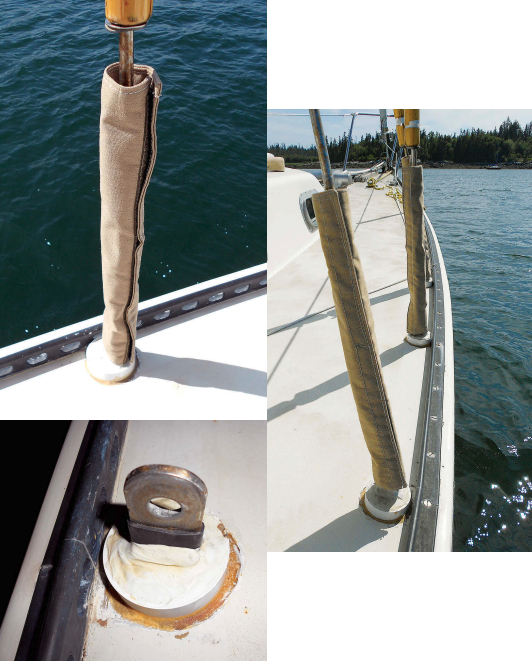
Hall’s repair did not rely on a bigger gob of sealant. He removed the chainplates, cleaned off the old sealant, and built a perimeter collar, or coffer dam, from a 2-inch PVC pipe coupling cut in half. That collar was epoxied to the deck to define the cavity and keep the bedding where it belonged. Before the cavity was filled, the chainplate itself was wrapped in heavy-wall heat-shrink tubing with adhesive lining. Only then was sealant added, turning the whole opening into a controlled, contained seal instead of an exposed seam that could be worked by movement and water.
The result, in Hall’s words, is that the chainplates are now “high - and dry.” That is the right outcome because the repair does not just stop water on the surface. It changes the geometry of the leak path.
The failure points worth inspecting first
If you are chasing the same kind of leak, the inspection has to go beyond the cosmetic bedding edge. Start with the deck core around the penetration, even if the chainplate does not pass through balsa core like Secret Water’s does. You are looking for softness, staining, delamination, and signs that water has been traveling inside the laminate instead of staying at the opening.
Then check the sealant system itself. c34.org recommends polysulfide as a bedding material for chainplates and warns against using 3M 5200 as the primary seal. That warning is worth respecting because chainplates are not a place for over-aggressive adhesive if you expect future inspection or removal. The best sealant is the one that can keep water out without turning the next service interval into a demolition job.
Also look closely at fastener prep and fit-up. Old sealant on the plate, a dirty surface, or hardware that does not sit squarely in the opening can all leave tiny channels for water. Fit-up matters as much as the bedding compound: if the opening, collar, wrapping, and sealant do not match each other cleanly, the water will find the weak point. On a chainplate, that weak point may sit hidden under the trim until the leak has already damaged the structure behind it.
Why the bigger picture matters on an old cruising boat
The urgency around chainplates is not just maintenance caution, it is rigging reality. IMORULES says chainplates and other standing-rigging securing arrangements must be substantially constructed, integrated with the supporting structure, and strong enough that watertight integrity is not impaired. That is the standard in plain language: the fitting has to stay structurally trustworthy and keep the boat dry.
Cruising World underlined the scale of the problem in 2022 when surveyor Ross Hubbard said he sees about eight vessels with known chainplate failures a year and estimated that at least 60 percent of removed chainplates have some type of problem, such as pitting, cracks, or fractures. That is not a corner case. It is a reminder that a leaking chainplate should be treated as an inspection event, not a housekeeping task.
The real lesson for DIY owners
The takeaway from Secret Water is simple. If a chainplate keeps leaking after the “obvious” rebedding job, stop assuming the last sealant bead was just bad luck. Inspect the deck structure, the bedding material, the fasteners, and the fit-up around the opening. Treat the penetration as part of the rig and part of the boat’s structure, because that is exactly what it is.
That is why Hall’s fix works as more than a patch. It addresses the leak path, the load path, and the serviceability of the fitting at the same time. On a 1965 sailboat, that is how you turn a stubborn drip into a dry, reliable chainplate that stays ready for the next passage.
This article was produced by Prism’s automated news system from verified source data, official records, and press releases, then run through automated quality and moderation checks before publishing. The system is built and supervised by the people who set the standards it runs under. Read our full AI policy.
Did this article answer your question?