Why a breathable mainsail cover protects small-boat sails
A breathable mainsail cover protects a small-boat sail by blocking UV without trapping dampness, and the right fit keeps it from chafing, sagging, or leaving the aft end exposed.

On an 18-footer like a Catalina 18, a mainsail cover that traps heat and moisture can quietly shorten sail life while the boat sits on a mooring or trailer. The right cover keeps UV, salt, and mildew off the sail instead of sealing the canvas into its own damp heat.
Why breathable canvas beats a waterproof shell
MAURIPRO’s Mainsail Cover - MZ is built from marine-grade acrylic canvas, the kind of material sail covers have leaned on for years because it balances UV50+ protection, water resistance, and breathability. That breathability is the point. Practical Sailor warns waterproof sail covers can hold moisture and mildew sails more quickly, and wet canvas that dries slowly is hard on stitching, patches, and the cloth itself.
North Sails calls UV exposure the single greatest environmental danger to cruising sails, and sails left in the sun must be covered. Old canvas loses its UV protection over time, which is why a cover is not just a cosmetic layer. It is a working part of the sail’s protection system, especially when the boat lives outside and the mainsail spends more time furled than flying.
That is also why darker, heavier covers often earn their keep. They can provide better protection than lighter material, and that makes sense on a small cruiser that sees a lot of idle time between weekend sails. The cover’s job is not to seal the sail away from the weather completely. Its job is to keep the worst of the sun off while letting trapped damp escape.
Fit is where a cover saves money or wastes it
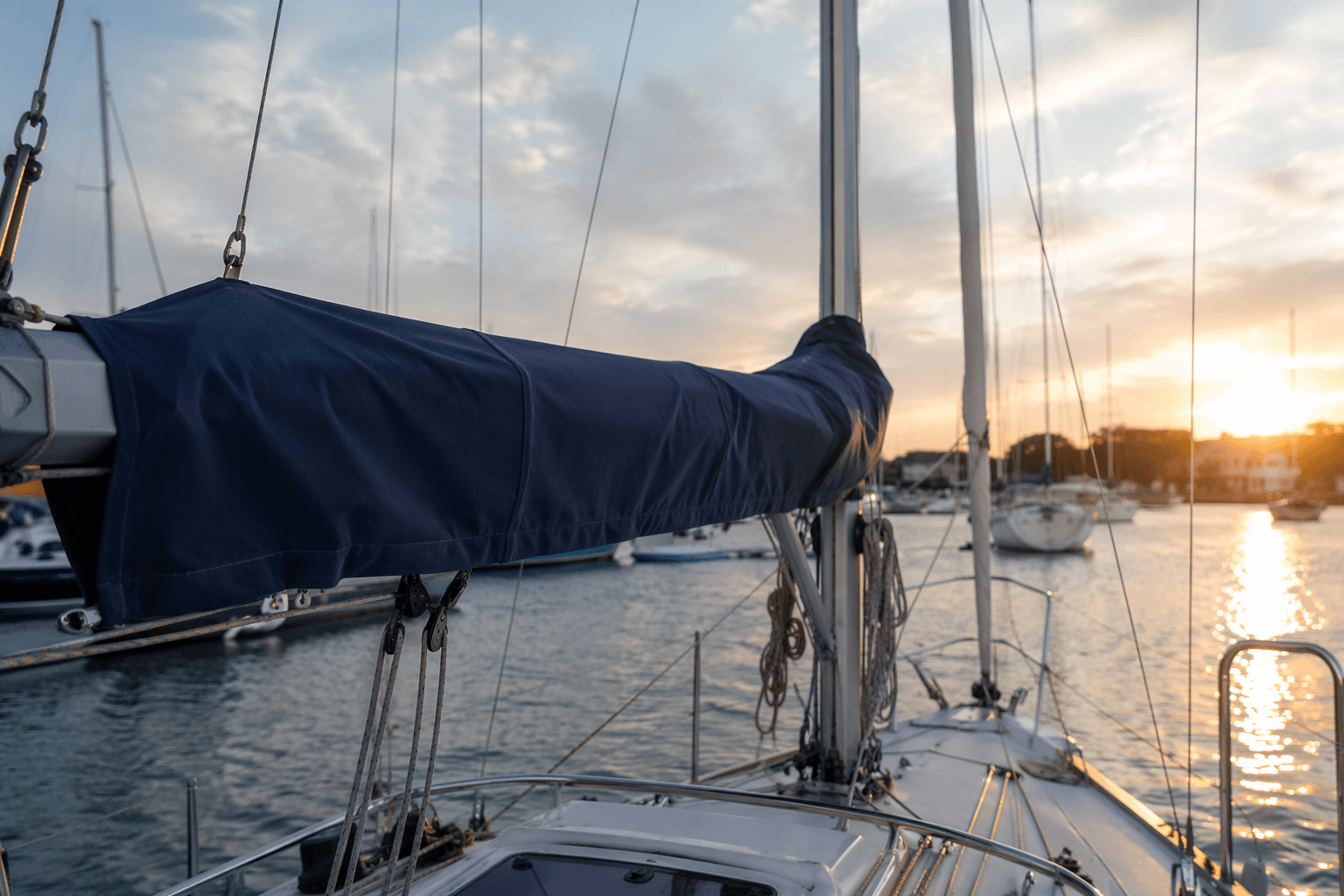
MAURIPRO sizes the MZ for booms up to 9.8 feet and lists it as the correct size for a Catalina 18 boom. That matters because fit is where sail protection either works or fails. A cover that comes up short leaves the aft end of the sail exposed to sun and salt; one that runs long can sag, pool water, and rub against deck gear.
Catalina Yachts lists the Catalina 18 as an 18-foot trailerable sailboat with a 7.58-foot beam and a mainsail luff of 20.25 feet. Those dimensions mean the cover has to match the boom cleanly while clearing the sail bundle above it. On a boat this size, the margin for sloppy fit is thin, because every inch of slack shows up as flap, chafe, or standing water.
A good fit also has to make sense with the way the boat is sailed. If you rig and derig often, or fiddle with a whisker pole or an asymmetric spinnaker setup between outings, the mainsail still has to be protected when the boat is idle.
What to check before you buy
A breathable mainsail cover should be judged like a piece of working gear, not like upholstery. The important questions are practical:
- Does it match the boom length and sail shape, or will it leave the aft end exposed?
- Will it shed water, or does the cut create low spots that sag and collect rain?
- Does it clear lazy jacks and other running hardware without rubbing?
- Are the reinforcement points placed where the sail, battens, or boom will push hardest?
- Can one person install and remove it without wrestling the whole rig?
For small boats, boom geometry matters as much as length. A cover that looks fine in the loft can still fail on deck if the boom angle, topping lift, or stack of lazy jacks forces the cloth into a crease. Reinforcement belongs where the cover meets friction, especially along the underside and around the aft end, because that is where chafe starts and water likes to sit.
Snaps, zippers, and the saltwater reality
The MZ uses snap closures along the underside rather than relying only on zippers, and that choice fits the way many solo sailors actually use a cover. Snaps can be opened one-handed, are less likely to seize in saltwater, and are easier to inspect when something wears out on a boat that gets sailed, rinsed, and put away by one person.
West Marine sells corrosion-resistant canvas snap kits and snap lubricant products for marine canvas use, and its snap kit uses nickel-plated brass fasteners to resist corrosion. That is the sort of hardware that keeps a cover serviceable season after season, instead of turning a simple job into a fight with frozen metal.
Zippers can work, but only if they are protected and maintained. Ties are simple, but they can be slower to manage in a breeze or after a long day on the water. The best closure is the one you will actually use correctly every time, because a cover that is hard to fasten tends to get fastened loosely, and loose covers chafe sails.
The evolution of mainsail protection
Practical Sailor counted Doyle Sailmakers’ StackPack among the early innovators in mainsail handling systems, and Quantum Sails’ SailPack is an integrated mainsail cover with internal lazy jacks built from Sunbrella fabric.
This article was produced by Prism’s automated news system from verified source data, official records, and press releases, then run through automated quality and moderation checks before publishing. The system is built and supervised by the people who set the standards it runs under. Read our full AI policy.
Did this article answer your question?