Why polyethylene sailboat hulls need plastic welding, not epoxy
A hairline crack on a polyethylene hull can look easy to smear over, then fail offshore. If the damage is structural, plastic welding is the repair that actually stays put.
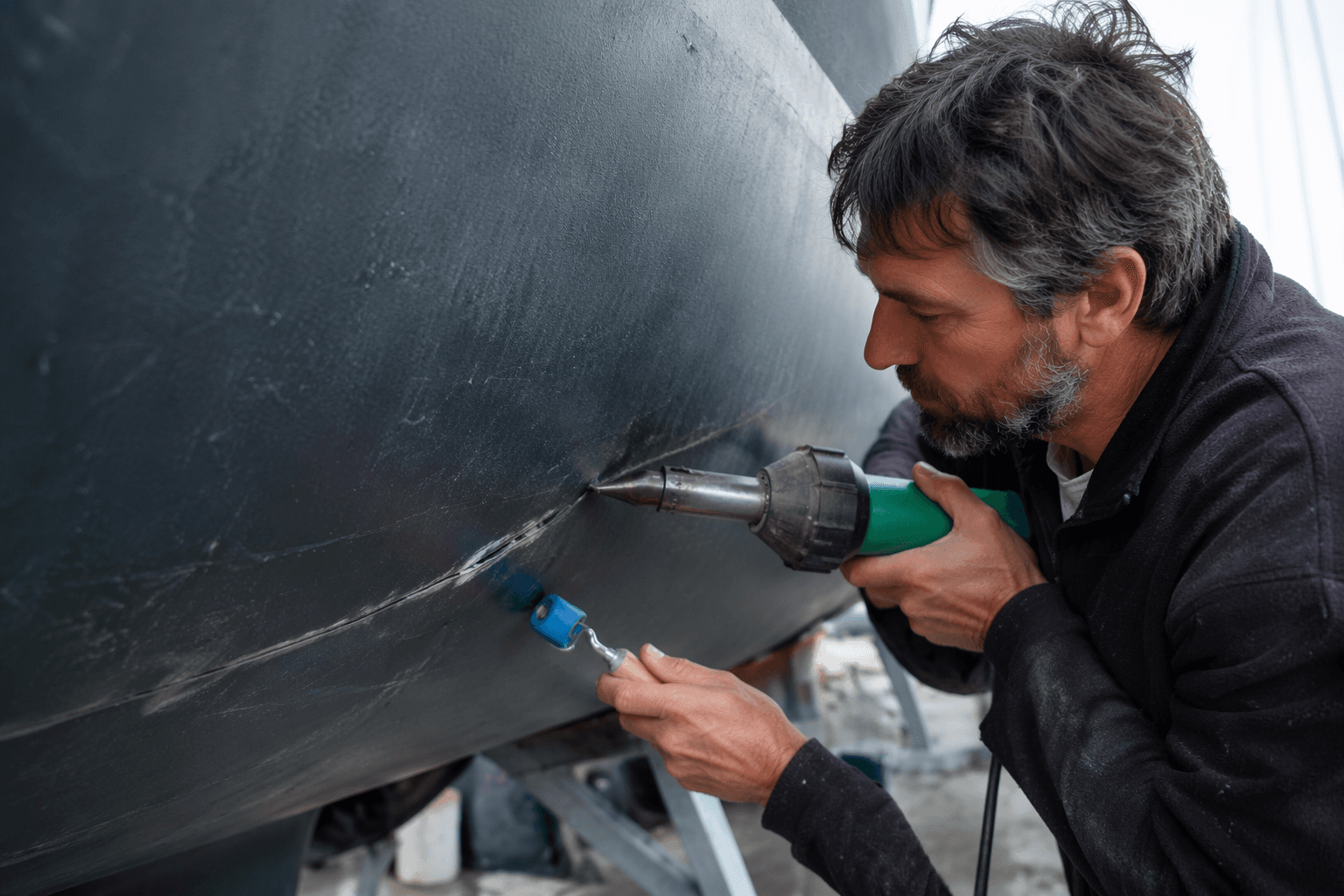
A polyethylene dinghy that takes a hard bang on the beach can tempt you into the quickest fix in the toolbox: mix epoxy, slap on a patch, and hope the hull holds. That hope is exactly where sailors get burned. Polyethylene is tough, impact-resistant, and famously hard to bond because its surface energy is so low that ordinary marine epoxies do not grab it the way they grab fiberglass or many other plastics.
When epoxy makes sense, and when it does not
The first decision is not what adhesive to buy. It is whether the damage is truly structural. A cracked working hull, a split near a loaded fitting, or any break that flexes under sail is the kind of problem that usually belongs in the plastic-welding category, because the repair has to become part of the hull again. Polyethylene is virtually impossible to repair effectively with adhesives, and welding is the best method, Polyvance says.
That is why a patch can look fine on the dock and still separate once the boat starts moving, flexing, baking in sunlight, or aging through a season. Epoxy can still have a place on small, low-load cosmetic damage, but on a polyethylene hull the confidence test is simple: if the crack will be asked to carry real sailing loads, epoxy is usually a short-term patch, not a durable fix.
Why plastic welding works differently
Plastic welding does not depend on adhesive grab. It uses heat to melt the base material and a matching rod so the repair fuses into the hull at a molecular level. That is why it is favored for polyethylene: the bond is built from the same material, not from a glue trying to cling to a surface that resists bonding.
That approach also explains why the wrong heat can ruin the job. MAURIPRO cautions against rushing the heating step. Overheating can warp the hull or create internal stresses.
The tool kit that matches the job
The basic repair kit for true polyethylene damage is not a tube of adhesive. It is a plastic welder or a hot-air or nitrogen welder, plus a rod that matches the hull material, usually HDPE or LDPE. Before any heat goes on the boat, the repair area needs a thorough cleaning with alcohol and a wire brush so the weld is not fighting dirt, oxidation, or chalky surface contamination.
The crack itself should be beveled into a V-groove to increase bonding area, then preheated carefully before the weld begins. That sequence matters because the goal is to give the molten rod and the softened hull enough contact to fuse cleanly, not to smear plastic around the break and call it done. On a good day, the repair looks simple. On a bad day, an overheated panel or a badly matched rod turns a weekend fix into a distorted hull.
Where specialized adhesives still fit
The old rule that nothing sticks to polyethylene is no longer the whole story. WEST SYSTEM’s G/flex 655 thickened epoxy adhesive is designed for permanent waterproof bonding of plastic and is a bit more flexible than standard epoxies, with a modulus of elasticity of 150,000 psi. WEST SYSTEM’s instructions say flame-treating HDPE and LDPE with a propane torch can improve epoxy bonding by oxidizing the repair surface.
WEST SYSTEM markets its Plastic Boat Repair Kit for splits, cracks, and small holes in plastic canoes, kayaks, and similar boats made from HDPE, LDPE, ABS, PVC, or polycarbonate. That makes the nuance important: specialty systems can be useful on small, lightly loaded repairs, especially where the part does not flex much. They are not the same thing as a structural weld in a working sailboat hull.
3M formulates structural acrylic adhesives to bond many low-surface-energy plastics, including polyethylene, sometimes with little or no special surface preparation.
How to decide from the crack itself
The crack location tells you almost everything. A gouge in a non-load-bearing cosmetic area is one problem. A split near a seat mount, thwart, chainplate area, or any zone that works hard every time the boat is sailed is another. The more the plastic moves, the less attractive an adhesive-only repair becomes, because movement is where glued repairs tend to peel, creep, or fail at the edges.
Access matters too. If you can reach both sides of the damage, you have a cleaner shot at a strong repair and better backing for the weld or patch. If the area is tight, curved, or thin, the job gets more technical, and that is where the line between a do-it-yourself weld and professional attention starts to show up.
The practical threshold for sailors
BoatUS, which serves more than 740,000 members, has published a plastic-welding primer for boat owners. It is a mainstream maintenance decision, especially for rotomolded dinghies, small sailboats, and beach cats that live hard lives on sand, ramps, and trailered launches.
Polyvance’s HDPE welding rod is used for kayaks and canoes, ATV and dirt bike fenders, playground equipment, and other HDPE items. The repair logic carries over cleanly to sailboats: if the hull is polyethylene and the damage is structural, welding is the repair that matches the material. If the damage is small, lightly loaded, and more cosmetic than structural, specialty adhesives can sometimes buy time.
This article was produced by Prism’s automated news system from verified source data, official records, and press releases, then run through automated quality and moderation checks before publishing. The system is built and supervised by the people who set the standards it runs under. Read our full AI policy.
Did this article answer your question?