Why Shock Cord Quality Matters for Long-Lasting Sailboat DIY Uses
Two cords that look the same can age very differently in sun and salt. The fix is picking the right cover, then replacing it before it turns sloppy or fails.
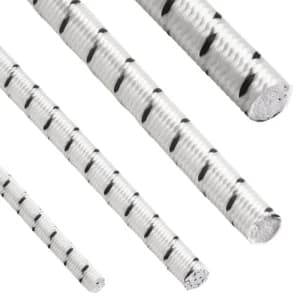
Why the cheap cord on the shelf is not the same cord on your boat
Two shock cords can look nearly identical in the chandler’s bin and behave nothing alike after a season in the sun. That is the whole point of Practical Sailor’s April 6, 2026 report: the real test is not how a bungee feels in your hand, but how it survives load, weather, and repeated outdoor cycling over time. The testers measured three samples under load when new, then cycled them monthly for two years outdoors, which is exactly the kind of abuse a boat deck gives cheap gear without apology.
That matters because shock cord is everywhere on a sailboat. It holds canvas, keeps gear from migrating across the cockpit, organizes covers, and cleans up the little lash-ups that make a boat safer and less annoying to live with. When it works, nobody talks about it. When it fails, the result is usually not dramatic, just deeply irritating: drooping covers, loose gear, and a cockpit that starts collecting clutter again.
What actually makes one cord last and another quit
Shock cord is not just elastic rope. Marine-grade versions are built as an elastic core protected by a woven outer sheath, and that sheath is doing more work than many owners realize. Fisheries Supply describes that construction for wet, sun-exposed, high-movement environments, which is exactly the marine setting that punishes bargain bungees.
Material choice is the big separator. Common sheath materials include cotton, polypropylene, and Dacron polyester, while Marlow Ropes says its standard shockcord uses a natural rubber core with a polyester cover that is tough, UV resistant, and abrasion resistant. English Braids says its shock cord uses a natural rubber core with polyester, nylon, or polypropylene sheathing and a minimum stretch of about 100 percent. It also notes that polypropylene sheathing resists UV, while the rubber core itself does not, which is the kind of detail that explains why some cords stay useful and others age out fast.
The takeaway is simple: the cover, the core, and the fit between them all matter. If the sheath can shrug off UV and chafe, the cord lasts longer. If the core bakes in the sun, it loses its snap, and the whole thing turns into dead, sagging line.
Why sun exposure is the real killer
UV damage is not abstract. The U.S. Environmental Protection Agency notes that sunlight includes UV radiation that can damage materials, and that the atmosphere blocks most, but not all, of it. The Centers for Disease Control and Prevention adds that sunlight exposure is highest in summer and between 10 a.m. and 4 p.m., which is exactly when boats sitting in slips, on moorings, or in the yard are getting cooked.
That is why a cord that seems fine in the hand can fail early in service. It may still feel elastic after a few stretches, but once the core has been baked and the sheath has taken repeated abrasion, you start seeing glazing, cracking, loss of elasticity, or that dead, tired feel that tells you the cord is done. On a boat, the mistake is waiting until it snaps. By then, the cheap replacement cost has already turned into extra work and avoidable deck clutter.
Where longevity matters most on a sailboat
Not every use justifies premium cord, but some definitely do. If the line is hiding under cover, seeing little sunlight, and only carrying light duty, a decent pre-fabricated shock cord may be all you need. Practical Sailor says high-quality covered shock cords are relatively inexpensive and can last for years if they are not left out in the sun, which is hard to argue with when you are trying to keep the budget under control.
- Lazyjacks that live in the open and get worked often
- Sail ties that stay on deck through weather and sun
- Cover support where the cord is constantly flexed
- Cockpit organization where failed cord turns into loose gear and clutter
- Any setup that needs special hooks or end fittings, because improvised ends are usually where cheap jobs unravel first
Longevity matters most in exposed jobs and in places where failure creates a mess:
That is the practical boundary line. If the application is hidden, light-duty, and easy to replace, a basic cord may be acceptable. If it is exposed, hard-working, or a pain to get at, spend for better material or build it right the first time.
When to buy pre-made and when to make your own
Practical Sailor’s guidance is refreshingly direct: good pre-made covered shock cord is relatively cheap, but making your own can be worth the time for exposed applications or anything that needs special hooks or end fittings. That is the sweet spot for DIY sailors who want control over fit without overcomplicating the job.
Pre-made makes sense when you want speed, standard lengths, and a fast fix. Building your own makes more sense when you want the cord to sit cleanly, terminate properly, and survive in a place where the sun never leaves it alone. The point is not to make every little bungee into a project. The point is to stop treating all elastic line as disposable junk.
A practical inspection routine before you outfit the boat
You do not need a lab to sort the good cord from the throwaway stuff. You do need to handle it like a consumable, not permanent rigging. Look for the small signs of aging before the first hard blow or the first long hot week turns a temporary fix into a failure.
Use this quick check: 1. Stretch the cord and feel for rebound. It should come back cleanly, not slowly and lazily. 2. Inspect the sheath for cracking, fuzzing, glazing, or abrasion. 3. Look for flattening or a dead spot where the core has lost life. 4. Check any end fittings or knots for wear, corrosion, or slippage. 5. If the cord lives outside, replace it before it starts looking tired, not after it breaks.
That is the difference between cheap and economical. A low-cost cord that fails early is not a bargain. A better cord that survives UV, abrasion, and repeated load cycles is.
The smart buy is the one that survives the season
The deceptive part of shock cord is that the bad stuff and the good stuff can look nearly the same on day one. The long-term difference shows up in sun, salt, and stretch cycles, and that is exactly where marine-grade construction earns its keep. For sailors, the safest rule is to match the cord to the exposure and replace it before it gets sloppy.
If the cord is tucked away, a modest pre-made option can be perfectly sensible. If it is sitting in the sun, taking abrasion, or carrying the kind of load that keeps a boat tidy and usable, spend for the covered marine-grade stuff or build your own with a proper sheath and fitting. That small decision pays back in fewer re-dos, less deck clutter, and one less piece of gear failing at the wrong moment.
This article was produced by Prism’s automated news system from verified source data, official records, and press releases, then run through automated quality and moderation checks before publishing. The system is built and supervised by the people who set the standards it runs under. Read our full AI policy.
Did this article answer your question?